How to select the correct code, cable, and RF specification for automotive FAKRA connector replacement

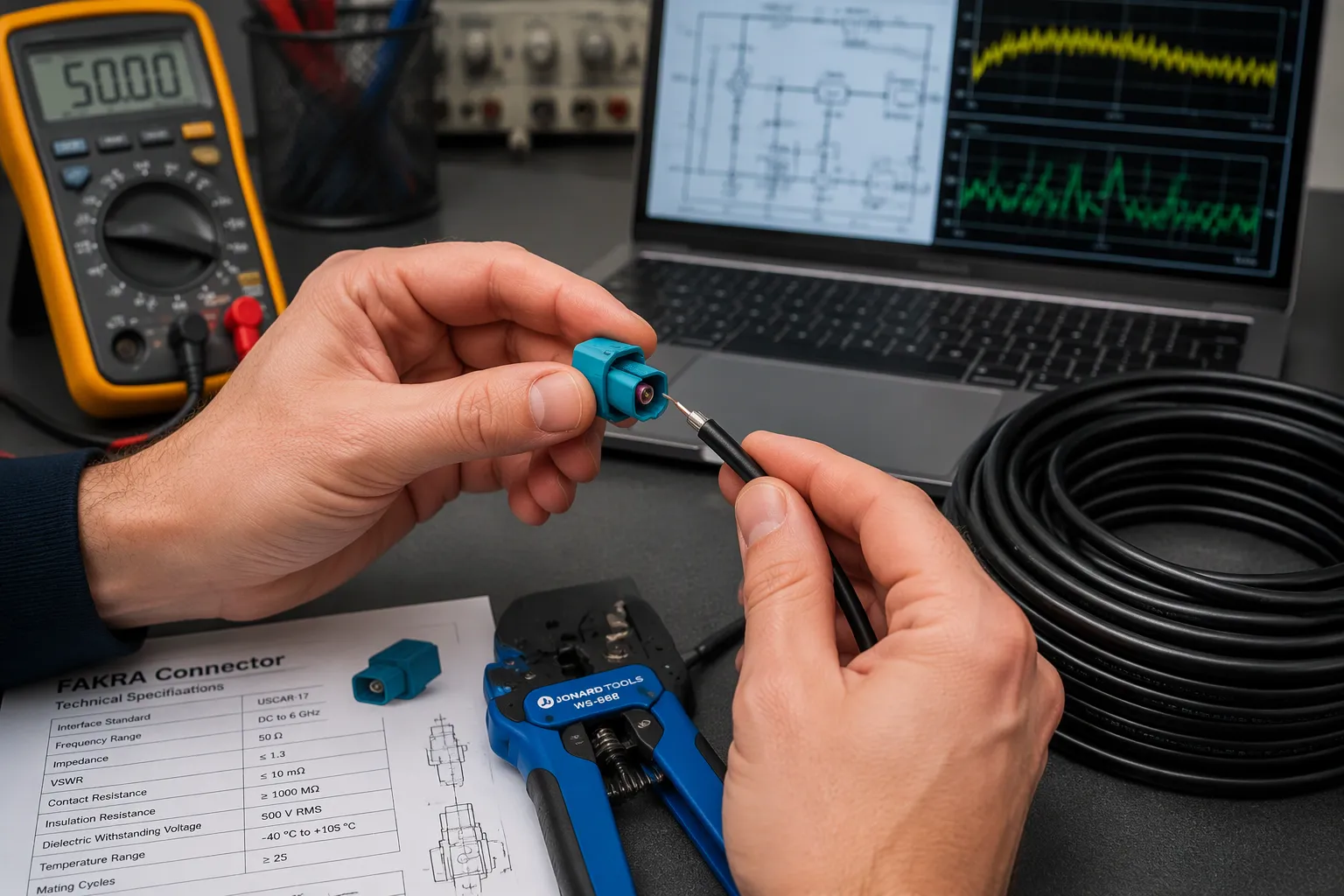
An automotive FAKRA connector replacement forces three decisions. You must match the connector coding and keying, choose the cable for the run, and confirm 50-ohm impedance and RF specs. The direct answer: identify the mating code first, then size the cable to the run and link budget, then verify RF specs before installation. Color is a helpful label, but the mechanical code governs mating. A fakra connector that looks identical may still carry a different code, so verify the interface before you order.
In Short: Identify the mating code and keying first, then size the cable to the run and link budget, then confirm 50-ohm impedance, frequency range, and RF specs before installation.
Key Takeaways
Match the connector code and keying first. Color is only a label; the mechanical code ensures a proper fit.
Choose the cable based on run length and signal loss. Keep the cable as short as routing allows.
Verify 50-ohm impedance and RF specifications for your specific application before you order.
Confirm compatibility with photos of both mating connectors and a technical drawing. A visual match alone is not enough.
Send complete details to your supplier, including code, gender, cable length, and application. This prevents costly mistakes.
Automotive FAKRA connector replacement basics
What counts as a replacement
An automotive FAKRA connector replacement means you supply a new product that matches the original interface and performance. It is a specification-matching exercise, not a repair service. You compare the existing part against a new connector or cable assembly and confirm that code, gender, cable, and RF ratings align.
This distinction matters during procurement. A replacement part must meet the same mechanical and electrical requirements as the original. You need the correct fakra connector types for the job, not a generic part that merely looks similar. LEADSIGN supplies FAKRA connectors, cable assemblies, extension cables, adapters, HSD connectors, and Mini FAKRA solutions for this exact purpose. Each product family covers a defined set of applications, so you can match the part to the system rather than force a fit.
When to replace a FAKRA cable or connector
Several situations call for a new fakra connector or cable. A damaged housing is the most obvious case. Cracked plastic or a bent shell can break the locking function and weaken the connection. Worn locking tabs also justify replacement, because a loose latch may not hold under vibration.
Changed routing is another common trigger. A new harness path may need a different cable length or a right-angle fakra connector. An upgraded module may demand higher frequency performance or a different code. New builds also require fresh parts rather than reused ones. In each case, you select a replacement based on the application, not on appearance alone. Confirm the specification against the mating device before you order.
Identifying the correct connector coding and keying
Why connector color alone is not enough
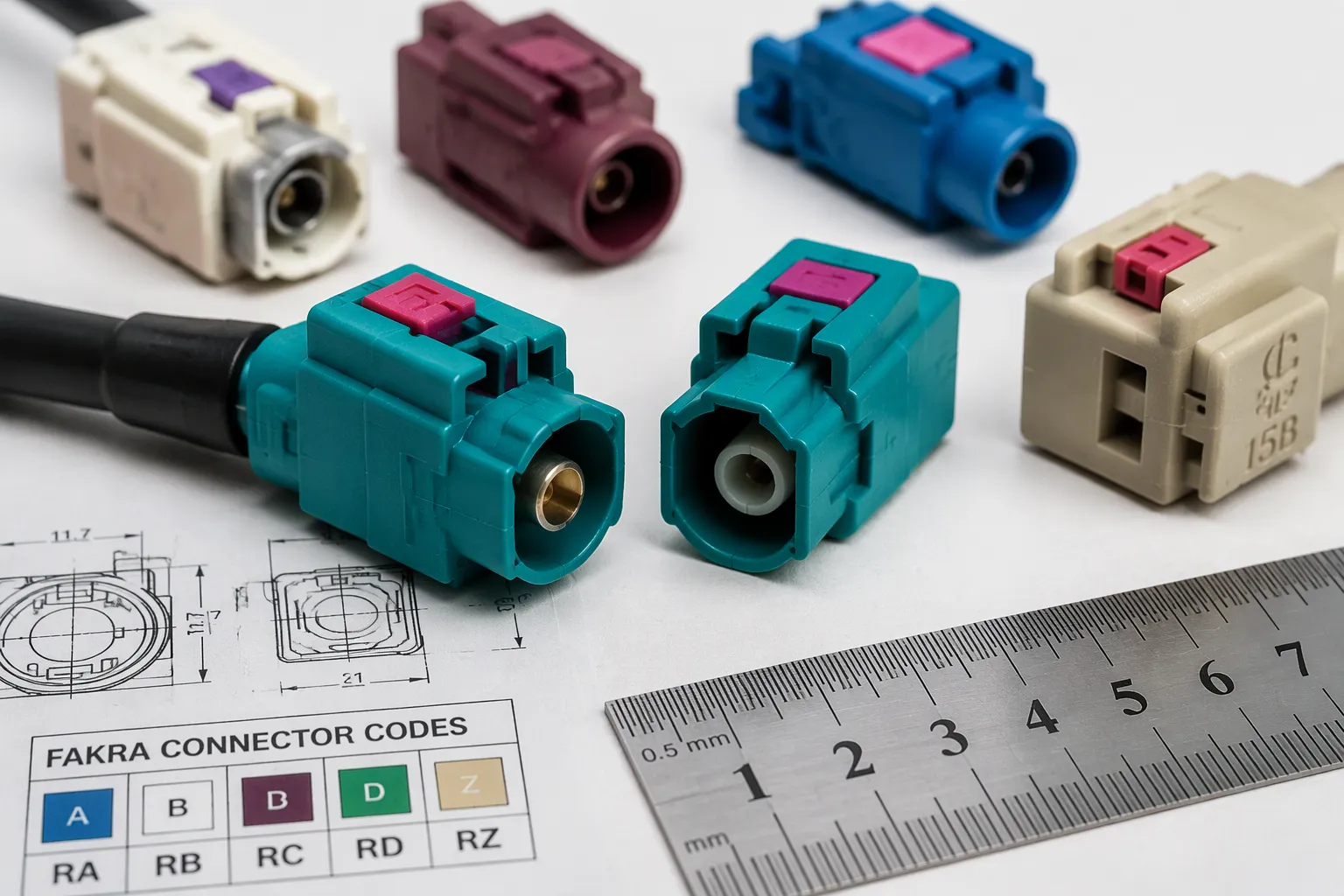
A fakra connector uses a molded housing with a specific code. That code prevents mismating between connectors that serve different functions. A radio antenna plug will not seat on a GPS socket when the codes differ. This mechanical protection is the whole point of the system.
Color supports the code, but color does not replace it. You will find colored housings across the fakra range, and installers often use color as a quick visual check. Treat that check as a first filter only. Two parts can share a similar appearance and still carry different codes. The mechanical code governs mating, and the housing geometry decides whether two halves connect.
Codes range from A to Z across the fakra family. Each code must match its mating counterpart exactly. Do not assume a universal color chart applies to every program. Color assignments can vary between applications, so confirm the code against the mating device and the drawing. Coding also stops at mechanical fit. A matched code does not confirm electrical compatibility, impedance, or frequency performance. You still need to verify those values separately.
LEADSIGN FAKRA products carry 13 mechanical and colored codings plus 1 neutral coding. Each housing includes primary and secondary locks. The primary lock holds the connector in place. The secondary lock adds a backup that resists vibration and pull-out. Together they secure the connection after the code aligns.
Confirming gender and mating interface
Gender confirmation is the next step, and it is where many orders go wrong. A fakra connector exists as a male plug or a female jack. The male side carries the center pin. The female side carries the socket. You must confirm which side your replacement replaces.
Photograph both mating connectors before you contact a supplier. One photo of the original part is not enough. The second photo shows the device the part plugs into. These images reveal the mating interface, the locking features, and the housing shape. They also expose any damage that changed the original fit.
Record the keying details in the same pass. Note the key code molded into the housing, the latch style, and the orientation of the keyed-and-coded housing. A supplier can then compare your photos against a pin-to-pin table and confirm the pinout. This step closes the gap between a visual match and a verified part.
Write the connector coding requirements into your request. State the code, the gender, and the lock type. Ask the supplier to confirm each item against a drawing. This habit protects you from a costly return and keeps the build on schedule.
Selecting cable and RF specifications
Cable type, length, and 50-ohm impedance
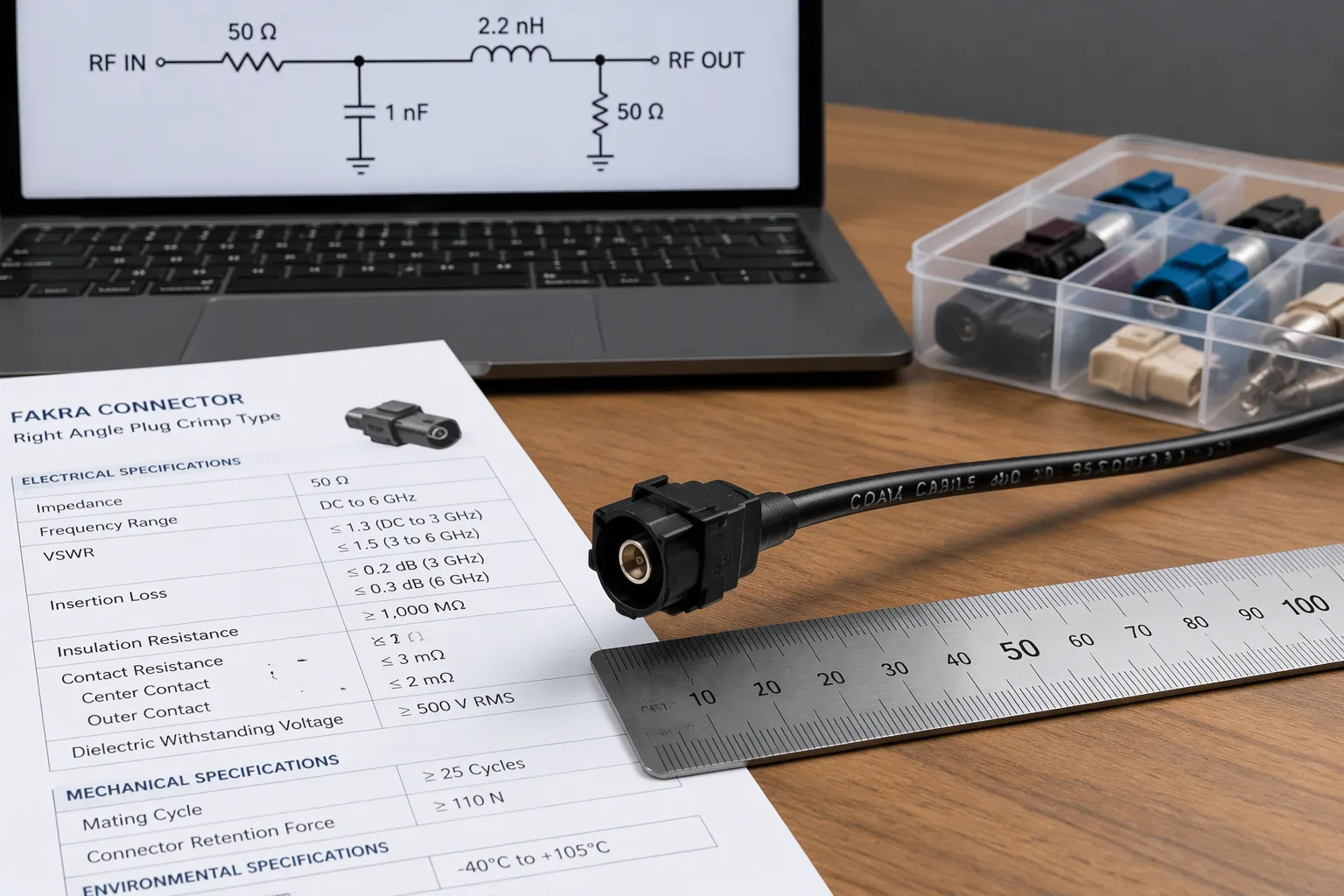
Many automotive RF systems use a 50-ohm design. Confirm the actual requirement for your specific system and product configuration before you order. A 50-ohm RF coaxial connector will not correct a mismatch elsewhere in the chain. Check the module datasheet and the original part, then match both.
Cable length affects installation and signal transmission. A longer run gives you routing freedom, yet it adds loss between the module and the antenna. Size the cable to the physical path first, then check the link budget against the loss the run introduces. Shielding matters just as much. Route the cable away from noise sources and protect it from abrasion, heat, and moisture. Choose a jacket and a waterproof version that suit the environment the harness passes through.
LEADSIGN FAKRA products give you a defined performance envelope. The connectors run at 50 ohm with a frequency range of DC to 6 GHz and support data rates up to 8 Gbps. Return loss is ≥ 18 dB, and the operating temperature range is -40 °C to +105 °C. Each part handles ≥ 25 mating cycles. Waterproof versions are available, and the range complies with RoHS, WEEE, and ELV. Treat impedance and VSWR as a pair when you review the datasheet. Impedance and VSWR together tell you how cleanly the fakra connector passes the signal.
Straight vs. right-angle FAKRA connectors
Orientation decides how the cable leaves the housing. A straight fakra connector exits in line with the mating axis. It suits open spaces and short, direct runs. A right fakra connector turns the cable 90 degrees at the housing. It fits tight cavities behind panels, head units, and camera modules. Choose the right fakra connector when the bend radius would otherwise crush the cable against a wall.
Use the table below to organize your selection. Each row maps a specification to its role and the check you owe your supplier.
Specification | Why it matters | What the buyer should confirm |
|---|---|---|
Connector family | Sets the interface standard | FAKRA, HSD, or Mini FAKRA |
Connector coding | Prevents mismating | Exact code letter on both halves |
Keying | Aligns the housing | Key position and latch style |
Connector gender | Defines plug or jack | Male pin or female socket |
Mating interface | Governs physical fit | Photos of both mating connectors |
Cable type | Sets loss and flexibility | Jacket, core, and shield construction |
Cable length | Drives loss and routing | Measured run plus service loop |
Impedance | Matches the system design | System requirement, often 50 ohm |
Frequency application | Caps usable performance | Maximum signal frequency |
Connector orientation | Fits the cavity | Straight or right-angle |
Shielding | Blocks interference | Shield coverage and grounding path |
Environmental conditions | Affects durability | Temperature, moisture, vibration |
Required quantity | Drives pricing and lead time | Build volume plus spares |
Sample and drawing requirements | Verifies the part | Sample test and approved drawing |
A pin-to-pin table closes the loop on wiring. Ask your supplier to map each contact against your photos. Confirm compatibility against the mating device, not against a catalog photo. One verified specification beats ten assumptions.
Application fit and standard vs. custom assemblies
GPS, GNSS, radio, LTE, 5G, and telematics needs
Select the connector based on the maximum frequency of the transmitted signal. A GPS / GNSS: the L1 band at 1575.42 MHz application places modest demands on a fakra connector. An LTE or 5G telematics link pushes toward the upper end of the DC to 6 GHz range. Match the part to the highest frequency in the chain, not the lowest.
Each application also brings its own routing and environmental profile. A roof-mounted antenna feed passes through tight body cavities and weather exposure. A head-unit connection stays dry but bends sharply behind the dashboard. Review the cable or harness path before you commit to a fakra family. Confirm that the chosen fakra variant covers the signal band and the installation space. This step protects compatibility across the full system.
Standard cable vs. custom FAKRA assembly
Standard replacement cables fit common lengths and familiar routing. They ship fast and cost less per unit. Choose a standard assembly when your run matches an available length and the connector code is already in stock. Custom FAKRA cable assemblies fit unusual lengths, specific codes, and tight bend paths. They cost more per unit and take longer to build, yet they remove adapters and extra joints from the chain.
LEADSIGN offers OEM/ODM services and custom harness solutions for high-frequency interconnect applications. The team supports short delivery times on standard parts and builds custom lengths to your drawing. Send your routing, code, and quantity, and the team will confirm the fakra specification against your application.
Procurement checklist and common mistakes
What to send a supplier
A complete request shortens the quote cycle and prevents wrong parts. Send the vehicle make and model, the production year, and the application. Add photos of the original connector and photos of both mating connectors. State the cable length, the connector coding, and the connector gender. Describe the cable routing, the required quantity, and the delivery country. Attach a drawing or a sample when you have one.
These rfq inputs give the supplier enough detail to check the mating interface and the pinout. Ask for a controlled drawing and pin-to-pin table with the quote. That document confirms the key code, the pinout verification, and the connector part numbers before production starts. A supplier who works from photos alone cannot guarantee compatibility.
Mistakes to avoid
Most failed automotive fakra connector replacement orders trace back to a short list of errors. Watch for these:
Selecting by appearance only, without checking the code.
Matching the wrong connector code to the mating half.
Confusing male and female interfaces.
Using the wrong cable length for the run.
Ignoring the mating connector on the device side.
Assuming every fakra cable performs the same.
Adding unnecessary adapters to bridge incompatible mating parts.
Skipping sample testing before the full order.
Failing to confirm the application frequency.
Ignoring cable routing and environmental conditions.
Each mistake costs time and money. A wrong code or a mismatched keying detail produces a part that will not seat. An unverified pinout can damage the module. Treat the specification as a contract, not a suggestion.
Final compatibility must be confirmed using the actual connector, code, cable, application, and technical drawing. No photo or catalog page replaces that check.
You now have a repeatable sequence for any automotive fakra connector replacement. Work through it in order:
Confirm the connector coding and keying against the mating half.
Select the cable by run length and link budget.
Verify 50-ohm impedance and the RF specs for your application.
Adapt the interface with a pigtail when the housing will not mate directly.
Validate the replacement against the mating device and a technical drawing before you order. A photo match alone proves nothing about the fakra interface.
Contact LEADSIGN for fakra connector information, replacement cable assemblies, samples, custom cable lengths, technical drawings, and quotations.
FAQ
How do I confirm the correct fakra code for a replacement?
Read the code molded into the original housing and photograph both mating halves. Codes run A through Z, and each one must match its counterpart exactly. A matched code confirms mechanical fit only. You still need to verify impedance and frequency performance for your application.
Can I select a fakra connector by color alone?
No. Color is a helpful label, yet the mechanical code governs mating. Two housings can look alike and still carry different codes. Confirm the code against the mating device and the drawing. LEADSIGN stocks 13 mechanical and colored codings plus 1 neutral coding.
How do I tell a male fakra connector from a female one?
Look at the center contact. The male plug carries the center pin. The female jack carries the socket. Photograph both mating connectors and send the images to your supplier. State the gender in writing. This step prevents the most common ordering error in fakra replacement work.
Does cable length change fakra performance?
Yes. A longer run adds loss between the module and the antenna. Measure the physical path first, then check the link budget against that loss. Keep the run as short as routing allows. Confirm the cable type and shielding suit your environment before you order.
Why does 50-ohm impedance matter in a fakra system?
Many automotive RF systems use a 50-ohm design. Confirm the actual requirement for your specific system and product configuration. A mismatched impedance raises return loss and weakens the signal. LEADSIGN fakra parts rate at 50 ohm, DC to 6 GHz, with return loss ≥ 18 dB.
See Also
Improving Vehicle Data Transfer Using FAKRA PCB Connectors
Boosting Automotive Communication Through FAKRA PCB Connectors
Why Fakra Connectors Matter in the Automotive Industry
The Critical Role of Fakra Connectors in Modern Vehicles
Why FAKRA Connectors Are Essential for Automotive Applications