Straight vs Right-Angle FAKRA Cable Connectors: Which Should You Choose?

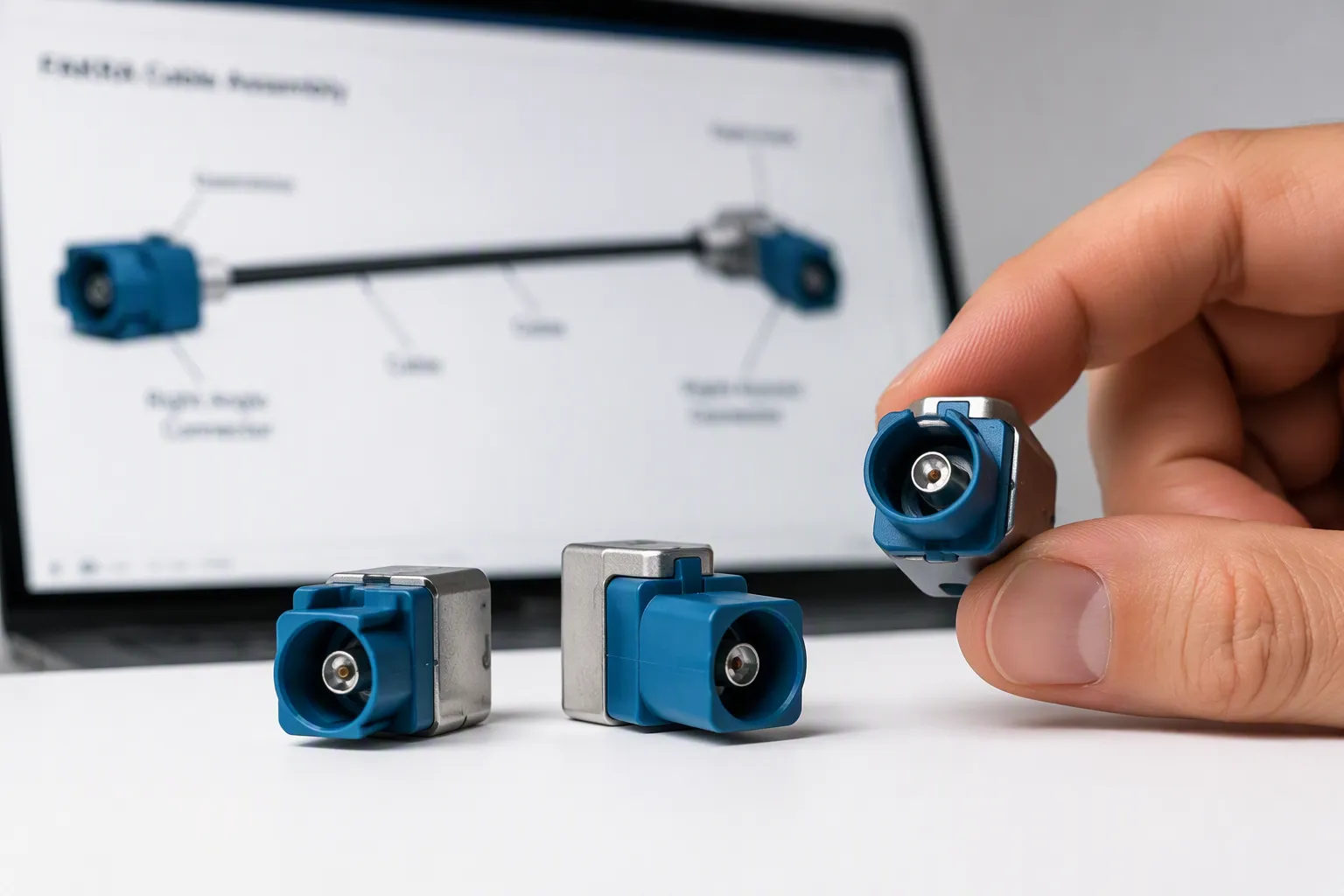
You have the correct electrical specifications for your FAKRA cable connector. Yet the cable does not fit behind the dashboard or ECU. The connector exits in the wrong direction. An installer with all the right parts still faces a fit issue. This is a common installation problem.
FAKRA connector designs vary by orientation. FAKRA is a 50-ohm RF system used in vehicles. The choice between straight and right-angle affects installation space, cable strain, and long-term reliability.
Straight connectors suit direct rear clearance and simple routing. Right-angle connectors suit tight spaces and immediate 90-degree turns.
This post explains the differences, routing considerations, bend radius, selection criteria, and includes a checklist to help you decide.
Key Takeaways
Straight FAKRA connectors work best when you have enough space behind the device for a direct cable path.
Right-angle FAKRA connectors save space in tight spots by turning the cable 90 degrees at the connection point.
Always respect the cable bend radius to prevent damage and keep signal quality high.
Check your installation space and routing needs before you pick a connector orientation.
Verify all specifications like impedance and shielding to ensure a reliable connection.
What Is a Straight FAKRA Cable Connector?
Design and Mating Direction
A straight FAKRA cable connector exits directly from the device. The cable runs in line with the mating axis. You need enough rear clearance behind it for this orientation. You choose this style when space allows a direct cable path without bends. This design simplifies routing and reduces strain on the cable.
FAKRA connectors use color coding and mechanical keying to prevent wrong mating. Each position has a unique color and keying structure. You identify the correct connection point by matching the color. This reduces assembly errors and improves consistency in the automotive industry.
To mate a straight FAKRA connector, align the notch with the port. Push until you hear a loud click. Gently tug to confirm the lock. The secondary lock, typically purple, increases terminal retention. Match color codes for accurate connections. Avoid sharply bending the cable after mating to preserve signal integrity. Following these steps ensures a secure and reliable connection.
Straight connectors simplify inspection because the cable exits straight. You see the connection point and verify the lock easily. Direct cable routing also makes it easier to trace the cable path during troubleshooting. This makes them suitable for modules away from tight enclosures.
Common Automotive Applications
Straight FAKRA cable connectors appear in many automotive systems. Applications include GPS and telematics modules, rearview, front-view, and surround-view camera systems, antenna and infotainment connections, ADAS radar units, and communication gateways. V2X modules and telematics control units also use straight connectors.
The straight orientation provides a direct cable path. It reduces stress on the connector and maintains signal quality. For high-speed data, a straight connector often offers better RF performance than a right-angle version.
Your final selection depends on the application, cable type, and mating connector. Confirm compatibility with your drawing or sample before ordering. Connector orientation does not replace correct impedance, shielding, coding, or termination quality. Always verify these specifications during design.
What Is a Right-Angle FAKRA Connector?
Design and 90-Degree Exit
A right-angle FAKRA connector turns the cable 90 degrees at the connection point. The cable exits sideways instead of straight back. This design reduces the rear clearance you need behind a module. You gain valuable space in tight installations.
The 90-degree exit introduces mechanical stress near the connector. The cable may press against enclosure walls or nearby components. You must manage this stress to avoid strain and potential signal degradation. Proper routing prevents these issues.
Parameter | Value/Effect |
|---|---|
Vertical height reduction | 35% lower than straight connector (18mm) |
Signal integrity maintained up to | 8GHz |
Impedance control | Reflection coefficient <-20dB up to 6GHz |
Where Right-Angle Shines
Right-angle designs reduce required rear clearance. You find them near dashboards, ECU housings, antenna modules, camera modules, and PCB edges. These locations leave little room for a straight cable path. A right-angle connector solves this problem.
Right-angle versions come in cable-mount, PCB, sealed, and unsealed configurations. You select the style that matches your assembly method and environmental needs. Sealed versions protect against moisture and dust in exposed areas. PCB versions mount directly to the board edge.
You still must respect cable bend radius and vibration conditions. A right-angle exit does not remove these requirements. The cable needs room to bend without kinking. Vibration-prone installations need proper strain relief. These factors affect long-term durability and performance.
Right-angle FAKRA connectors serve many automotive systems. You use them in infotainment units, telematics boxes, and ADAS modules. The compact footprint helps in dense assemblies. This makes routing cleaner and cable management easier.
Straight vs Right-Angle FAKRA Connectors: Key Differences
Routing Direction and Installation Space
Straight and right-angle styles mainly affect mechanical layout, routing direction, installation space, and cable strain. A straight FAKRA connector routes the coaxial cable out of the interface in line with the connector body. A right-angle FAKRA connector turns the cable near the housing. This right-angle design can reduce the space needed behind a module or enclosure. You must match the connector direction to the available routing space, cable bend limits, module housing, and mating access.
Right-angle FAKRA connectors can have varying cable-exit directions. Even if mating is correct, the cable may still interfere with module housings, brackets, or dashboard structures. Verify orientation using a drawing or physical sample before production.
Right-angle FAKRA connectors can have varying cable-exit directions; even if mating is correct, the cable may still interfere with module housings, brackets, or dashboard structures. It is essential to verify orientation using a drawing or physical sample before production.
Cable Strain and Inspection Access
A straight connector simplifies inspection because the cable exits straight. You see the connection point and verify the lock easily. Direct routing also makes it easier to trace the cable path during troubleshooting. A right-angle connector introduces mechanical stress near the connector. The cable may press against enclosure walls or nearby components. You must manage this stress to avoid strain and potential signal degradation.
Feature | Straight FAKRA Connector | Right-Angle FAKRA Connector |
|---|---|---|
Routing direction | In line with mating axis | 90-degree side exit |
Installation space | Needs rear clearance | Reduces rear clearance |
Cable strain | Lower, direct path | Higher near connector |
Inspection access | Easy to see and verify | Harder to inspect |
Common use cases | GPS, AM/FM, telematics | Dashboards, ECU, PCB edges |
Selection notes | Direct routing, simple | Tight spaces, immediate turns |
Connector orientation does not replace correct impedance, shielding, cable type, coding, or termination quality. Do not confuse FAKRA 50-ohm RF connectors with HSD 100-ohm differential connectors. These are different systems for different applications.
How FAKRA Orientation Affects Cable Routing and Bend Radius
Bend Radius Rules of Thumb
A right-angle FAKRA connector reduces the rear clearance you need behind a module. The cable exits sideways instead of straight back. This design solves tight installation problems. You still must respect the cable bend radius. A tight bend damages the cable and degrades signal performance over time. The center conductor and shield can deform under excessive bending stress.
You measure bend radius from the center of the cable. A common rule sets the minimum bend radius at five times the cable outer diameter for a single bend. Check your cable manufacturer's specification for the exact value. Route the cable with a gentle curve after the connector exit. Avoid sharp turns immediately after the right-angle exit point. This practice protects the cable and maintains signal integrity.
Vibration and Strain Relief Considerations
Vibration and cable stress affect long-term reliability. A vibration-resistant RF cable requires sufficient strain relief near the FAKRA connector. This need increases when the cable exits the module at a tight angle, such as with a right-angle connector. Poor fixing places stress on the crimp area or connector housing over time.
Rugged FAKRA assemblies benefit from controlled bend radius, stable fixing points, and clearance from hot surfaces or moving parts. When you choose a right-angle FAKRA connector to turn close to a module wall or PCB edge, the connector direction, cable bend radius, and fixing position all affect harness routing and long-term mechanical reliability. For intermittent 4G/5G links caused by vibration or moisture ingress, select sealed connectors and add mechanical strain relief. This approach directly addresses vibration-related failures at the connector.
You can explore compatible cable options in the FAKRA coaxial cable category at https://www.fakraconnectors.com/supplier-4108257-fakra-coaxial-cable. Proper cable selection supports the durability your automotive application demands.
When to Choose a Straight FAKRA Connector
Enough Rear Clearance and Direct Routing
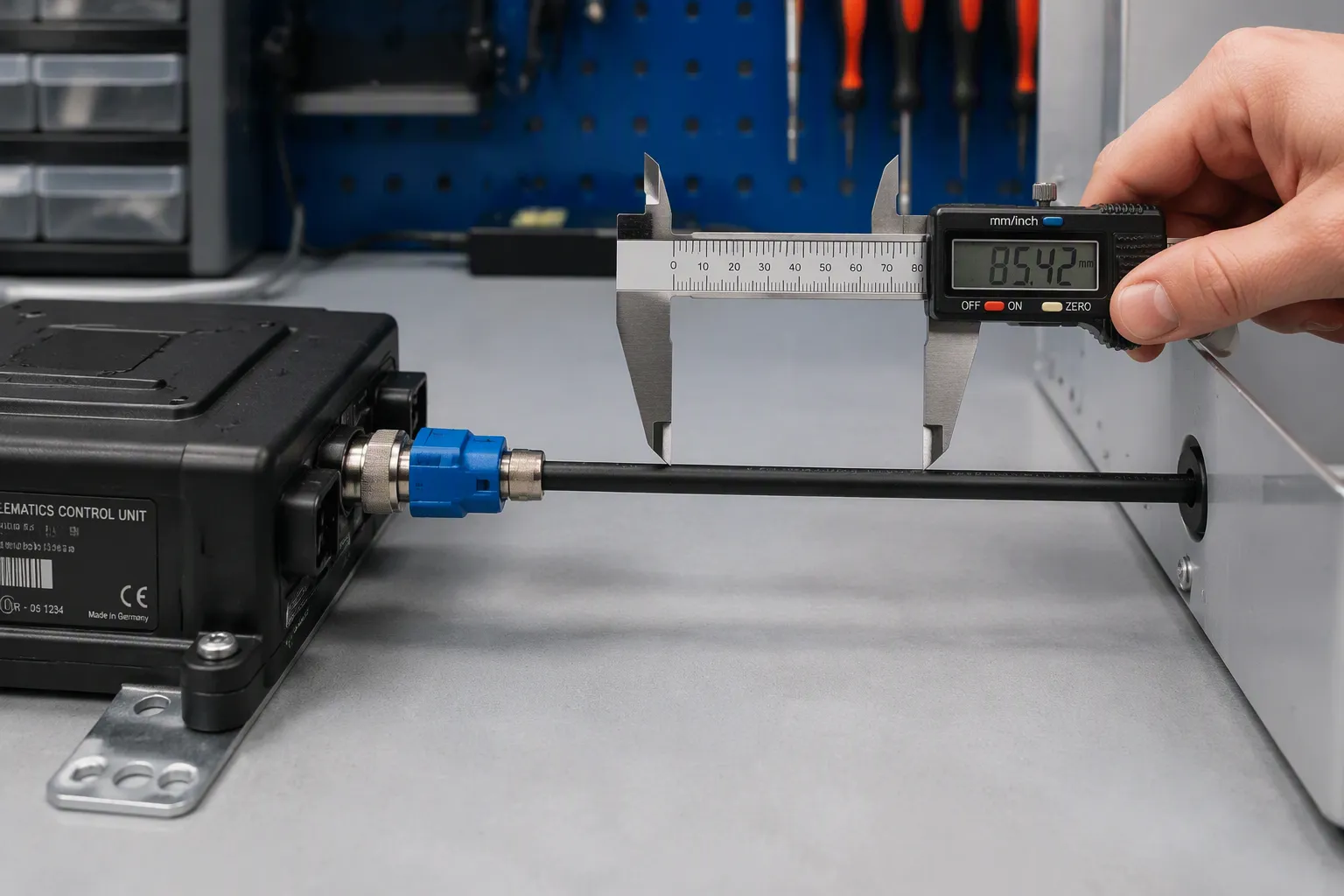
You choose a straight FAKRA connector when the installation provides enough rear clearance. The cable must exit directly from the device without an immediate turn. This condition exists when the module sits away from enclosure walls, dashboard structures, or other nearby components. Measure from the mating face to the nearest obstruction. This tells you if a straight connector fits the available space.
Direct routing simplifies the cable path. You avoid sharp bends near the connector. This reduces mechanical stress on the cable and the termination point. The cable runs straight from the connector to its destination. You do not need extra space for a bend radius immediately after the connection. A straight path also reduces the number of fixing points you need. The cable does not change direction until it reaches the next harness element.
Straight connectors work well in many automotive applications. Telematics units with open space behind them use this orientation. Antenna modules with rear access also use straight connectors. GPS and GNSS receivers often use this style. The direct cable path keeps the routing clean and predictable. You can plan the harness layout with confidence.
Cable routing becomes easier to plan with straight connectors. You measure the distance from the connector to the first fixing point. You route the cable directly along the intended path. This simplicity saves time during harness assembly and installation. It also reduces the chance of routing errors in production.
The straight orientation also helps with cable management in multi-connector assemblies. You organize cables in parallel runs. Each cable exits its connector in the same direction. This creates a neat and serviceable harness layout. You can trace each cable path without confusion.
Easier Inspection and Lower Insertion Loss
Inspection becomes simpler with a straight FAKRA connector. You see the connection point clearly. The cable does not cover the mating interface. You verify the lock mechanism without obstruction. This saves time during quality checks and troubleshooting. Operators can confirm correct mating at a glance.
You can confirm full seating by visual inspection. The audible click provides confirmation. Visual verification adds certainty in production environments. This speeds up the inspection process. Field service technicians also benefit from clear visibility of the connection point.
Straight FAKRA connectors often exhibit better RF performance than right-angle versions. The signal path remains straight through the connector. No sharp turn introduces impedance mismatch or signal reflection. This matters for high-speed data transmission in modern vehicles. Signal integrity depends on maintaining consistent impedance throughout the path.
Automotive systems increasingly rely on high-speed data. Telematics units use LTE and 5G. Infotainment systems stream video and audio. ADAS modules process large data volumes. A straight connector helps maintain signal integrity in these applications. The lower loss directly benefits overall system performance.
The insertion loss of a straight connector is typically lower than a right-angle version. The signal travels a shorter physical path through the connector. Less energy is lost as heat or reflection. This preserves the signal quality at the receiver end. The advantage grows as data rates increase.
You should evaluate the RF requirements of your application. If you need the best possible signal performance, choose the straight orientation when space allows. The difference is small at lower frequencies below 1 GHz. It becomes more significant at frequencies above 3 GHz used by modern automotive systems.
You can explore straight FAKRA options in the FAKRA cable connector category. Visit the FAKRA cable connector category page for available configurations. Confirm your specifications before ordering to ensure compatibility with your application.
When to Choose a Right-Angle FAKRA Connector
Tight Spaces and Immediate Turns
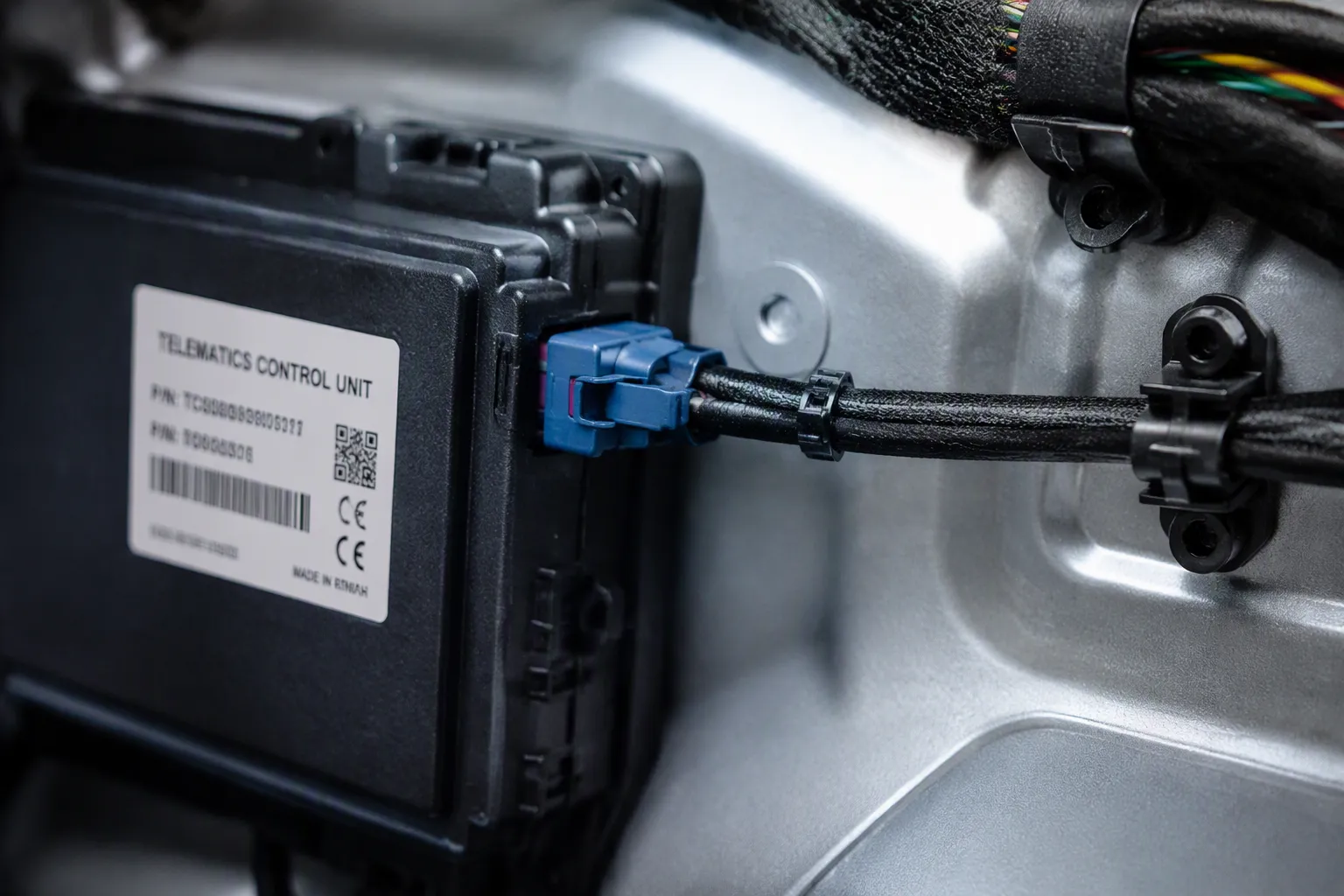
You choose a right-angle FAKRA connector when space is limited. The cable must turn immediately at the connection point. A straight connector would require rear clearance that does not exist in your installation. The right-angle design solves this problem by redirecting the cable 90 degrees at the housing.
Consider a telematics control unit mounted against a firewall. The rear of the module sits inches from the vehicle body. A straight connector would force the cable into the wall. A right-angle connector routes the cable parallel to the module surface. This keeps the cable path clear and avoids pressure on the termination point.
Right-angle connectors help with clean routing and cable management in dense assemblies. You can group multiple cables along a single path. Each cable exits its connector sideways and joins the main harness run. This creates an organized layout that technicians can service easily. The compact footprint also reduces the risk of cable damage during installation.
Vibration-prone locations benefit from right-angle exits combined with proper strain relief. The cable does not pull directly against the mating axis. Instead, it moves with the harness. This reduces stress on the crimp area and extends the life of the assembly. You should still secure the cable at regular intervals to prevent movement.
Dashboard, ECU, and PCB Edge Mounting
Right-angle FAKRA connectors excel in specific mounting locations. Dashboards leave little room behind instrument clusters and infotainment screens. ECU housings often sit flush against other components. Antenna modules and camera modules mount in tight corners of the vehicle body. PCB edges offer no space for a straight cable exit.
A PCB FAKRA connector with a right-angle orientation mounts directly to the board edge. The cable exits parallel to the PCB surface. This saves vertical space inside the enclosure. You can stack boards closer together without interference. The design also simplifies assembly because the cable routes along the board rather than away from it.
Automotive engineers frequently specify right-angle connectors for ADAS modules. These units process high-speed data from cameras and radar sensors. The connector must fit within a compact housing while maintaining signal integrity. A right-angle FAKRA connector meets this requirement when you respect the cable bend radius.
You can explore related right-angle options in the FAKRA antenna adapter category at https://www.fakraconnectors.com/supplier-4108273-fakra-antenna-adapter. This category includes adapters that change connector orientation or interface type. These parts help you solve routing challenges without redesigning the entire harness.
Durability depends on proper installation. A right-angle connector reduces rear clearance needs. It does not remove the requirement for correct impedance, shielding, or termination quality. You must verify the cable exit direction against your drawing or sample. Small differences in exit angle can cause interference with nearby structures. Always confirm the part number and orientation before production.
Right-angle FAKRA connectors serve many automotive applications. They provide a practical solution when space is tight and the cable must turn immediately. Use them near dashboards, ECU housings, antenna modules, camera modules, and PCB edges. The result is a cleaner, more reliable installation.
How to Choose the Right FAKRA Connector: Selection Checklist
Knowing how to choose the right FAKRA connector starts with this checklist. Select the correct FAKRA cable connector for your automotive project by verifying these specifications.
Connector and Cable Specifications
Begin with the connector coding and color. The housing color and mechanical keying must match the mating connector. Standard interfaces offer multiple mechanical and color codings plus a neutral (Code Z) option. Choose the correct gender: male or female.
Next, determine the orientation. Straight works best when rear clearance exists. Right-angle saves space behind dashboards and near ECU housings. Select the cable type and length. Common 50-ohm cables include RG-174, RG-316, and RG-58. The FAKRA connector must be specified for that cable's diameter and shielding.
Confirm the impedance of 50 ohms. Standard connectors support frequencies up to 6 GHz. Ensure the cable assembly meets your target frequency for stable signal performance. Specify shielding requirements based on the application environment.
Note all remaining parameters: application (GPS, LTE, 5G, telematics), mating connector interface, installation space dimensions, quantity required, and include a drawing or sample photo for verification. These details prevent mismatches during production. Each parameter must be confirmed before ordering. No single connector fits all applications.
Application and Installation Checks
After selecting basic specifications, evaluate the installation environment. The table below highlights key differences between straight and right-angle FAKRA connectors.
Consideration | Straight FAKRA Connector | Right-Angle FAKRA Connector |
|---|---|---|
Spatial constraints | Less effective behind dashboards | Saves space behind dashboards |
Crimp difficulty | Easier to crimp | Slightly harder to crimp |
Signal loss | Lower signal loss | May introduce marginal signal loss |
For high-speed data transmission, a straight FAKRA connector typically provides better RF performance. Right-angle connectors suit tight spaces but require careful bend radius management.
Choose sealed variants for exposed areas such as antenna bases or exterior cameras. Use automotive-grade connectors rated for temperature extremes and vibration. Always test a sample assembly before production runs. These connectors differ in spatial constraints and signal integrity. Confirm your choice with a physical sample and review the installation space. Your final selection depends on the drawing, sample, and mating connector.
Frequently Asked Questions
Right-Angle vs Straight Performance
Is a right-angle FAKRA connector better than a straight connector?
Neither orientation is universally better. Your choice depends on installation space and routing needs. A straight FAKRA connector works best when rear clearance exists and you want direct cable routing. It also simplifies troubleshooting because the connection point stays visible. A right-angle design suits tight spaces behind dashboards or near ECU housings. The cable turns immediately instead of requiring space behind the module. A useful technical fact: right-angle connectors reduce vertical height by approximately 35 percent compared to straight versions. This savings proves critical in dense automotive assemblies where every millimeter matters.
Does connector orientation affect signal quality?
Yes, orientation can affect signal quality, especially at high frequencies. A straight design typically provides lower insertion loss because the signal path has no sharp turn. Right-angle versions may introduce marginal impedance variation at the bend point. However, modern FAKRA connectors maintain reflection coefficients below -20 dB up to 6 GHz even in right-angle variants. This means the difference remains negligible for most automotive applications below 3 GHz. For high-speed applications above 4 GHz, you should evaluate the specific connector datasheet to confirm performance meets your system requirements.
Customization and Signal Quality
When should you choose a straight FAKRA cable connector?
Choose a straight FAKRA cable connector when your installation provides enough rear clearance for the cable to exit directly. This simplifies routing and reduces mechanical stress on the cable near the termination point. Straight designs suit GPS modules, AM/FM receivers, and telematics units with open rear space. You also get easier inspection because the connection point remains clearly visible. The direct cable path also reduces the number of fixing points needed along the harness. This orientation supports straightforward harness layout and reliable long-term signal performance.
Can LEADSIGN customize straight or right-angle FAKRA cable assemblies?
Yes, LEADSIGN supplies custom FAKRA cable assemblies in both straight and right-angle orientations. You specify connector coding, cable type, length, and shielding for your application. For high-speed data applications, LEADSIGN maintains 50-ohm impedance control and uses shielded coaxial cables with low signal attenuation. This preserves signal integrity throughout the assembly. You can also request Power over Coax support for antenna applications. Contact LEADSIGN with your drawing or sample for a custom RF cable assemblies solution tailored to your automotive project.
Choose a straight fakra connector when you have rear clearance, need easy inspection, and want strong RF performance. Choose a right-angle fakra connector for tight spaces, immediate 90-degree turns, and dense routing. This rule guides most automotive installations.
Orientation is only one factor. Impedance, shielding, cable type, coding, and termination quality matter just as much. A connector cannot fix a poor cable or weak crimp. For high-speed links, every part of the signal path must work together.
Contact LEADSIGN for straight or right-angle fakra connectors and custom rf cable assemblies. Visit https://www.fakraconnectors.com/contactus.html to discuss your project.
FAQ
Is a right-angle FAKRA connector better than a straight connector?
Neither style is universally better. A right-angle FAKRA connector saves space behind dashboards and ECU housings. A straight connector works well when rear clearance exists. Your choice depends on installation space, routing direction, and cable bend radius. Verify orientation with a drawing or sample before production.
Does connector orientation affect signal quality?
Orientation can affect signal quality at high frequencies. A straight connector typically provides lower insertion loss because the signal path has no sharp turn. A right-angle version may introduce marginal impedance variation at the bend. Modern FAKRA connectors maintain stable performance up to 6 GHz. Evaluate your specific datasheet for high-speed applications.
When should I choose a straight FAKRA cable connector?
Choose a straight FAKRA cable connector when your installation provides enough rear clearance. The cable exits directly from the module without an immediate turn. This simplifies routing and reduces mechanical stress near the termination point. You also get easier inspection because the connection point stays visible. This orientation suits GPS, AM/FM, and telematics units.
Can LEADSIGN customize straight or right-angle FAKRA cable assemblies?
Yes, LEADSIGN supplies custom FAKRA cable assemblies in both orientations. You specify connector coding, cable type, length, and shielding for your automotive application. LEADSIGN maintains 50-ohm impedance control and uses shielded coaxial cables. You can also request Power over Coax support. Contact LEADSIGN with your drawing or sample for a tailored solution.
See Also
A Complete Guide To Understanding Fakra Connectors And Their Uses
Everything You Need To Know About Fakra Male Connectors
Fakra Connectors Explained: Benefits, Uses, And Installation Tips Guide
Making Fakra Cables Simple: A Complete And Easy Guide
Fakra Connectors Guide: Fundamentals, Varieties, And Practical Applications Explained