What Is an HSD to USB Cable for Automotive Infotainment Systems

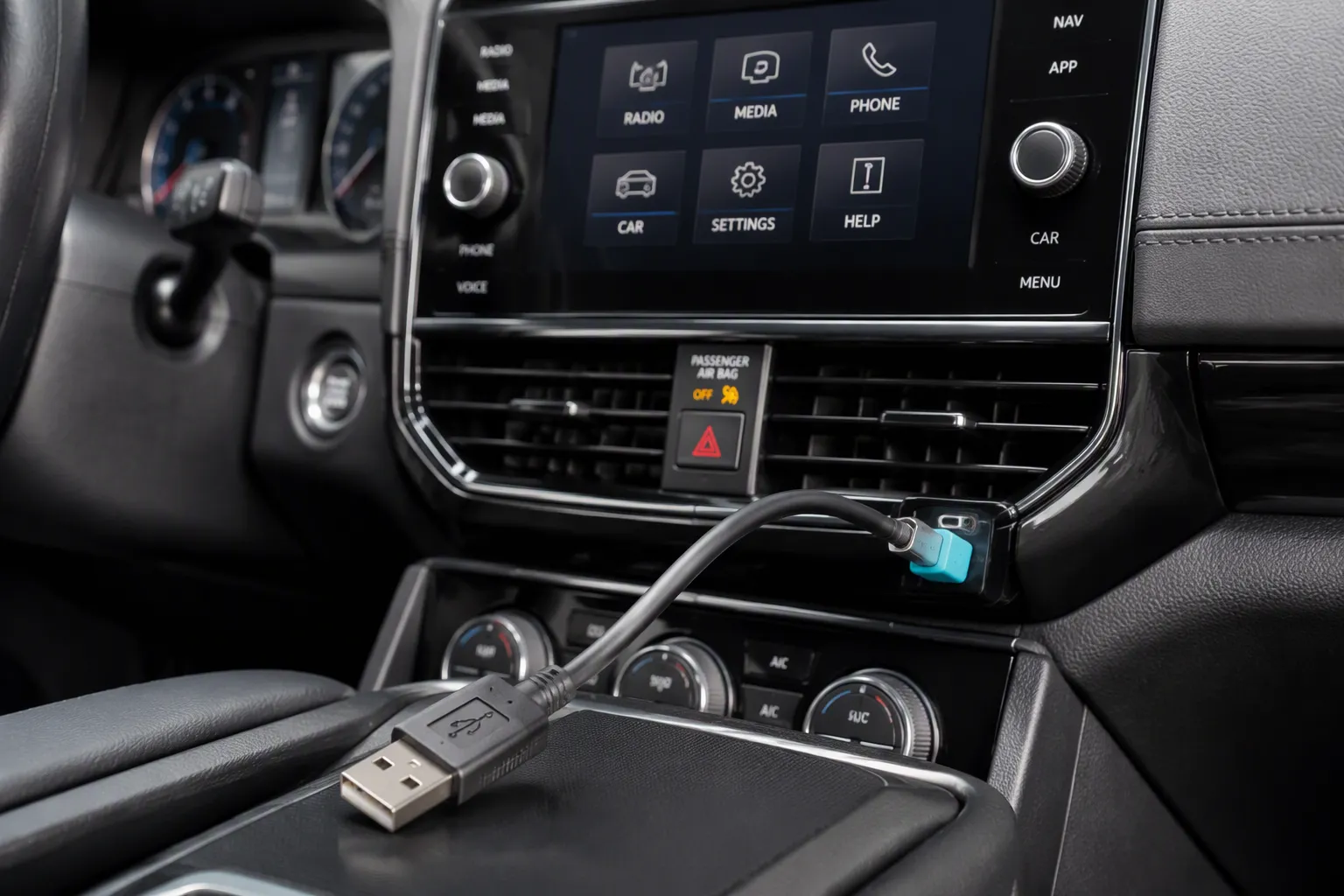
An HSD to USB cable automotive assembly is a specialized component. It converts High-Speed Data (HSD) signals to standard USB connectivity for in-vehicle infotainment systems. LEADSIGN supplies these assemblies for automotive engineers, infotainment designers, and OEM/ODM teams. As the infotainment market grows from USD 28.51 Billion in 2026 toward USD 38.35 Billion by 2031, reliable data links matter more than ever. HSD and USB are not interchangeable connectors. You need a compatible cable assembly that matches the correct HSD code, pinout, USB type, impedance, and vehicle system design. This article gives you a clear, non-technical explanation of what the cable is, why it is used, how it works, and how to select the right one.
Key Takeaways
An HSD to USB cable connects high-speed data ports to standard USB devices in your car.
You must match the HSD code, pinout, and USB type to your vehicle system for proper function.
These cables power infotainment, smartphone connections, and diagnostic tools in vehicles.
Shielding and rugged design protect data from interference and harsh conditions.
LEADSIGN offers custom HSD cable assemblies with OEM and ODM support for your specific needs.
What Is an HSD High-Speed Data Connector?
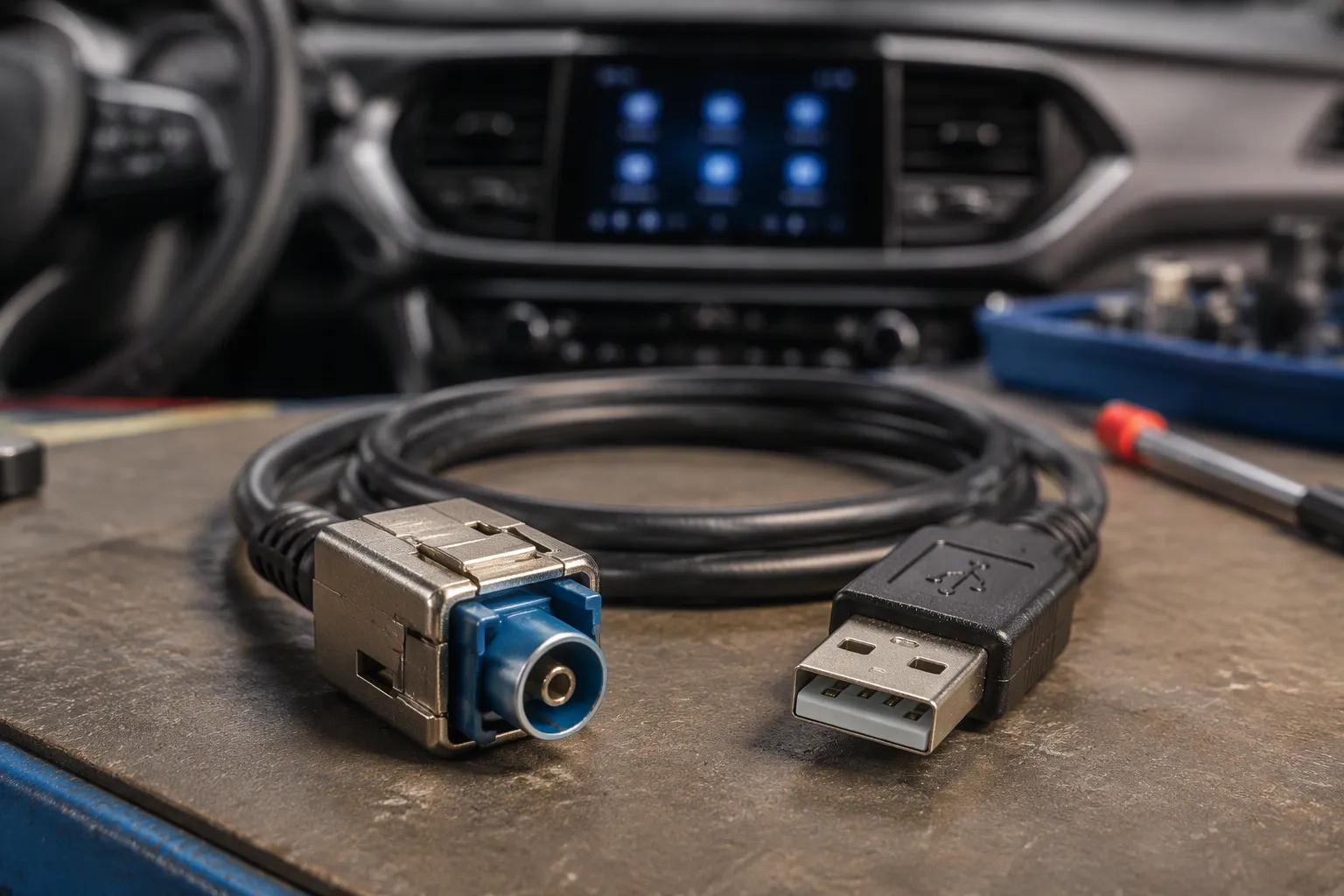
HSD and USB Explained
An HSD high-speed data connector is a shielded, impedance-controlled connector system. Engineers design it for automotive high-speed data transmission. The system carries high bit-rate data streams reliably inside a vehicle. HSD connectors support many protocols, including LVDS, Ethernet, USB, IEEE 1394, GVIF, and USB 2.0. They meet industry standards such as LV214, USCAR 2 REV 5, and IDB 1394 Automotive Specification. The table below summarizes key specifications for selected HSD products.
Specification Category | Details |
|---|---|
Data Rate | Up to 6 Gbps (HSD); up to 1 Gbps (HSL) |
Frequency | Up to 6 GHz |
Supported Protocols | LVDS, Ethernet, USB, IEEE 1394, GVIF, MOST, SerDes, GMSL1, FPD-Link III/IV, APIX2, USB 2.0 |
Industry Standards | LV214, USCAR 2 REV 5, IDB 1394 Automotive Specification, RoHS compliant |
Key Features | Fully shielded; supports various wire types; sealed and unsealed applications; extensive PCB header portfolio |
Connector Types | HSD Wire-to-Board, HSD Wire-to-Device |
Applications | Legacy infotainment, dashboard/touch screens, HD screens, Bluetooth, USB connections, dual band WIFI, surround cameras |
USB stands for Universal Serial Bus. It is the universal standard for device connectivity. You use USB to connect smartphones, media devices, diagnostic tools, and firmware-update equipment. An HSD to USB cable automotive assembly bridges these two domains. It carries USB differential pairs through a rugged HSD interface. LEADSIGN supplies verified formats such as 4-pin HSD Z Code to USB 2.0 Type-A and HSD Z Code to Mini-B USB. These formats apply for selected product configurations. Always verify the exact part number before you design your system.
The Role of the Cable Assembly
The cable assembly acts as a physical bridge between an HSD port and a standard USB device. A passive HSD-to-USB cable contains one HSD connector, four conductors (VBUS, GND, D+, and D−), and a USB Type-A plug or receptacle. It carries raw USB differential pairs with no logic or voltage regulation. This design offers low latency, zero driver dependency, and wide temperature tolerance from −40°C to +105°C for selected products.
HSD cables do not convert protocols. They carry raw USB differential pairs (D+ and D−) alongside power and ground—but only when the host side already implements USB signaling at the HSD port level. There is no built-in USB controller or PHY chip in basic passive HSD-to-USB cables.
You will find HSD connectors and cable assemblies in many vehicle systems. Common applications include:
Automotive electronics and displays
Digital infotainment electronics
LVDS transmissions
Cameras
USB connections (including USB 1.0, 2.0, 3.0)
IEEE 1394 (FireWire)
A compatible cable assembly must match the correct HSD code, pinout, USB type, and impedance. The HSD connector and cable assembly work together to deliver high-speed data transmission. For selected HSD product families, impedance is 100 ohms and the frequency range extends from DC to 6 GHz. These ratings depend on the exact part number. You should confirm every electrical specification against your vehicle system design before production.
Why Automotive Systems Use HSD to USB Cables
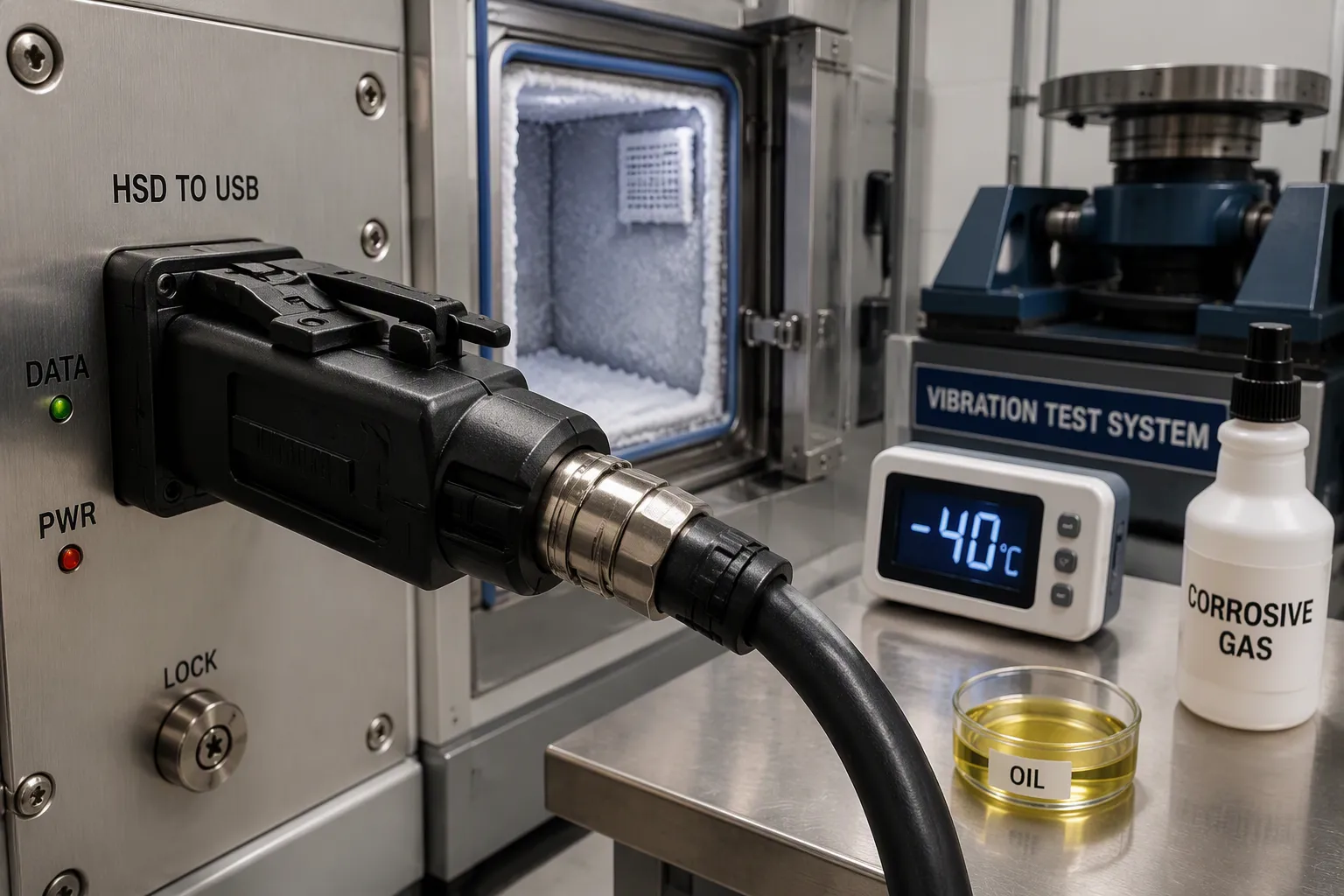
Reliability in Demanding Environments
Vehicles expose every component to harsh conditions. Extreme temperatures, moisture, and chemical exposure can degrade ordinary cables. Automotive electrical wire must withstand these factors without compromising safety and performance. UL Solutions tests automotive cables and connectors across a wide temperature range, typically from -40°C to 125°C, and up to 250°C depending on the application. For selected HSD products, the temperature range reaches -40°C to +105°C. You also face vibration, humidity, oil, acid, alkali, and corrosive gas exposure. These conditions demand a rugged design.
HSD connectors meet this challenge through robust mechanical properties. Primary and secondary locks keep the connection secure. A crimp connection provides reliable electrical contact. High cable retention force prevents disconnections under vibration. High coding efficiency eliminates misconnections. Standards such as SAE/USCAR-2 and ISO 8092 define connector-system requirements for automotive environments. Terminal retention strength prevents backing out under vibration. Connector Position Assurance (CPA) or secondary lock mechanisms ensure full seating. Sealing requirements depend on mounting location, with IP-rated sealed connectors vital for external applications.
The table below summarizes key environmental factors and how UL Solutions addresses them.
Environmental Factor | Evidence from UL Solutions |
|---|---|
Temperature extremes | Tested from -40°C to 125°C, up to 250°C depending on application |
Environmental exposure | Testing conducted as part of performance evaluation |
Flame propagation | Included in testing services |
Mechanical durability | Assessed under operating and exposure conditions |
Chemical resistance | Testing conducted for automotive cables and connectors |
Electrical characteristics | Supports reliable wiring, power, and high-speed data interconnections |
Seamless Data Transfer and Integration
HSD connectors serve where electronic modules exchange high-speed differential data. Typical links include camera-to-control-unit connections, control-unit-to-display links, digital instrument clusters, infotainment systems, USB connections, and other compatible automotive data interfaces. The connector provides the mechanical and shielded transition between the module and the differential cable. This design ensures your automotive USB connection stays stable.
An HSD to USB cable automotive assembly supports USB 1.0, 2.0, and 3.0. The USB 3.0 version handles higher data rates than earlier standards. For USB 2.0 High Speed, data transfer rates reach up to 480 Mbps. High-speed data transmission supports data rates up to 6 GHz for selected cable types. This capability makes HSD suitable for high-performance automotive and consumer electronics applications.
EMI shielding protects your usb data transmission from interference. Shielding techniques operate at enclosure, module, and PCB levels. Braided sleeves offer flexibility and mechanical durability. Foil sleeves provide 100% coverage and block high-frequency EMI. Copper shielding delivers superior conductivity and corrosion resistance. These methods keep your signal clean.
You will find HSD connectors in infotainment, media playback, smartphone connectivity, navigation, telematics, and firmware updates. In-vehicle Ethernet mainly applies in the ADAS domain. It also serves the IVI infotainment domain, including displays and front-mounted navigation systems. Another key area is the Netlink system, such as T-Box and high-speed gateway.
LEADSIGN supplies automotive-focused HSD cable assemblies with OEM and ODM support. A compatible cable assembly must match your vehicle architecture. You should verify the final pinout and electrical specification against your system design. This approach ensures reliable performance across automotive systems.
HSD to USB Cable Automotive Applications
In-Car Infotainment and Media
You will find HSD to USB cable automotive assemblies in many places inside a vehicle. They connect an infotainment module, a dashboard interface, or a USB port to a media device. HSD connectors provide connectivity solutions for automotive infotainment modules, cameras, consumer equipment ports, and display devices. The HSD product portfolio handles high-speed data transmission up to 6 GHz. This makes HSD ideal for high-bandwidth protocols.
A typical setup links the head unit to a USB port in the center console. The cable carries USB differential pairs through a shielded HSD interface. Your connection depends on the vehicle architecture and the HSD pinout. You must match the correct HSD code and pin assignment before installation. LEADSIGN supplies an HSD USB cable assembly for automotive infotainment systems. These assemblies support music playback, media streaming, and device charging.
Do not confuse an HSD-to-USB cable with an HSD LVDS cable. The HSD-to-USB cable handles USB-related connectivity. The HSD LVDS cable carries differential video or display data. You also should not confuse HSD-to-USB cables with FAKRA coaxial cables. FAKRA connectors serve antenna and RF signals. HSD connectors serve high-speed data links. Each connector type has a distinct role in automotive systems.
Smartphone, Navigation, and Service Equipment
Your smartphone connects through the USB interface in the vehicle. The cable assembly links the phone to the infotainment head unit. This connection supports navigation apps, media playback, and hands-free calling. Mini USB interfaces ensure compatibility with various portable electronic devices. The harness design ensures signal integrity and provides excellent anti-interference performance.
Service technicians also use these cables. A diagnostic device or firmware-update device connects through the same USB port. The HSD connector system transmits USB signals, LVDS camera signals, and IEEE 1394 signals. This makes HSD suitable for digital infotainment applications, head-up displays, and telematics. You will find HSD connectors in high-speed in-vehicle entertainment systems, cameras, and sensors.
A compatible cable assembly must match your vehicle design. You should verify the final pinout and electrical specification. LEADSIGN offers OEM and ODM customization for automotive USB applications. This support helps you match the right connector to your specific infotainment system.
How It Works and Key Selection Factors
Signal Conversion and USB 2.0 Type-A or Mini-B
An HSD cable carries high-speed differential data. The cable assembly adapts this signal to a USB interface. A passive HSD-to-USB cable contains one HSD connector, four conductors, and a USB plug. It carries raw USB differential pairs with no logic or voltage regulation. This design offers low latency and wide temperature tolerance.
You must select the right USB connector type for your system. LEADSIGN supplies HSD Z Code to USB 2.0 Type-A and HSD Z Code to Mini-B USB formats for selected configurations. A usb 3.0 cable assembly requires additional conductors beyond a single four-contact HSD connector. One solution uses dual HSD connectors, with one handling USB 2.0 data and power and the other handling SuperSpeed pairs. Always verify the final pinout and electrical specification against your vehicle system design.
HSD (High-Speed Data) Connector Codes and Pinouts
HSD connectors use a mechanical keying system with color coding. The system employs a 14 color-coded scheme linked to coding letters. Each coded connector matches a distinctive housing color. This coding identifies the application function and prevents assembly line errors. However, the function assigned to each port depends on the vehicle manufacturer. The same color may serve different functions across platforms. Color alone cannot confirm USB capability. Blue does not by itself indicate USB 3.x.
You must match the correct HSD pinout for your application. The table below shows common pin configuration variants.
Variant | Description |
|---|---|
4 Pin HSD | Two differential signal pairs in a square pattern |
Dual 4 Pin HSD | Two 4-pin ports in a single housing |
4+2 Pin HSD | 4 signal pins plus 2 contacts for power or ground |
4+4 Pin HSD | 4 signal pins plus 4 additional contacts |
4+8 Pin HSD | 4 signal pins plus 8 additional contacts |
For selected HSD product families, impedance is 100 ohms and the frequency range extends from DC to 6 GHz. These ratings depend on the exact part number. You should confirm every electrical specification before production.
Cable Type | Primary Use | Key Consideration |
|---|---|---|
HSD-to-USB 2.0 Type-A | USB device connectivity | Match HSD code and pinout |
HSD-to-Mini-B USB | Portable device connection | Verify connector gender |
Standard USB cable | Consumer electronics | Not rated for automotive vibration |
HSD LVDS cable | Differential video or display data | Not for USB signals |
Troubleshooting and LEADSIGN Supplier Solutions
Common USB Detection and Data Issues
When your automotive USB device fails to connect, several causes are possible. The table below lists common problems and their explanations.
Cause | Explanation |
|---|---|
The head unit acts as USB host and provides VBUS. If enumeration fails, the device may not start even when the physical connection seems fine. | |
Power/VBUS issues | Overcurrent draw can cause shutdown, prevent proper connection, or trigger disconnection before enumeration completes. |
Suspend/resume problems | If not handled correctly, devices may fail to wake, disconnect after sleep, or become unresponsive. |
Incorrect HSD code or pinout | A mismatched hsd pinout prevents signal transfer. |
Loose connector | Incomplete locking causes intermittent connection. |
Excessive cable length | Long hsd cables degrade signal quality. |
Shielding/EMI | Poor shielding allows interference to disrupt data. |
Wrong USB connector type | A mismatched connector cannot mate properly. |
A cable cannot solve vehicle-side compatibility if the infotainment system does not support the required USB protocol, power level, device type, or pin assignment. You must verify the final pinout and electrical specification against your vehicle system design.
Custom HSD Cable Assemblies for OEM and ODM
LEADSIGN supplies automotive-focused HSD cable assemblies with pre-terminated solutions. The R&D team in Shenzhen, China, specializes in custom harness cables, coaxial cables, and molding services. You can customize connector types, cable lengths, shielding, jacket materials, and pinouts. Testing includes 100% continuity and wiring validation, Hi-pot and insulation resistance testing, and impedance checks. Mating durability reaches at least 25 cycles for selected HSD products. Lead time is typically 10–15 working days with all procedures completed in-house. LEADSIGN holds IATF16949:2016 certification. These automotive high-speed cable assemblies support LVDS, USB, and Ethernet over HSD. For selected product configurations, hsd connectors use 100-ohm differential impedance and foil plus braid shielding. A compatible cable assembly must match your specific application. Contact LEADSIGN to discuss your OEM or ODM requirements.
An HSD to USB cable automotive assembly is a specialized component that enables reliable device connectivity in your infotainment systems. You must always match the correct HSD code, pinout, connector type, impedance, shielding, and your vehicle system design for peak performance. LEADSIGN also supplies automotive HSD connectors with OEM/ODM customization, pre-terminated solutions, and application-specific connector matching. The automotive communication technology market grows from USD 27.4 billion in 2025 to USD 110.8 billion by 2035, a 15.0% CAGR.
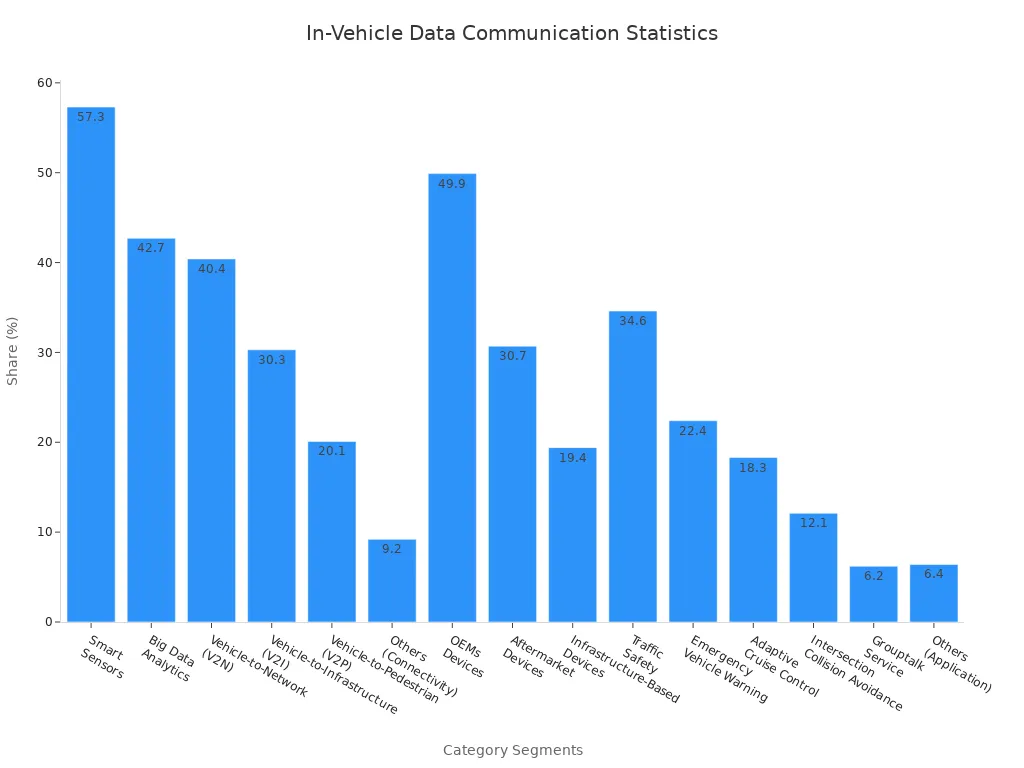
As vehicles become more connected, HSD connectors and HSD cable assemblies will remain essential for safe, reliable data communication in every infotainment system.
FAQ
What does an HSD to USB cable do?
It carries high-speed differential data from an HSD port to a standard USB device. The cable assembly uses an HSD connector on one end and a USB plug on the other. This setup supports device connectivity in your infotainment system. Always verify the pinout for your vehicle design.
Can I use any HSD cable for my infotainment system?
No. You must match the correct HSD code, pinout, connector gender, and impedance. Each HSD variant serves a specific function. A mismatched HSD assembly prevents signal transfer. Verify the final specification against your vehicle architecture before installation.
What should I check before selecting an HSD assembly?
Check the HSD code and color, connector gender, USB type, pinout, data rate, and power needs. Confirm cable length, bend radius, shielding, and temperature range. For selected products, HSD impedance is 100 ohms. OEM and ODM customization is available for your specific application.
Why does my device charge but not transfer data?
A charge-only connection often points to a pinout mismatch or a data line fault. Your HSD assembly may carry power but not the differential pairs. Check the HSD code and wiring assignment. The infotainment system must also support the device protocol.
Does LEADSIGN offer custom HSD cable assemblies?
Yes. LEADSIGN supplies automotive-focused HSD cable assemblies with OEM and ODM support. You can customize HSD codes, connector types, cable lengths, and shielding. Pre-terminated solutions are available. Mating durability reaches at least 25 cycles for selected HSD products. Contact LEADSIGN to discuss your requirements.
See Also
Key Benefits Of HSD Connectors For Automotive Infotainment Systems
Improving Automotive HSD Systems Through USB Connectivity Integration
Boosting Vehicle Performance Using HSD To USB 2.0 Cables
Optimizing Infotainment By Unlocking HSD To USB Cable Potential
Major Advantages Of HSD Connectors Within Automotive Systems