Understanding Vehicle Cable Safety and Performance Testing

Intro: One Untested Cable Can Take Down an Entire Safety System
Vehicle cables carry critical signals – speed control, clutch engagement, braking, gear shifting. If a cable fails unexpectedly, the result can be electrical malfunction, loss of control, or even a crash. In military and aerospace applications, cable failure is a well‑known risk, which is why rigorous testing is mandatory. The same principle applies to commercial fleets and passenger vehicles.
For repair shops, fleet operators, and harness manufacturers, regular cable testing is not an option – it is a safety and cost‑saving necessity. This guide covers:
The main types of vehicle cable tests (mechanical, environmental, life cycle)
How to perform them correctly
Why testing prevents costly failures
Industry standards (ISO, SAE) and approval processes
1. Types of Vehicle Cable Tests
Test Category | Purpose | Common Methods |
|---|---|---|
Mechanical tests | Evaluate strength, flexibility, fatigue | Tensile pull, bend/flex, abrasion |
Environmental tests | Assess resistance to temperature, moisture, corrosion | Thermal cycling, salt spray, humidity chamber |
Life cycle tests | Predict long‑term durability and wear | Durability cycling, fatigue bending |
🔹 Mechanical Tests
Tensile strength test: Pull the cable until it breaks. Records maximum force (N or kgf). Ensures cable can withstand accidental tugging or vibration without separating.
Flexibility & bend test: Repeatedly bend the cable at a specified radius (e.g., 90° or 180°). Checks for conductor fracture, insulation cracking. Critical for door hinges, trunk lid, and moving suspension areas.
🔹 Environmental Tests
Temperature resistance: Cycle cable from -40°C to +125°C (or higher for engine bay). Inspect for insulation hardening, cracking, or melting.
Moisture & corrosion: Expose cable and terminals to salt spray or high humidity (e.g., 5% NaCl, 48 hours). Evaluates resistance to rust, oxidation, and water ingress – essential for underbody and exterior cables.
🔹 Life Cycle Tests
Durability testing: Subject cable to repetitive mechanical stress (vibration, flexing, tension) simulating years of use. Ensures no premature failure.
Fatigue testing: Repeatedly load and unload the cable until failure. Determines safe service life.
2. How to Perform Cable Testing – Step‑by‑Step
✅ Preparation
Select representative samples – at least 3‑5 from the same batch.
Clean samples – remove oil, dirt, shipping debris.
Calibrate equipment – tensile tester, environmental chamber, multimeter, network analyzer (for data cables).
✅ Execution (example: tensile test)
Mount cable ends in grips, ensuring no slipping.
Apply pulling force at a constant rate (e.g., 50 mm/min).
Record the force at which failure occurs.
Compare with specification (e.g., ISO 6722 minimum pull‑out force).
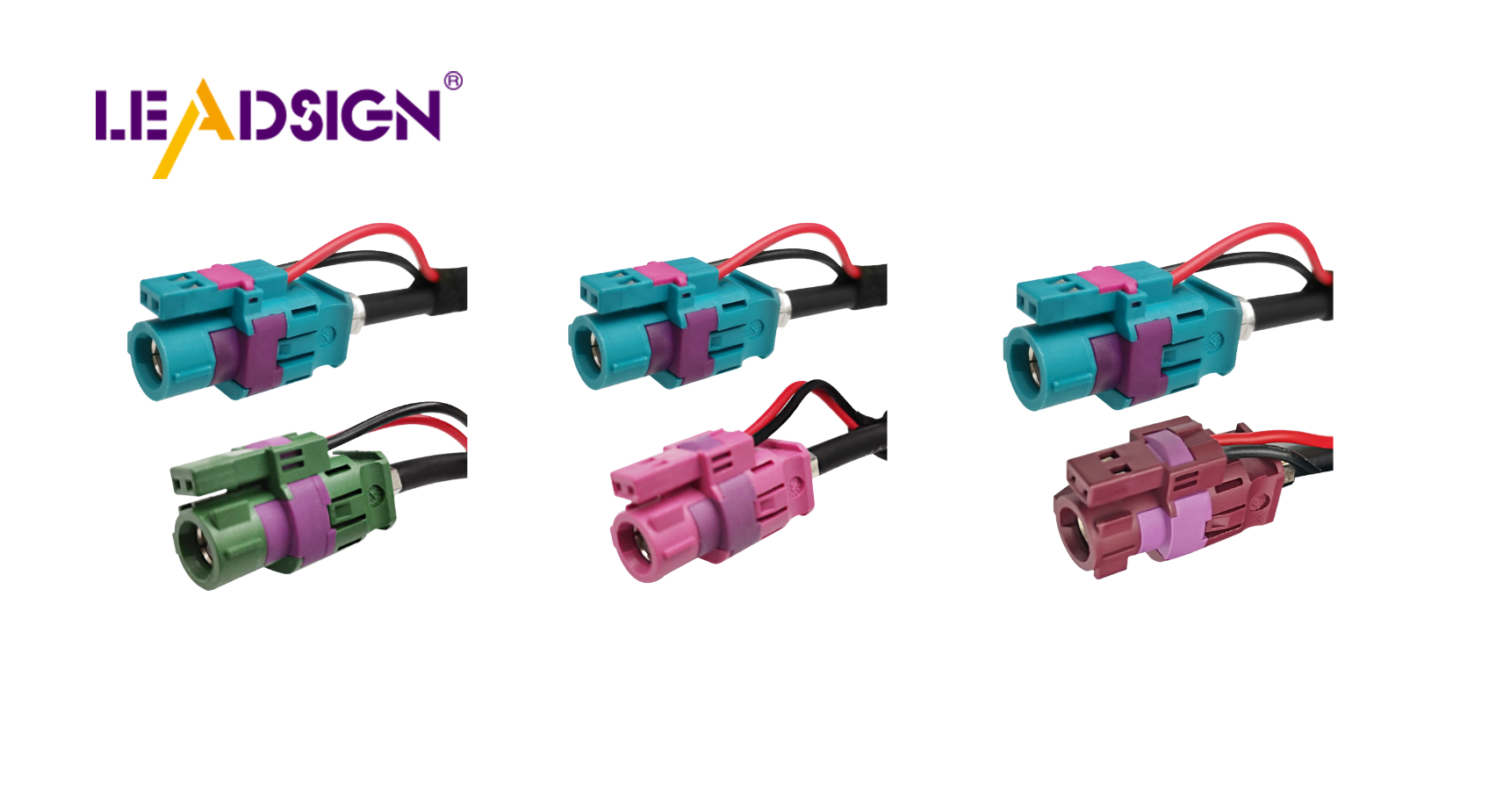
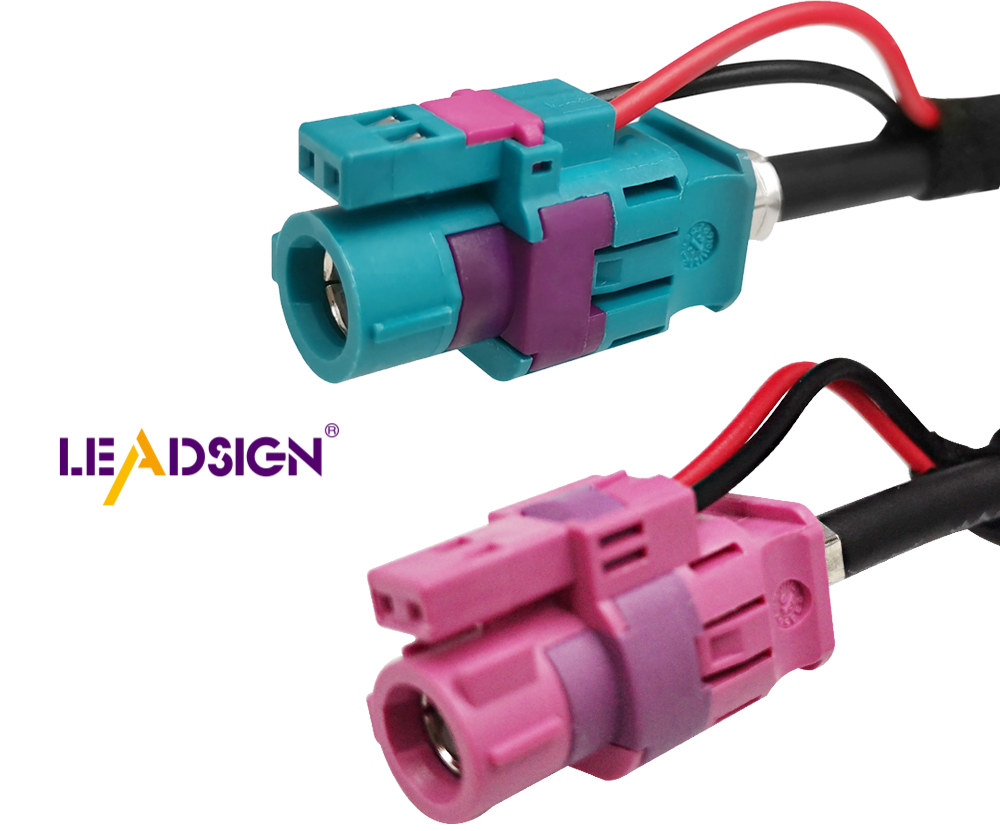
For FAKRA/HSD data cables, also measure insertion loss, return loss (VSWR), and impedance.
✅ Data collection & analysis
Document each sample’s result and failure mode (conductor break, insulation tear, shield damage).
Calculate average, standard deviation, pass/fail rate.
Compare against industry standards or customer requirements.
Pro tip: For high‑speed data cables (FAKRA, HSD, Ethernet), mechanical/environmental tests are not enough. Request a test report from your supplier (LEADSIGN provides full data sheets for every pre‑terminated cable).
3. Why Cable Testing Matters – Real‑World Impact
Benefit | Explanation |
|---|---|
Prevents electrical failures | Detects internal breaks, insulation damage, corrosion before they cause shorts or open circuits. |
Protects people and vehicles | Ensures brake, airbag, and steering signals are not compromised – reduces crash risk. |
Improves performance | Low‑resistance, well‑shielded cables improve efficiency and signal integrity. |
Lowers repair costs | Early detection avoids roadside breakdowns, towing, and expensive module damage. |
Ensures compliance | Meets regulatory and OEM requirements (ISO, SAE, USCAR). |
4. Industry Standards & Approval Processes
🔹 Key standards
Standard | Scope |
|---|---|
ISO 6722 | Road vehicles – 60V and 600V single‑core cables (insulation, temperature, abrasion). |
ISO 19642 | Automotive coaxial and data cables (FAKRA, HSD, Ethernet). |
SAE J1128 | Low‑voltage primary cable. |
USCAR‑2 | Connector performance (vibration, thermal cycling). |
IEC 60529 | IP rating (dust/water ingress). |
🔹 Approval process
Manufacturer submits samples to accredited lab (or performs internal testing to standard).
Tests are conducted according to the relevant standard.
If all criteria are met, a test report or certificate is issued.
Approved cables are marked (e.g., “ISO 6722”).
Why compliance matters: Using non‑tested or counterfeit cables puts your vehicles at risk and may void warranties or cause liability issues.
5. 2026 Trends – What’s New in Cable Testing
Trend | Implication |
|---|---|
4K cameras and 5G telematics | Data cables (Mini FAKRA, HSD Ethernet) now require high‑frequency testing (up to 20 GHz, 28 Gbps). Standard continuity checks are insufficient. |
EV / hybrid | High‑voltage cables (orange) require partial discharge testing and HV insulation checks. Low‑voltage data cables need EMI shielding verification. |
Pre‑terminated cable assemblies | Shops increasingly trust factory‑tested cables (LEADSIGN provides 100% tested) – no field testing needed. |
Fleet maintenance programmes | Regular periodic cable testing (especially on hybrid/EV fleets) reduces unplanned downtime. |
6. Final Recommendations – For Shops & Fleets
If you… | Action |
|---|---|
Manufacture or repair harnesses | Invest in a basic test kit: tensile pull tester, continuity meter, VSWR tester (for data). Or use pre‑tested components. |
Operate a fleet | Schedule periodic visual inspection + continuity check for critical cables (brake, throttle, camera). |
Source FAKRA/HSD cables | Always request a test report (impedance, insertion loss, return loss). LEADSIGN provides these for every pre‑terminated cable. |
Need compliance | Specify ISO 19642 or USCAR‑2 rated cables. Avoid unbranded or no‑data‑sheet products. |
Remember: A cable that passes visual inspection may still have internal damage or impedance mismatch. Testing is the only way to be sure.
Ready to upgrade to pre‑tested, reliable data cables?
[Contact LEADSIGN for FAKRA/HSD test reports] | [Get custom length pre‑terminated cables] | [Download 2026 cable testing guide]
Summary of Changes (vs. original)
Original issue | Improvement |
|---|---|
Basic, consumer‑level explanation | Professional B2B guide with test types, methods, standards. |
No connection to data cables | Added FAKRA/HSD high‑frequency testing. |
No industry standards | Added ISO, SAE, USCAR, IEC. |
No commercial CTA | Added LEADSIGN reference and contact. |
Language generic | Rewritten for repair shops, fleets, and harness manufacturers. |
If you need a shorter LinkedIn version or a printable “Cable Testing Checklist”, please let me know. You can also send me other low‑click articles for the same treatment.
See Also
Maximizing Automotive Data Flow With Innovative Connectors
Boosting Vehicle Efficiency Using HSD to USB 2.0 Cables
Improving Data Transfer: Significance of High-Speed Connectors