Unlock the Power of Wiring Connector Types – Professional B2B Guide (2026)

Intro: The Right Connector Prevents Short Circuits, Overheating, and Costly Callbacks
Understanding wiring connector types is essential for any electrical installation – whether in a vehicle, industrial equipment, or residential wiring. Choosing the correct connector ensures safety, reliability, and long‑term performance. Poor connections lead to loose wires, arcing, overheating, and even fires. This guide covers the three most common connector families (twist‑on, crimp, push‑in), how to select them based on wire gauge, environment, and power requirements, and best practices for safe installation. It also introduces high‑speed data connectors (FAKRA, HSD) for modern automotive and industrial communication networks.
1. Types of Wiring Connectors – Overview
Connector type | Connection method | Typical use | Pros | Cons |
|---|---|---|---|---|
Twist‑on (wire nut) | Screw‑on compression | Residential, commercial building wiring | Low cost, tool‑less | Poor vibration resistance; not for stranded wire |
Crimp | Mechanical deformation (crimping tool) | Automotive, industrial, permanent installations | Gas‑tight, vibration‑resistant, high current | Requires crimp tool; not reusable |
Push‑in (spring clamp) | Spring pressure (tool‑less) | Lighting, low‑power, quick connections | Fast, tool‑less | Lower current rating; not for high vibration |
For automotive and high‑reliability applications, crimp connectors are the professional standard. Twist‑on and push‑in are rarely used in vehicles due to vibration.
2. Matching Connectors to Wire Gauge (AWG)
Wire gauge (AWG) | Recommended connector type | Notes |
|---|---|---|
22‑18 (small) | Crimp (red), push‑in | Sensors, low‑power signals |
16‑14 (medium) | Crimp (blue), twist‑on (orange/yellow) | Lighting, relays, general purpose |
12‑10 (large) | Crimp (yellow), compression lug | High‑current power (fans, pumps) |
Rule: Using a connector designed for a smaller wire gauge on a larger wire results in a loose connection, high resistance, and overheating.
3. Environmental Considerations – Where Will the Connector Be Used?
Environment | Required feature | Recommended connector type |
|---|---|---|
Dry, indoor (residential, office) | Unsealed | Twist‑on, push‑in, crimp (uninsulated) |
Wet, outdoor, underbody | Sealed (IP67/IP69K), corrosion‑resistant | Heat‑shrink crimp, sealed Deutsch, Weather Pack |
High vibration (engine bay, machinery) | Secondary lock / CPA, vibration‑rated | Crimp (ratcheting), Deutsch, FAKRA |
High temperature (engine bay, industrial ovens) | XLPE insulation, high‑temp plastic | Crimp with SXL/GXL wire, Deutsch DT |
Pro tip: For automotive exterior or underbody, never use twist‑on or standard push‑in connectors – water ingress will cause corrosion within months.
4. Power Requirements – Current Rating
Connector type | Typical current capacity | Best for |
|---|---|---|
Push‑in (WAGO, etc.) | 10‑20A | Lighting, low‑power devices (residential) |
Twist‑on (wire nut) | 15‑30A (depends on size) | Branch circuits (solid wire) |
Crimp (butt, ring) | 10‑50A (depending on gauge) | Automotive, industrial, high‑vibration |
Compression lug | 50‑400A | Battery cables, high‑current bus bars |
Always derate for high‑temperature environments. A connector rated for 20A at 25°C may only handle 15A at 80°C.
5. Step‑by‑Step Installation Guide
🔹 Twist‑On Connectors (Wire Nuts)
Strip 10‑12 mm of insulation.
Hold wires parallel, ends even.
Twist wire nut clockwise until tight.
Pull each wire gently – they should not move.
Limitation: Not for stranded wire or high‑vibration.
🔹 Crimp Connectors (Professional Choice)
Strip 5‑8 mm of insulation – no nicked strands.
Insert wire fully into crimp terminal.
Use ratcheting crimper with correct die.
Squeeze until ratchet releases.
Pull test (5‑10 lbs) – wire must not come out.
For outdoor/underbody, seal with adhesive‑lined heat‑shrink.
🔹 Push‑In Connectors (Tool‑less)
Strip 10‑12 mm of insulation.
Push wire straight into connector until it stops.
Gently pull to verify lock.
To release, press the release tab (if available).
Best for: Low‑vibration, indoor, temporary installations.
6. Testing Connections – The Pull Test
After any connection, gently pull each wire to ensure it is secure. A loose wire will cause:
Intermittent operation (lights flicker, device cuts out)
High resistance → overheating → melted insulation
Arcing → fire hazard
Professional practice: Always test continuity with a multimeter before energising the circuit.
7. High‑Speed Data Connectors – A Special Case (FAKRA, HSD)
Traditional power connectors (crimp, twist‑on, push‑in) cannot carry high‑speed data (video, GPS, USB‑C, Ethernet). For automotive communication networks, use:
Connector family | Impedance | Data rate | Typical use |
|---|---|---|---|
FAKRA (coaxial) | 50Ω | Up to 20 GHz (Mini) | GPS, backup camera, 5G antenna |
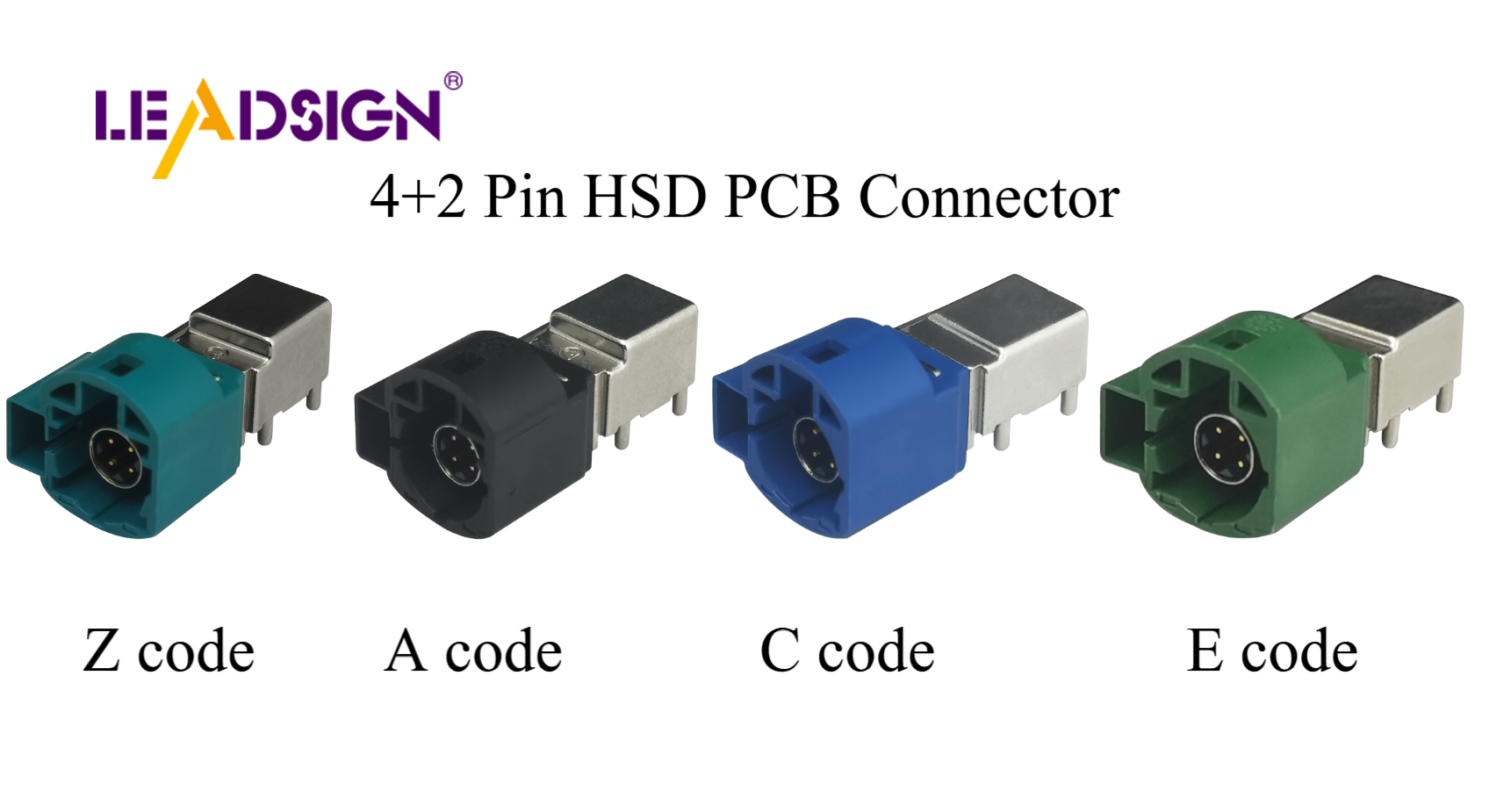
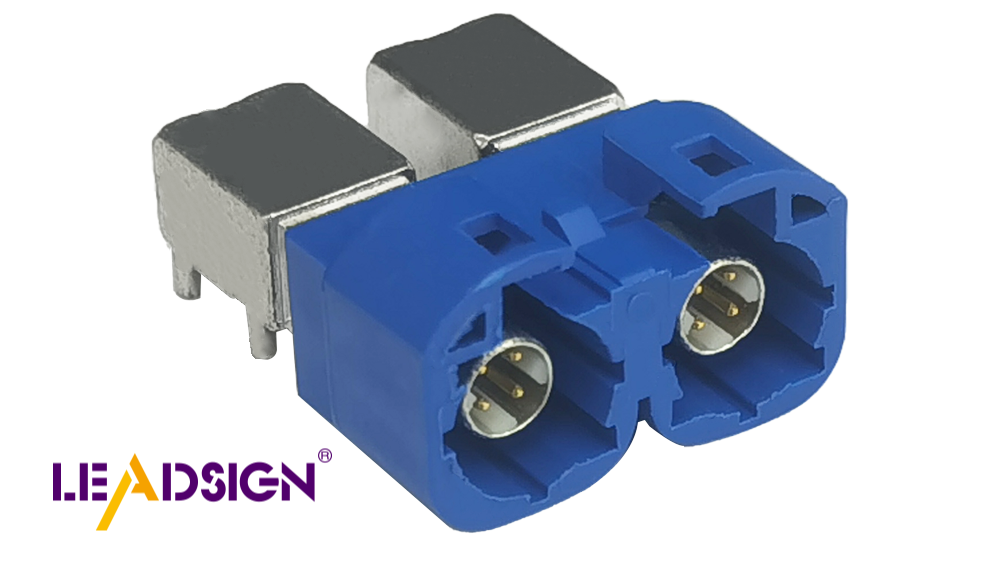
HSD (differential) | 100Ω | Up to 5 Gbps | USB‑C CarPlay, Ethernet, LVDS |
LEADSIGN offers pre‑terminated FAKRA and HSD cables – no field crimping, guaranteed impedance.
8. 2026 Trends – What’s Changing in Wiring Connectors
Trend | Implication |
|---|---|
4K cameras & 5G telematics | Requires Mini FAKRA (20 GHz) – standard crimp connectors not applicable. |
EV / hybrid | High‑voltage (orange) connectors – do not touch. Low‑voltage data lines need double shielding. |
Pre‑terminated cables | Shops prefer LEADSIGN plug‑and‑play FAKRA/HSD cables – no field termination errors. |
Push‑in connectors gaining popularity | For low‑vibration residential and lighting, tool‑less convenience increases. |
9. Why LEADSIGN – For High‑Speed Data Connectors
For power and basic signal, crimp connectors from TE, Molex, or Deutsch are excellent. For high‑speed data, LEADSIGN provides pre‑terminated, colour‑coded FAKRA and HSD cables.
What LEADSIGN offers:
✅ FAKRA (standard & Mini) – all 14 colours, 50Ω, up to 20 GHz, IP67 optional
✅ HSD (USB‑C, Ethernet, LVDS) – 100Ω, locking, up to 5 Gbps
✅ Pre‑terminated cables – any length 0.3m – 20m, no field crimping
✅ Low‑loss, double‑shielded coax – for long runs and EV environments
✅ Bulk pricing – for shops, fleets, and distributors
For your business: When you need a camera, GPS, or USB‑C connection, skip field termination – use LEADSIGN pre‑terminated cables.
Final Recommendations – Quick Selection Guide
Application | Recommended connector type | Source |
|---|---|---|
Residential branch circuit (solid wire) | Twist‑on (wire nut) | Any |
Automotive interior power (lights, switches) | Crimp (butt or spade, unsealed) | Any quality brand |
Automotive engine bay sensor | Crimp (sealed, Deutsch or Weather Pack) | TE / Deutsch |
Automotive underbody power | Heat‑shrink sealed crimp (adhesive‑lined) | Any |
Backup camera (1080p) | FAKRA blue (50Ω coax) | LEADSIND pre‑terminated |
GPS antenna | FAKRA amber | LEADSIGN |
USB‑C CarPlay | HSD USB‑C (100Ω) | LEADSIGN |
Remember: The right connector type, correctly installed, ensures decades of trouble‑free service. Taking shortcuts leads to callbacks, failures, and safety risks.
Ready to simplify your high‑speed data connections with pre‑terminated cables?
[Request a free LEADSIGN FAKRA/HSD sample kit] | [Get bulk pricing]
See Also
Exploring FAKRA Coaxial Cable Connectors' Full Capabilities
An In-Depth Overview of HSD Connector Technology
Enhancing Automotive Performance Using HFM Connectors