Understanding Automotive Wiring Connector Types – Professional B2B Guide (2026)

Intro: The Right Connector Keeps Every System Reliable
Automotive electrical connectors are the critical links between every electronic component in a vehicle – from engine controls to lighting, from sensors to infotainment. Choosing the correct connector type directly affects vehicle performance, safety, and long‑term reliability. A mismatched or poor‑quality connector can cause intermittent failures, voltage drops, and even safety hazards.
In this guide, you will learn:
The importance of selecting the right connector
Basic connector components (housing, terminals, seals)
Common connector types (blade, pin, butt, round, multi‑pin sealed)
Their applications, advantages, and disadvantages
How to identify faulty connectors and proper installation techniques
Why LEADSIGN FAKRA/HSD connectors are essential for high‑speed data systems
1. Why Choosing the Right Connector Matters
Impact area | Consequence of wrong connector |
|---|---|
Vehicle performance | Voltage drop, signal loss, intermittent operation |
Safety | Loose connections can disable lights, airbags, or ABS |
Durability | Wrong material or sealing leads to corrosion, premature failure |
Maintenance cost | Poor connectors cause callbacks, increased labour |
Key insight: A connector that fits mechanically is not enough – it must match electrical requirements (current, impedance, sealing) and environment.
2. Basic Components of a Connector
Component | Function |
|---|---|
Housing | Holds terminals; provides mechanical keying, locking, and environmental protection (dust, moisture). |
Terminals | Metal contacts (male pins / female sockets) that conduct electricity. Material (copper alloy, tin/gold plating) affects resistance and corrosion resistance. |
Seals | Rubber grommets and housing gaskets prevent water and dirt ingress – essential for engine bay and underbody. |
3. Common Automotive Wiring Connector Types
🔹 Blade Connectors (Spade Connectors)
Description: Flat male terminal (blade) inserts into female receptacle. Often unsealed.
Applications: Switches, fuse boxes, relays, interior lighting.
Advantages: Simple, low cost, easy to disconnect.
Disadvantages: Low current rating (typically <20A); not sealed – interior use only.
🔹 Pin Connectors
Description: Round pins (male) and sockets (female) in a plastic housing. Can be sealed or unsealed.
Applications: ECU, transmission, sensors – multi‑pin configurations.
Advantages: High density, can be sealed (IP67), good vibration resistance.
Disadvantages: Requires proper crimp tool; more complex installation.
🔹 Butt Connectors
Description: Cylindrical splice connector that joins two wires end‑to‑end. Crimp or heat‑shrink type.
Applications: Wire repair, extending circuits, general splicing.
Advantages: Simple, permanent splice; heat‑shrink versions are waterproof.
Disadvantages: Not reusable; requires proper crimp tool.
🔹 Round Connectors (Circular)
Description: Circular metal or plastic housing with multiple pins. Often sealed and rugged.
Applications: Engine bay, heavy‑duty sensors, off‑road equipment.
Advantages: Excellent environmental sealing, robust, high pin count.
Disadvantages: More expensive, can be difficult to assemble.
🔹 Multi‑Pin Sealed Connectors
Description: Rectangular or circular sealed housings with many cavities (6, 8, 12, 16+ pins). Examples: Deutsch DT, TE Superseal.
Applications: ECUs, body control modules, safety systems (airbags, ABS).
Advantages: High density, water/dust proof, secondary lock for vibration.
Disadvantages: Requires special tooling; seals must be inspected periodically.
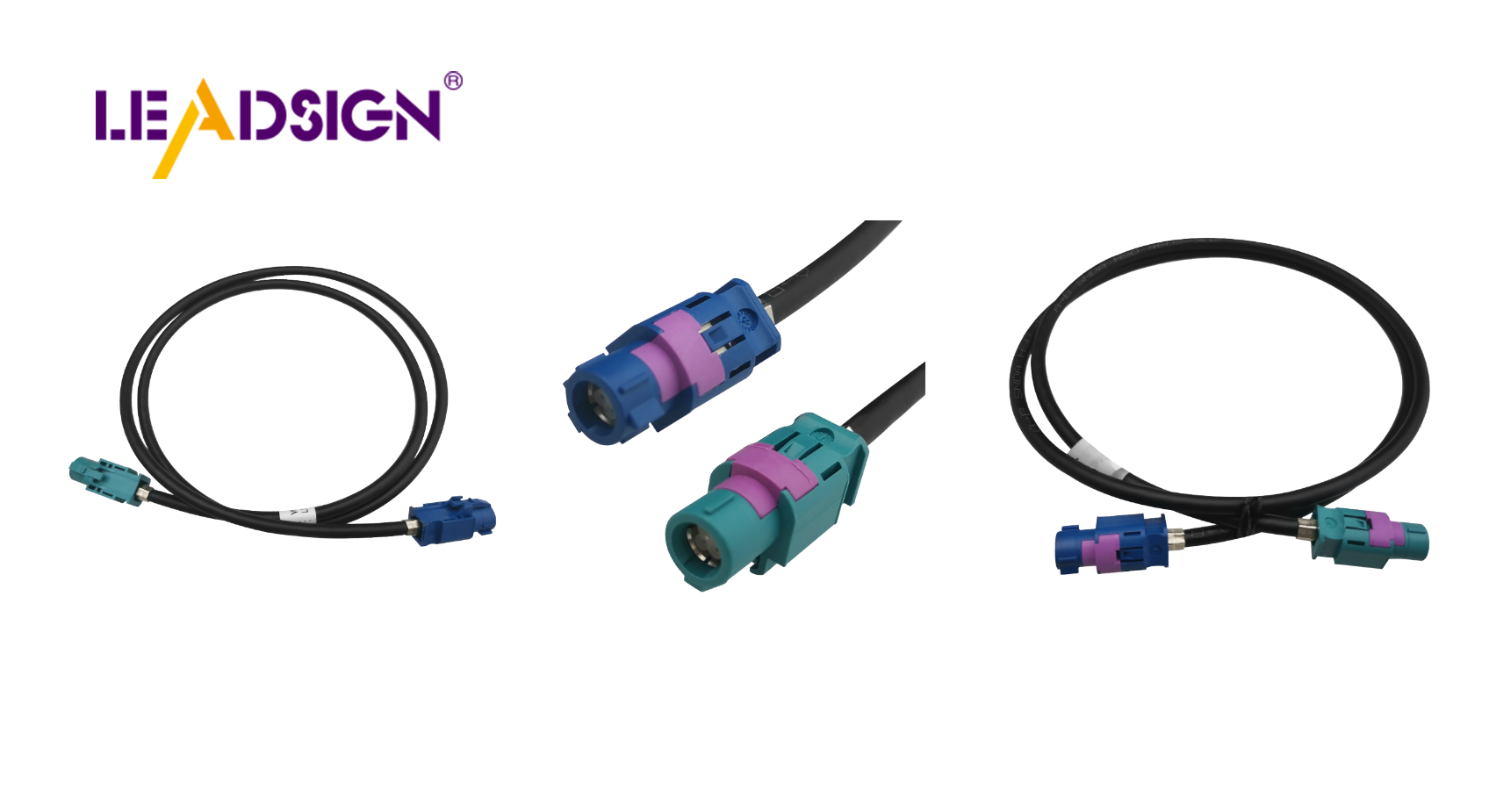
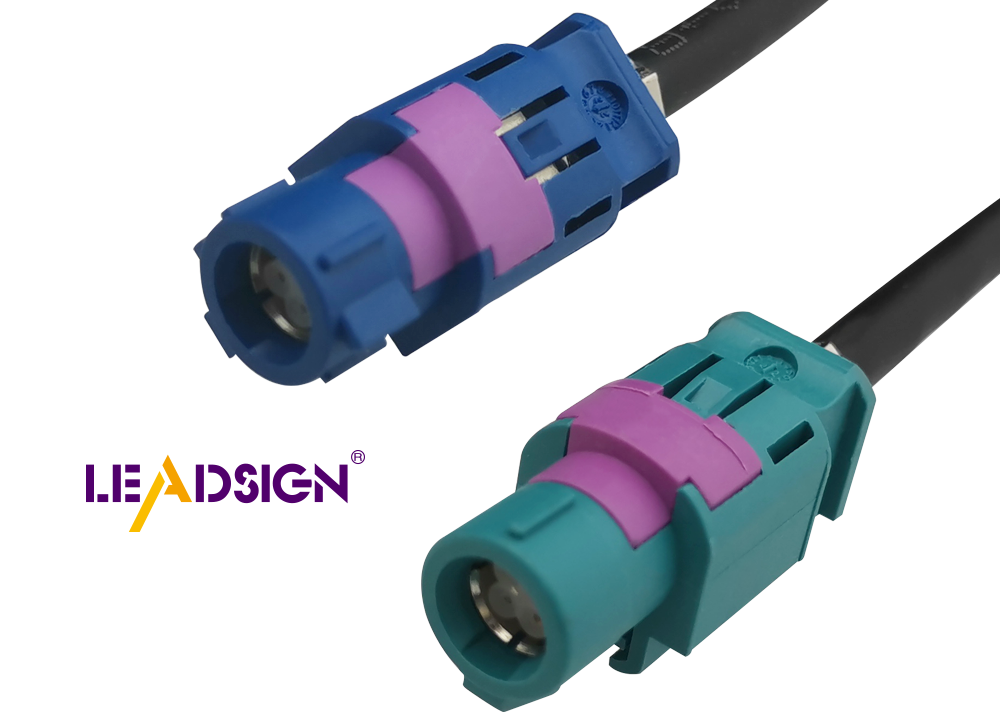
🔹 High‑Speed Data Connectors (FAKRA, HSD)
Description: Coaxial (FAKRA) or differential (HSD) connectors for video, GPS, USB, Ethernet.
Applications: Backup cameras, GPS antennas, 4G/5G telematics, USB‑C CarPlay, ADAS.
Advantages: Impedance‑controlled (50Ω or 100Ω), colour‑coded (FAKRA), double shielding.
Disadvantages: Signal only – not for power; field termination difficult (use pre‑terminated cables).
4. Identifying Faulty Connectors – Symptoms & Testing
Symptom | Possible cause |
|---|---|
Flickering lights, intermittent sensor | Loose terminal, corrosion |
No power to device | Broken wire, open terminal, melted connector |
Burnt smell | Overheating due to high resistance (loose or corroded) |
DTC (diagnostic trouble code) related to communication | Bad CAN / Ethernet connection |
Testing steps:
Visual inspection – look for corrosion (green/white), cracks, melted plastic, bent pins.
Multimeter – check continuity, voltage drop (<0.2V for power circuits), resistance to ground.
Wiggle test – operate circuit while gently moving connector; if fault appears, connector is suspect.
5. Proper Installation – Tools & Steps
✅ Tools required
Ratcheting crimper with correct dies
Wire strippers
Heat gun (for heat‑shrink connectors)
Multimeter
Depinning tool (for terminal removal)
✅ Installation steps
Prepare wires – strip 5‑8 mm insulation, no nicked strands.
Select correct terminal – match wire gauge (red=22‑18 AWG, blue=16‑14 AWG, yellow=12‑10 AWG).
Crimp terminal – use ratcheting crimper; perform pull test (5‑10 lbs).
Insert terminal into housing – push until click; gently tug to confirm retention.
If sealed – ensure rubber seal is correctly positioned.
Engage secondary lock / CPA – audible click.
Test – continuity, voltage drop, function.
For FAKRA/HSD data connectors: Do not field‑crimp – use pre‑terminated LEADSIGN cables.
6. Maintenance & Troubleshooting – Keeping Connectors Reliable
Task | Frequency |
|---|---|
Visual inspection (corrosion, cracked housing, loose locks) | Every 6 months / 20,000 km |
Clean with contact cleaner; apply dielectric grease to seals | Annually or after water exposure |
Perform tug test on critical connectors (battery, camera, ECU) | Every service |
Replace any connector with bent pins, broken lock, or deep corrosion | Immediately |
Pro tip: For exterior or underbody connectors, always use sealed (IP67) types – unsealed connectors will corrode within months.
7. Why LEADSIGN – Your Partner for High‑Speed Data Connectors
For power and basic signal connectors, many brands (Deutsch, TE, Molex) offer excellent products. However, for high‑speed data (FAKRA, HSD), field termination is difficult and error‑prone. LEADSIGN provides pre‑terminated, colour‑coded cables that eliminate this problem.
What LEADSIGN offers:
✅ FAKRA (standard & Mini) – all 14 colours, 50Ω, up to 20 GHz, IP67 optional
✅ HSD (USB‑C, Ethernet, LVDS) – 100Ω, locking, up to 5 Gbps
✅ Pre‑terminated cables – custom lengths 0.3m – 20m, no field crimping
✅ Low‑loss, double‑shielded coax – for long runs and EV environments
✅ Bulk pricing – for shops, fleets, and distributors
For your business: When you install a backup camera, GPS antenna, or USB‑C port, use LEADSIGN pre‑terminated FAKRA/HSD cables – plug‑and‑play, perfect signal integrity, no callbacks.
Final Recommendations – Connector Selection by Application
Application | Recommended connector type | Sealed? | Source |
|---|---|---|---|
Interior lights / switches | Blade or spade | No | Any |
Engine bay sensor (temp, pressure) | Deutsch DT or Weather Pack | Yes (IP67) | TE / Deutsch |
Underbody camera power | Sealed butt (heat‑shrink) | Yes | Any |
GPS antenna | FAKRA amber (50Ω) | Optional | LEADSIGN pre‑terminated |
Backup camera (1080p) | FAKRA blue | Optional | LEADSIGN |
4K camera (truck/bus) | Mini FAKRA blue (low‑loss) | IP67 optional | LEADSIGN |
5G telematics antenna | Mini FAKRA violet | IP67 optional | LEADSIGN |
USB‑C CarPlay | HSD USB‑C (100Ω) | No (interior) | LEADSIGN |
Remember: Understanding connector types is the first step to reliable vehicle electrical systems. Choose wisely, and your repairs will last.
Ready to optimise your connector inventory with pre‑terminated data cables?
See Also
Essential Guide to HSD Connectors in Auto Sector
Significance of Fakra Connectors in Contemporary Cars
Navigating Ford Fakra Connectors