Vehicle Connectors 2026: Which Type for Cameras, Radios & Fleets?

Intro: 240 Connectors Per Car – And 70% of Failures Trace to the Wrong Type
The global automotive connector market reached 8.67billionin2023andisacceleratingtoward8.67billionin2023andisacceleratingtoward15 billion by 2030. A modern vehicle contains an average of 240 connectors – each one critical for power, data, or safety.
But here’s the problem for repair shops and fleets:
Using the wrong connector type causes intermittent camera signals, infotainment resets, and even ADAS faults. In a 2025 survey, nearly 30% of aftermarket electrical callbacks were due to connector mismatch or poor installation.
In this guide, you’ll learn:
The 6 essential connector types for 2026 vehicles
Which connectors work for reverse cameras, car multimedia, and telematics
How to choose, avoid common mistakes, and buy smart
1. Electrical Connectors – The Backbone of Vehicle Wiring
These join wires to wires, wires to boards, or boards to boards. They handle power and low‑speed signals.
Wire‑to‑Wire (e.g., Butt, Bullet, Blade)
Use: Extending wires, repairing broken circuits, adding accessories
Pros: Simple, no soldering, removable
Best for: Lighting, power distribution, basic sensors
2026 note: Choose sealed (IP67) versions for exterior/underbody applications
Wire‑to‑Board
Use: Connecting a wire harness to a PCB (e.g., inside a radio or camera module)
Pros: Secure, often polarized (prevents wrong insertion)
Best for: Aftermarket multimedia units, camera controllers, telematics devices
Board‑to‑Board
Use: Stacking or connecting two PCBs (internal to a device)
Pros: High density, reliable
Best for: Advanced infotainment, ADAS computers – not typically replaced by shops
B2B takeaway: For most shop installations (cameras, radios, sensors), wire‑to‑wire sealed connectors are what you’ll stock most.
2. Data Connectors – Required for Modern Features
With 4K cameras, wireless CarPlay, and V2X, data connectors are no longer optional.
USB (A, C, Micro)
Data rate: Up to 10 Gbit/s (USB 3.2)
Use: Smartphone mirroring, firmware updates, dashcam recording
Automotive grade: Look for locking USB‑C (prevents vibration disconnect)
Ethernet (100BASE‑T1, 1000BASE‑T1)
Use: High‑bandwidth systems (ADAS, infotainment, telematics)
Why it matters: Single twisted pair, lightweight, low EMI
For your products: Newer car multimedia units with Android Auto / CarPlay wireless often use automotive Ethernet for diagnostics and audio streaming.
Pro tip: When installing a backup camera, the video signal typically requires a coaxial (FAKRA) connector – not USB or Ethernet. We supply pre‑terminated FAKRA‑coax assemblies.
3. Power Connectors – Battery & Charging
These handle high current and must be robust, low‑resistance, and heat‑resistant.
Battery Connectors
Type: Heavy‑duty stud, SAE terminal, or proprietary
Function: Connect battery to starter, alternator, and distribution box
Failure mode: Corrosion leads to No‑Start – use dielectric grease and sealed boots
Charging Connectors (EV)
Type 2 (IEC 62196) – AC charging, most common in Europe
CCS (Combo 1 / Combo 2) – DC fast charging
Tesla NACS – Gaining adoption in North America
While your shop may not replace EV charge ports, you will install low‑voltage auxiliary connectors for camera and infotainment systems in EVs – these must be rated for 400V‑800V isolation if placed near HV cables.
4. Specialty Connectors – Sensors, Coax & FAKRA
These are the connectors most directly linked to your product line.
Sensor Connectors
Use: ABS, TPMS, backup radar, LiDAR, camera modules
Features: Sealed, often with secondary lock, color‑coded
Installation tip: Never cut and splice a sensor harness – always replace the whole pigtail or use matching OEM‑style connectors (we supply them).
Coaxial & FAKRA Connectors
Impedance: 50Ω (standard for automotive video/antenna)
Use: GPS, SDARS, 4G/5G antenna, reverse cameras (CVBS, AHD, LVDS) , radio antenna
Key benefit: Single cable carries both video signal and (sometimes) power – reduces wiring complexity.
For your business: Every reverse camera or 360° view system you sell depends on a reliable coaxial connection. We offer pre‑made FAKRA‑to‑RCA or FAKRA‑to‑LVDS cables in custom lengths (0.5m to 15m), fully tested.
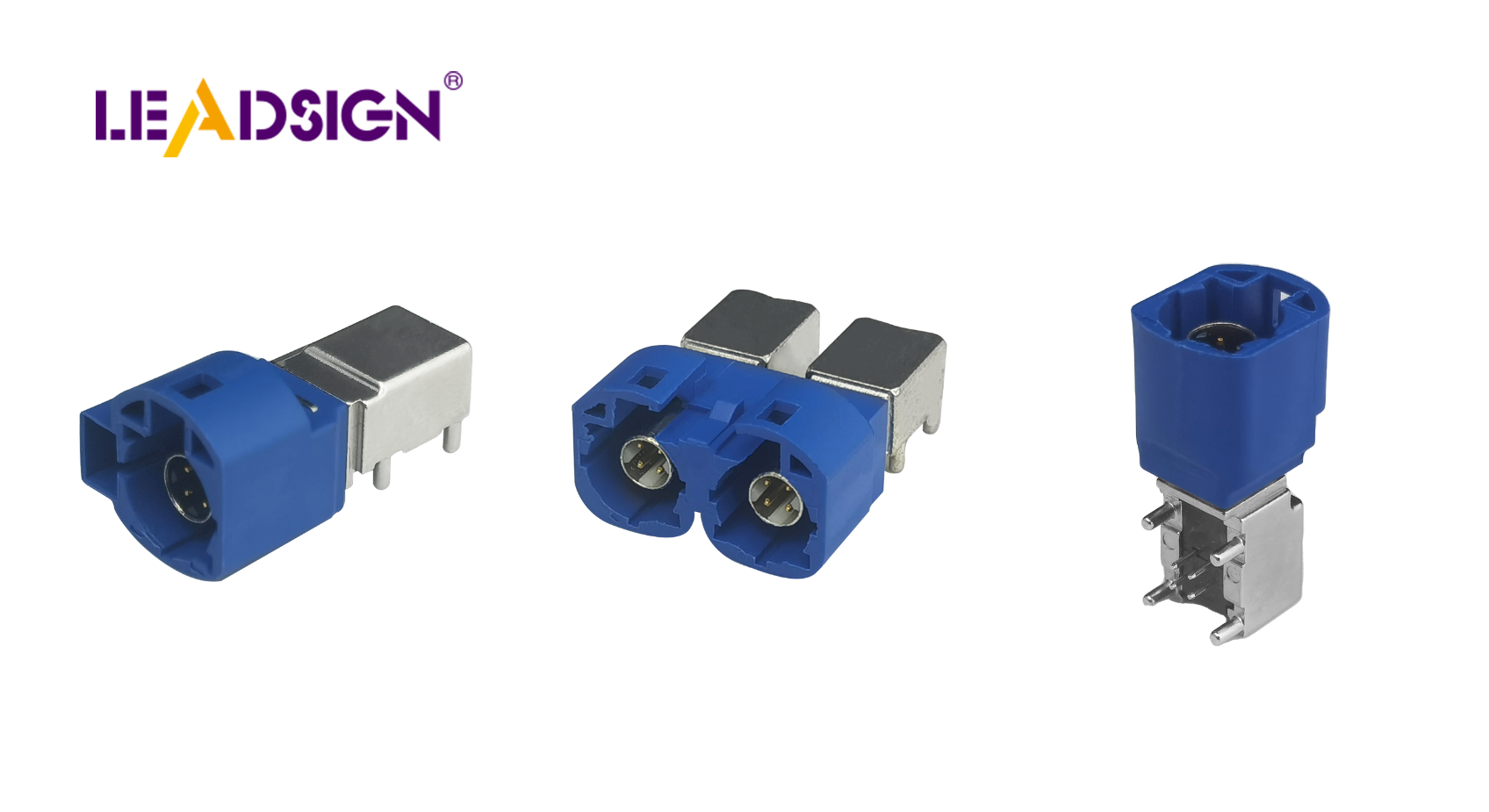
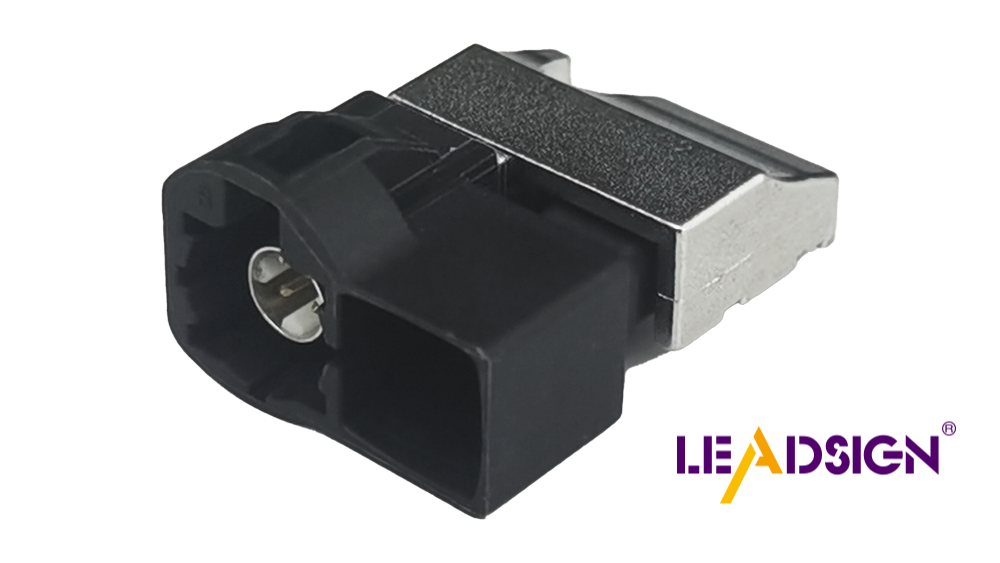
High‑Speed Data (HSD) Connectors
Use: USB 3.0, LVDS, Ethernet, HDMI – for screens, cameras, infotainment
Shielded, twisted‑pair quad construction – eliminates EMI
2026 trend: More cars use HSD for rear‑seat entertainment and telematics gateways.
5. Connector Selection Guide – By Application
Vehicle System | Recommended Connector Type | Why |
|---|---|---|
Reverse camera video | Coaxial (FAKRA, 50Ω) | High‑frequency, long reach, shielded |
Camera power & ground | Sealed bullet or butt (IP67) | Moisture & vibration resistance |
Car multimedia power | Blade or mini‑fusebox tap | Easy access to 12V and ACC |
USB ports for charging | Locking USB‑C / USB‑A | Prevents loosening from device cords |
Speaker wiring | Butt connector (unsealed) | Low current, interior use |
ADAS sensor (radar/lidar) | Sealed multi‑pin (Deutsch, Metri‑Pack) | High reliability, secondary lock |
Telematics / tracker | T‑tap with strain relief (or wire‑to‑wire) | Minimal wire cutting |
Pro tip for shops: Create a “connector kit” with the most common types: FAKRA (male+female), butt connectors (3 sizes), sealed bullet (2 sizes), and locking USB‑C. This covers 80% of your camera & radio installs.
6. Three Costly Mistakes (And How to Avoid)
Mistake | Real Consequence | Fix |
|---|---|---|
Using unsealed connector under vehicle | Corrosion within 6 months, camera fails | Use IP67‑rated (rubber seal inside) |
Wrong wire gauge for connector | High resistance → heat → melted housing | Match connector to wire AWG (e.g., red = 18‑22 AWG) |
Forgetting strain relief | Vibration breaks wire at crimp | Zip‑tie wire within 50 mm of connector |
7. 2026 Trends That Affect Your Inventory
ADAS & autonomy – More sensors require high‑bandwidth shielded connectors (Ethernet, HSD). Stock at least two Ethernet connector types (MATEnet, H‑MT).
EV proliferation – High‑voltage connectors (orange) are specialised, but low‑voltage (12V) connectors for cameras and radios now need better EMI shielding because EV power electronics generate more noise.
Modular wiring – Fleets demand plug‑and‑play harnesses. Pre‑terminated connectors (e.g., FAKRA to bare wire) save installation time – we supply them.
Sustainability – Some regions restrict halogen‑free materials. Check if your customers require RoHS / REACH compliance.
8. Shopping for Connectors – B2B Checklist
Factor | What to Look For |
|---|---|
Material | Copper alloy terminals (tin or gold plating), not brass |
Sealing | IP67 (temporary immersion) or IP69K (pressure wash) |
Temperature | -40°C to +125°C for engine bay; -40°C to +85°C for cabin |
Locking | Secondary lock / audible click (essential for vibration) |
Brand / quality | TE, Amphenol, Molex, Aptiv – or our OEM‑equivalent at lower cost |
Trusted brands for professional use:
TE Connectivity – wide range, especially sealed multi‑pin
Amphenol – rugged, industrial‑grade
Molex – great for data / signal integrity
LEADSIGN – competitive FAKRA, HSD, and sealed connectors with lab test reports
Final Recommendations for Your Business
For reverse camera kits:
→ Coaxial FAKRA (50Ω, pre‑terminated, custom length) + sealed bullet connectors for power (IP67)
For car multimedia (double‑DIN) installs:
→ Butt connectors (unsealed, for interior) + blade fuse taps + USB‑C locking extension cable
For fleet telematics / tracker installations:
→ T‑tap with dielectric grease or wire‑to‑wire sealed bullet (no cutting)
Why buy connectors from us?
✅ OEM‑grade copper alloy terminals
✅ Pre‑crimped pigtails available (save 50% labour)
✅ Custom length coaxial & HSD cables
✅ Bulk pricing for repair chains and distributors
See Also
Enhancing Vehicle Data Flow With Superior Connectors And Cables
Understanding HSD Connectors Essential For Automotive Applications
Transforming Vehicle Connectivity Through Benefits of HFM Connectors
Significance of Fakra Connectors For Today's Automotive Technology