Galileo GPS – Its Unique Features and How It Benefits Automotive Navigation (2026)

Intro: The First Civilian‑Controlled Global Navigation System
Galileo GPS is the world’s first global satellite navigation system fully under civilian control. Developed by the European Union and the European Space Agency (ESA), it ensures Europe’s independence in satellite navigation. With an impressive accuracy of up to 20 centimetres (far exceeding the US GPS system’s 5‑metre civilian accuracy), Galileo enables precise positioning, faster signal acquisition, and innovative features such as the Search and Rescue (SAR) service. For automotive applications – from fleet tracking and logistics to autonomous driving and emergency response – Galileo offers reliable, crisis‑proof navigation that sets new global standards.
1. What Is Galileo GPS? – A Civilian Controlled Alternative to US GPS
Feature | Galileo | US GPS | GLONASS (Russia) | BeiDou (China) |
|---|---|---|---|---|
Control | Civilian | Military | Military | Military |
Accuracy (public) | 20 cm – 1 m | 3‑5 m | 2‑5 m | 2‑5 m |
Satellites (active) | 24+ | 31 | 24 | 35+ |
Search & Rescue (SAR) | ✅ Yes (with return link) | ❌ No | ❌ No | ❌ No |
Interoperability | Works with GPS, GLONASS, BeiDou | Works with Galileo | Works with Galileo | Works with Galileo |
Key takeaway for automotive professionals: Galileo’s higher accuracy (20 cm vs. 5 m) significantly improves lane‑level navigation, ADAS performance, and autonomous vehicle positioning. The civilian control guarantees service availability even during geopolitical crises.
2. How Galileo Works – Signal Transmission and Receiver Technology
🔹 Satellite Constellation and Atomic Clocks
24 active satellites in three orbital planes, ensuring global coverage.
Each satellite carries four atomic clocks (two hydrogen‑maser, two rubidium). Hydrogen‑maser clocks are so precise they drift only one second in three million years.
🔹 How Your GNSS Receiver Uses Galileo
Your vehicle’s GNSS receiver (e.g., in a car head unit or telematics device) needs signals from at least four satellites to calculate a 3D position (latitude, longitude, altitude). Galileo signals are designed for faster acquisition and better performance in urban canyons (tall buildings) due to advanced modulation.
🔹 Interoperability – Using Multiple Constellations
Modern receivers use Galileo + GPS + GLONASS + BeiDou simultaneously. This increases the number of visible satellites, reduces position error, and provides redundancy. For example, a receiver using Galileo and GPS may see 20‑30 satellites instead of 10‑12 with GPS alone.
Implication for automotive aftermarket: When replacing a GPS antenna or head unit, ensure the device is Galileo‑compatible. Most modern infotainment systems support Galileo, but older units may need a firmware update or replacement.
3. Advantages of Galileo for Automotive Applications
🔹 Superior Precision and Reliability
20 cm accuracy (with dual‑frequency receivers) enables lane‑level navigation – critical for lane‑keep assist and autonomous driving.
Faster time‑to‑first‑fix (TTFF) – Galileo signals are optimised for quicker satellite acquisition, especially in deep urban canyons.
🔹 Independence and Security
Civilian control means no military degradation or shutdown during conflicts.
Guaranteed availability – Europe cannot be denied navigation services.
🔹 Search and Rescue (SAR) – Life‑Saving Feature
If a vehicle is in a remote area (off‑road, mountain pass) and an emergency beacon is activated, Galileo can locate the signal with <5 metre accuracy.
The return link feature confirms that the distress signal has been received – peace of mind for off‑road fleets and adventure travellers.
For fleet managers: Installing Galileo‑compatible tracking devices improves vehicle location accuracy, reduces fuel consumption through better route planning, and enhances driver safety in remote areas.
4. How Galileo Compares to Other Global Navigation Systems
System | Accuracy (public) | Best feature | Weakness |
|---|---|---|---|
GPS (USA) | 3‑5 m | Mature ecosystem, widely supported | Military control; no SAR return link |
GLONASS (Russia) | 2‑5 m | Good performance at high latitudes | Less accurate single‑frequency |
BeiDou (China) | 2‑5 m | Many satellites, SMS‑like messaging | Military control |
Galileo (Europe) | 20 cm – 1 m | Civilian control, SAR return link | Slightly fewer satellites in orbit (but growing) |
Verdict for automotive: Galileo is the best choice for applications requiring centimetre‑level precision (autonomous driving, precision agriculture, surveying). For standard navigation, using Galileo + GPS together gives the best of both worlds.
5. Automotive Applications – Where Galileo Makes a Difference
Application | Benefit of Galileo |
|---|---|
In‑vehicle navigation | Lane‑level guidance, reduced “GPS lag” in tunnels (with sensor fusion) |
ADAS (lane‑keep, adaptive cruise) | More precise positioning improves sensor fusion |
Autonomous driving | Centimetre accuracy essential for safe self‑driving |
Fleet telematics | Accurate tracking reduces fuel waste and improves dispatching |
Off‑road / emergency response | SAR service can locate vehicles in remote areas |
EV range prediction | More precise elevation and terrain data improves range estimation |
Pro tip for shops: When a customer complains of slow GPS lock or inaccurate positioning, check if their head unit or telematics device supports Galileo – many older units do not. Upgrading to a Galileo‑compatible receiver can drastically improve performance.
6. 2026 Trends – Galileo in Automotive Electronics
Trend | Implication |
|---|---|
Galileo High Accuracy Service (HAS) | Real‑time corrections over satellite – 20 cm accuracy without additional ground infrastructure. |
Mass adoption of multi‑GNSS receivers | Most new telematics, dash cams, and head units support Galileo + GPS + GLONASS. |
SAR return link integration in emergency call (eCall) | Future eCall systems may use Galileo for faster, more accurate location. |
Autonomous vehicle regulations | Many jurisdictions require centimetre‑level positioning – Galileo is a key enabler. |
7. Why LEADSIGN – For GNSS Antenna Cables
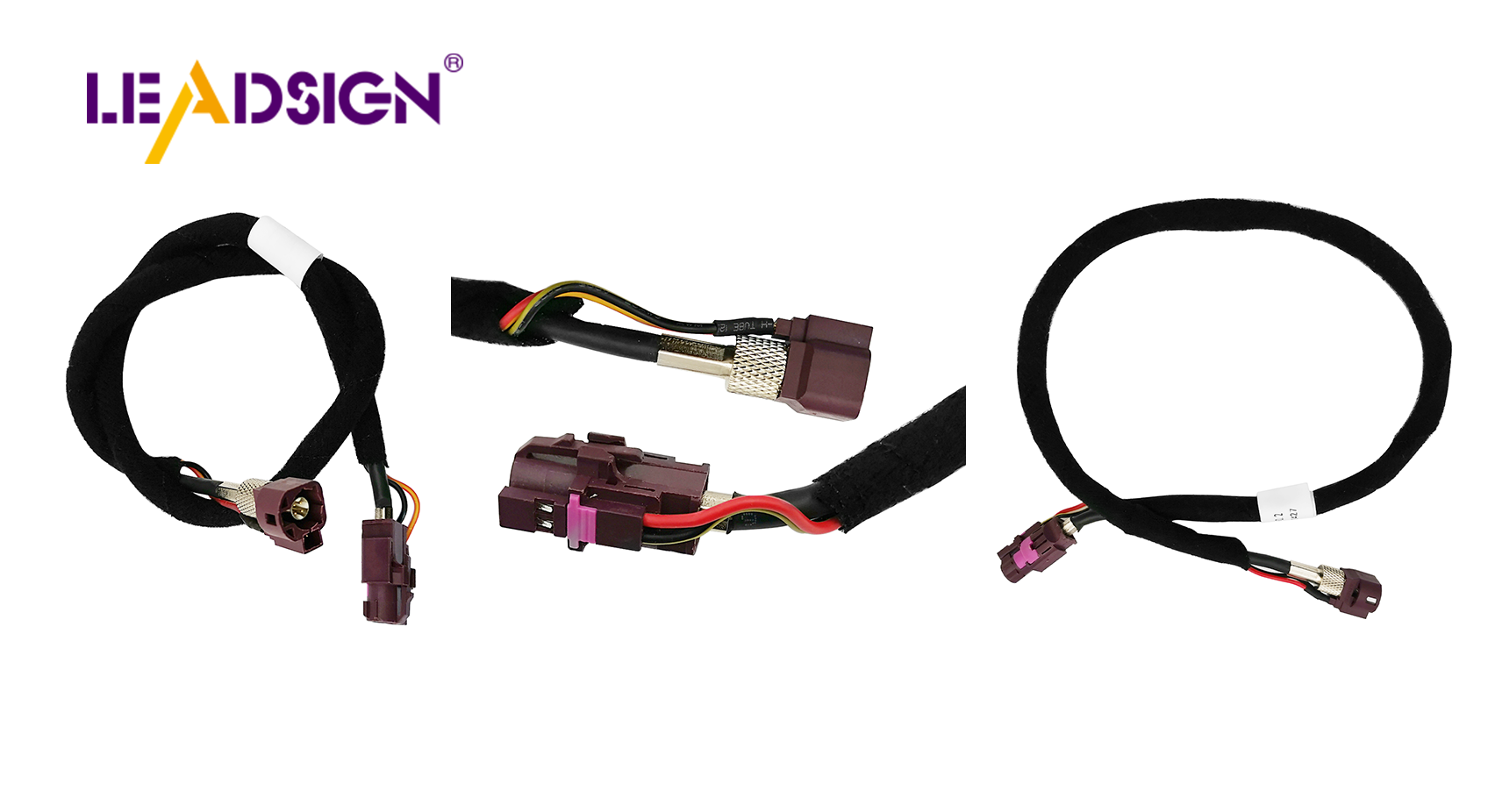
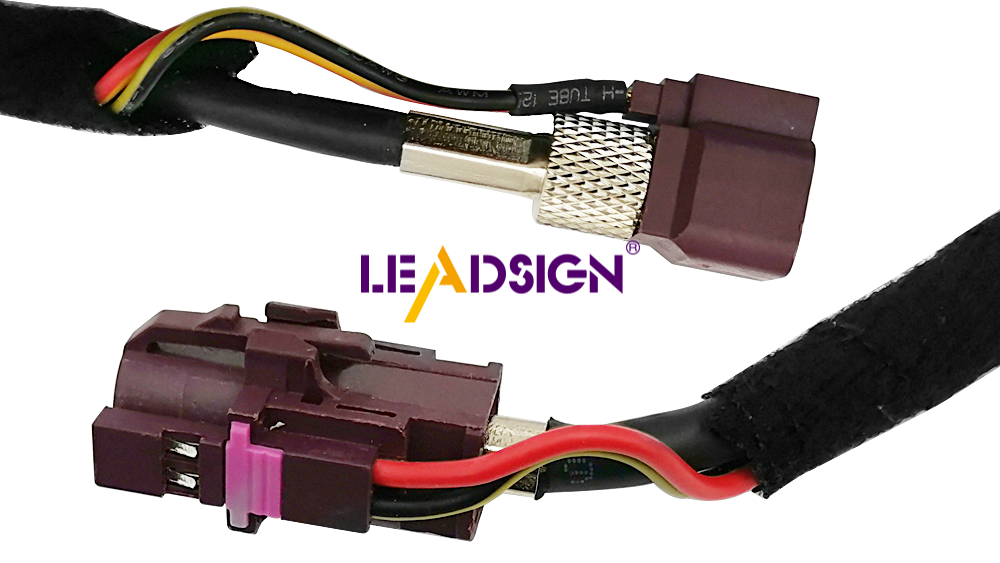
Accurate positioning starts with a reliable antenna and cable. For Galileo‑compatible GPS antennas, use FAKRA amber (50Ω coaxial) cables. LEADSIGN provides pre‑terminated FAKRA cables in any length, colour‑coded for function.
What LEADSIGN offers:
✅ FAKRA amber (50Ω) – standard for GPS/GNSS antennas
✅ Low‑loss, double‑shielded coax – preserves weak satellite signals
✅ Pre‑terminated cables – any length 0.3m – 20m, no field crimping
✅ IP67 optional – for roof‑mounted antennas exposed to weather
✅ Bulk pricing – for shops, fleets, and distributors
For your business: When replacing a damaged GNSS antenna cable, use a LEADSIGN pre‑terminated FAKRA amber cable – correct length, correct impedance, perfect signal.
Final Recommendations – Making Galileo Work for Your Vehicles
If your customer needs… | Recommended solution |
|---|---|
Standard navigation with good accuracy | Galileo + GPS compatible receiver (most modern units) |
Precision lane‑level guidance | Galileo‑only or dual‑frequency receiver |
Off‑road / emergency tracking | Galileo‑compatible tracker with SAR support |
Replacement of GNSS antenna cable | LEADSIGN FAKRA amber pre‑terminated cable |
Remember: Galileo is not a future technology – it is already operational and supported by most modern automotive electronics. Ensuring your vehicle’s GNSS antenna and receiver are Galileo‑compatible will improve accuracy, reliability, and safety.
Ready to upgrade your GNSS antenna cables?
[Request a free LEADSIGN FAKRA amber sample kit] | [Get bulk pricing]
See Also
Maximizing Automotive Data Flow With Superior Connectors And Cables
Boosting Data Transfer: Why High-Speed Automotive Connectors Matter
Understanding HSD Connectors Within The Automotive Sector