Exploring the Pros and Cons of Rigid Coaxial Cables in Automotive Wiring Connector Types – Professional B2B Guide (2026)

Intro: Choose the Right Cable for Signal Integrity and Installation Feasibility
Selecting the correct cable for automotive applications is critical. Rigid coaxial cables offer excellent electrical stability, shielding, and high‑frequency performance, but their lack of flexibility makes them difficult to install in tight or moving spaces. Understanding the trade‑offs between rigid coax, flexible coax, twisted pair, and fibre optic cables ensures your vehicle projects perform reliably and cost‑effectively. For most automotive aftermarket applications (GPS, cameras, telematics), flexible low‑loss FAKRA coaxial cables provide the best balance of performance and ease of installation.
This guide covers:
Advantages of rigid coaxial cables (durability, shielding, high‑frequency performance)
Disadvantages (inflexibility, difficult installation)
Comparison with flexible coax, twisted pair, and fibre optic
2026 trends and when to choose rigid vs. flexible cables
Why LEADSIGN flexible FAKRA cables are the practical choice for automotive RF applications
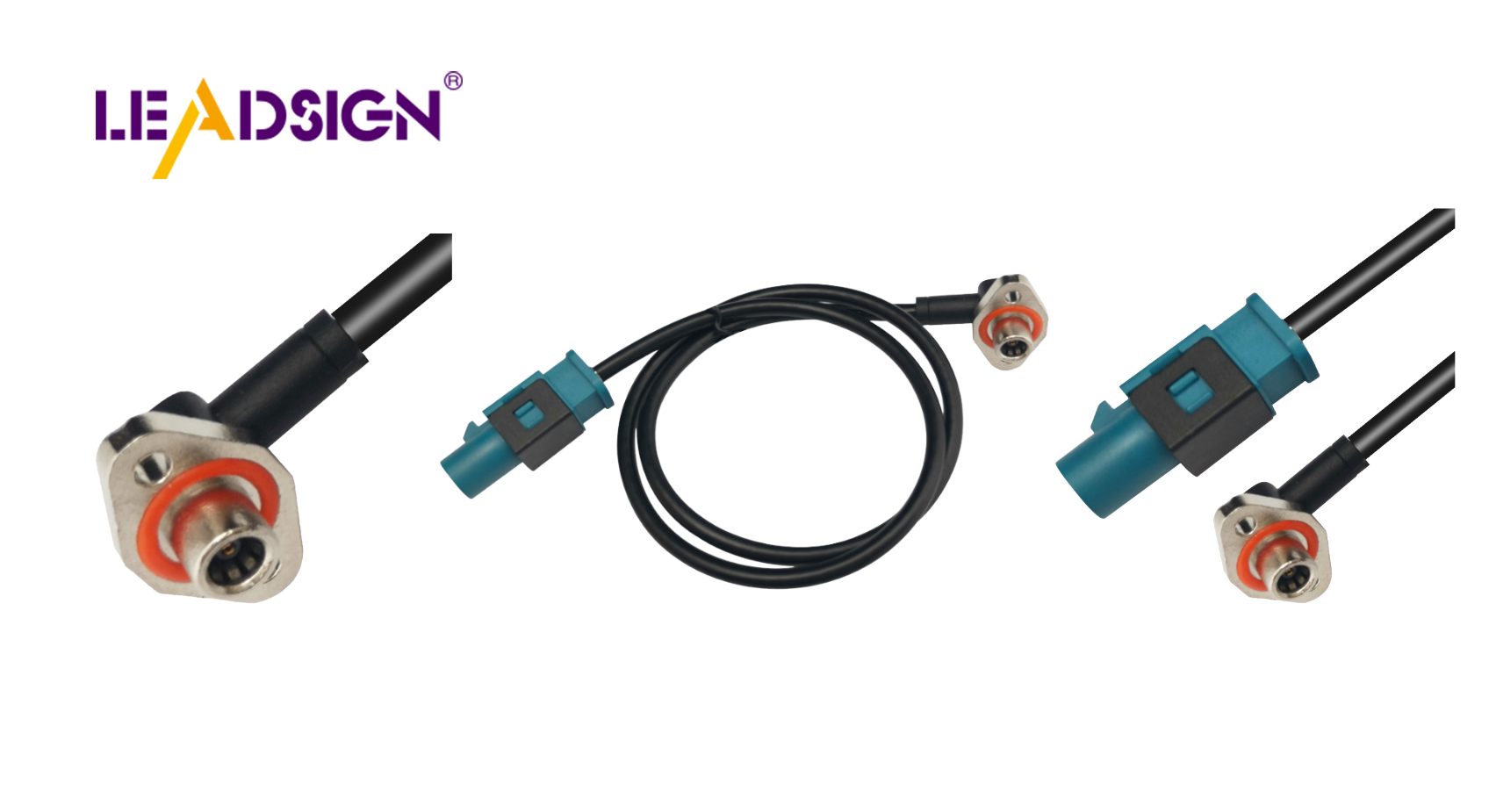
1. Advantages of Rigid Coaxial Cables
Advantage | Description | Automotive relevance |
|---|---|---|
Durability | Solid outer conductor, rugged construction | Withstands vibration, temperature extremes, and mechanical stress – suitable for fixed chassis runs. |
Shielding effectiveness | Excellent EMI/RFI rejection (solid shield) | Critical for sensitive GPS, radio, and camera signals in noisy EV/hybrid environments. |
High‑frequency performance | Low attenuation, stable impedance (50Ω) up to 20 GHz | Ideal for 4K cameras, 5G telematics, and radar systems. |
Key takeaway: Rigid coaxial cable provides the best possible signal integrity and shielding, but it is best suited for fixed, straight‑line installations (e.g., under chassis, roof to head unit).
2. Disadvantages of Rigid Coaxial Cables
Disadvantage | Explanation | Impact on automotive wiring |
|---|---|---|
Inflexibility | Cannot bend sharply; requires large bend radius | Difficult to route in tight engine bays, behind dashboards, or through door hinges. |
Hard to install | Requires special adapters for corners; pre‑bent sections needed | Increases labour time and material cost; not suitable for retrofits in confined spaces. |
For most vehicle installations, flexible coaxial cable (e.g., RG‑174, RG‑58, low‑loss FAKRA) is preferred because it can be routed around obstacles without breaking.
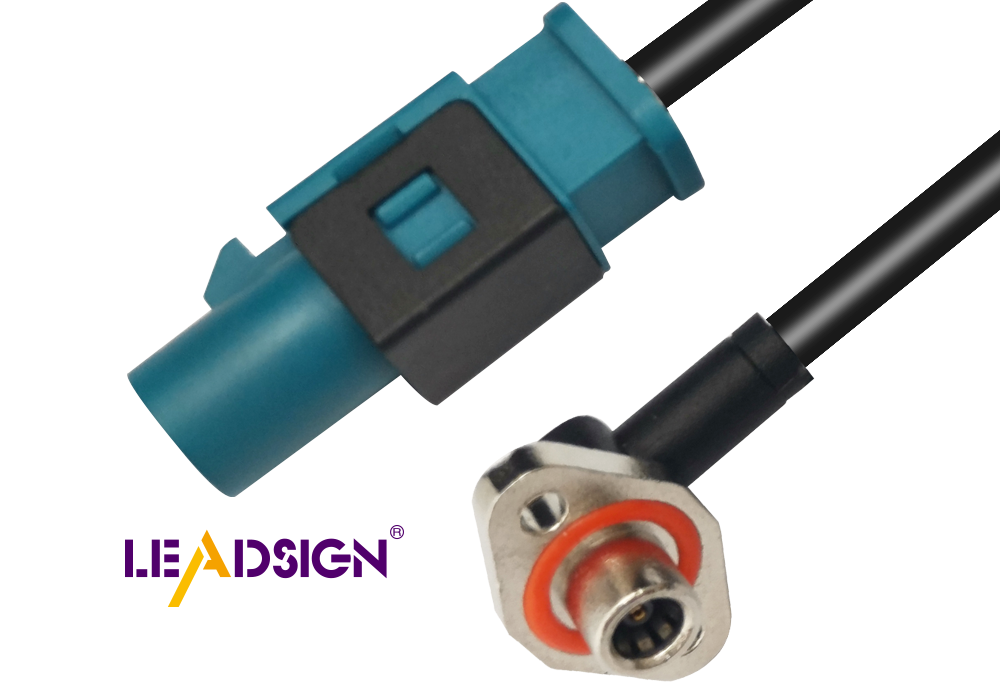
3. Comparing Rigid Coaxial with Other Cable Types
Cable type | Flexibility | Shielding | Data rate | Cost | Best automotive use |
|---|---|---|---|---|---|
Rigid coax | None | Excellent | Up to 20 GHz | High | Fixed runs, lab/test, extreme EMI |
Flexible coax (RG‑174, low‑loss FAKRA) | Good | Good to very good | Up to 20 GHz (Mini) | Moderate | GPS, backup camera, 5G antenna (most aftermarket) |
Twisted pair (e.g., CAN, Ethernet) | Good | Moderate (needs shielding) | 1 Gbps | Low to moderate | Sensor data, CAN bus, 100BASE‑T1 |
Fibre optic | Poor (bend‑sensitive) | Excellent | >10 Gbps | High | MOST bus, high‑end infotainment (legacy) |
Conclusion for automotive: For most RF applications (GPS, radio, camera, telematics), flexible low‑loss coaxial cable (FAKRA) is the practical choice. Rigid coax is reserved for specialised fixed installations where maximum shielding and stability are required and space is not constrained.
4. 2026 Trends – When to Choose Rigid vs. Flexible Coax
Trend | Rigid coax suitability | Flexible coax suitability |
|---|---|---|
4K/8K cameras (long runs, high bandwidth) | Excellent for fixed chassis runs | Good with low‑loss Mini FAKRA |
5G telematics (antenna to module) | Good for straight runs | Preferred for flexible routing |
EV / hybrid (high EMI) | Excellent shielding | Double‑shielded FAKRA also effective |
Aftermarket camera retrofit (tight spaces) | Poor – too inflexible | ✅ LEADSIGN flexible FAKRA recommended |
Roof‑mounted antenna to head unit (fixed path) | Acceptable | Acceptable (flexible easier) |
Pro tip for shops: Stock pre‑terminated flexible FAKRA cables from LEADSIGN – they offer low loss, double shielding, and custom lengths (0.3m – 20m) without the installation headaches of rigid coax.
5. Why LEADSIGN – The Practical Alternative to Rigid Coaxial
For automotive aftermarket and repair, rigid coaxial is rarely the best choice. LEADSIGN provides flexible, pre‑terminated FAKRA and Mini FAKRA cables that deliver near‑rigid electrical performance with the flexibility needed for real‑world vehicle installations.
What LEADSIGN offers:
✅ FAKRA (standard & Mini) – all 14 colours, 50Ω, up to 20 GHz, IP67 optional
✅ Pre‑terminated cables – any length 0.3m – 20m, no field crimping
✅ Low‑loss, double‑shielded coax – for long runs and EV EMI environments
✅ Flexible – easy routing behind dashboards, along chassis
✅ Bulk pricing – for shops, fleets, and distributors
For your business: When you need a reliable GPS, camera, or 5G antenna connection, choose LEADSIGN flexible FAKRA cables – easier to install, lower labour cost, no signal compromise.
Final Recommendations – Cable Selection for Automotive RF
Application | Recommended cable | Why |
|---|---|---|
Fixed, straight chassis run (extreme EMI) | Rigid coax (if space permits) | Maximum shielding, stability |
Most aftermarket GPS / camera / 5G | LEADSIGN flexible FAKRA | Easy installation, low loss, double shielding |
Long run (>10m) in tight space | LEADSIGN low‑loss Mini FAKRA | 20 GHz capability, thin and flexible |
Test / lab / prototype (bench) | Rigid coax or SMA | Precision, repeatable measurements |
Remember: Rigid coaxial cable has its place, but for the vast majority of automotive repairs and upgrades, flexible low‑loss FAKRA cables from LEADSIGN offer the best combination of performance, durability, and ease of installation.
Ready to simplify your RF cable inventory with flexible, pre‑terminated FAKRA cables?
[Request a free LEADSIGN FAKRA sample kit (amber, blue, violet)] | [Get bulk pricing]
See Also
Why FAKRA Coaxial Cables Matter for Automotive Use
Enhancing Data Transfer in Vehicles with Smart Connectors
Uncovering the Advantages of Fakra Connectors in Cars