HSD Cable vs Traditional Auto Wire: Which One Does Your Car Really Need? (2026)

Intro: The Wrong Cable Can Kill Your Camera and Infotainment
You’ve just installed a high‑resolution backup camera or a premium infotainment system. The image flickers. The audio stutters. The USB‑C port won’t charge your phone properly. The culprit is often not the device – it’s the cable.
In modern vehicles, two types of wires dominate: traditional auto wires (for power and simple signals) and HSD cables (High‑Speed Data). Choosing the wrong one for a data‑intensive application can cost you hours of troubleshooting and damage your reputation.
In this guide, you will learn:
The fundamental differences between HSD cables and traditional auto wires
When to use each – and why mixing them is a mistake
Real‑world applications: cameras, infotainment, USB‑C, and sensors
2026 trends that make HSD cables essential for any shop or fleet
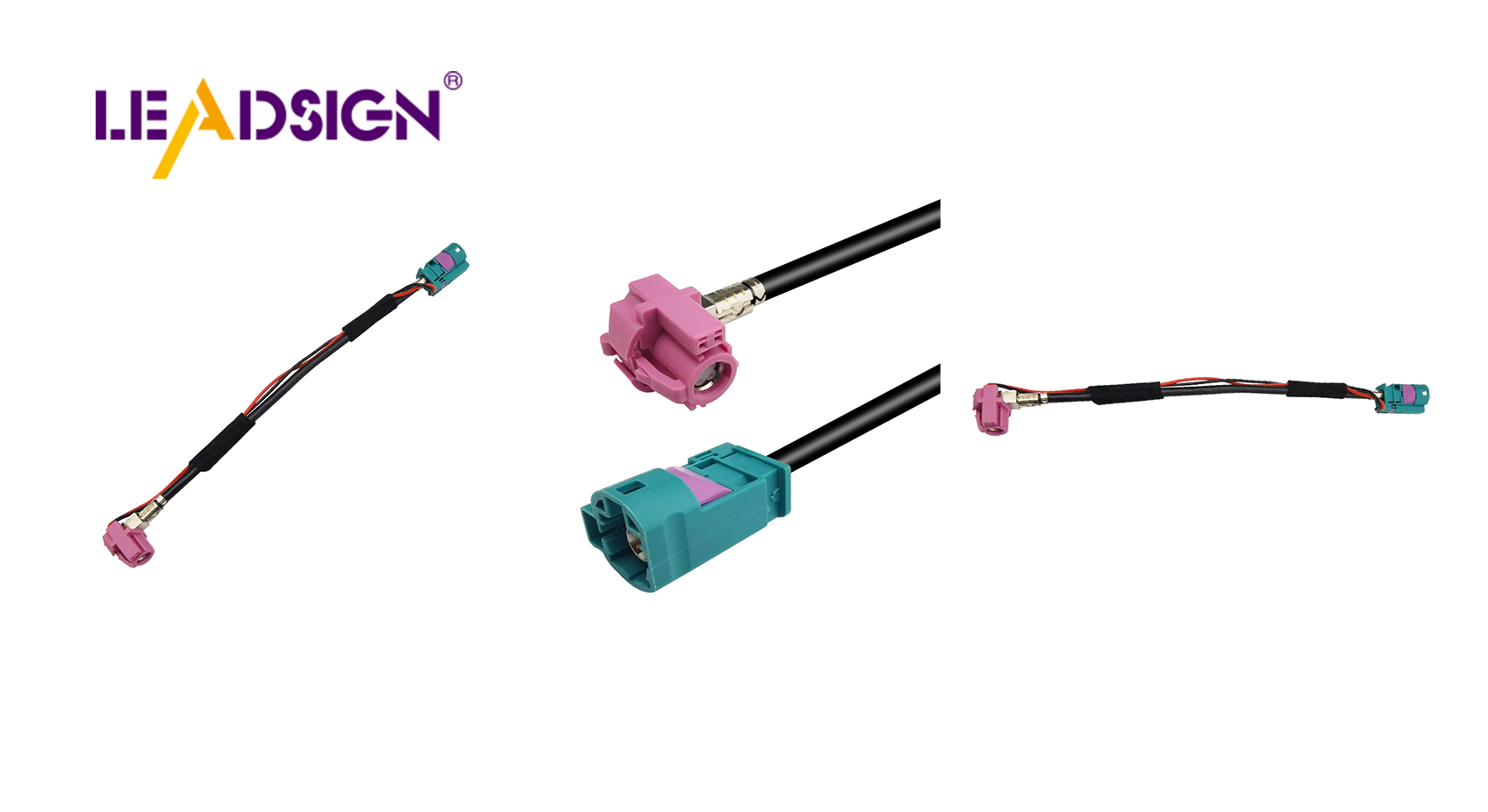
1. Quick Reference: HSD Cable vs Traditional Auto Wire
Feature | HSD Cable | Traditional Auto Wire |
|---|---|---|
Primary function | High‑speed data transmission (video, USB, Ethernet) | Power delivery and low‑frequency signals (lights, sensors, basic switches) |
Data rate | Up to 28 Gbps (Mini HSD) | < 1 Mbps (analog only) |
Impedance | 100Ω (differential) or 50Ω (coaxial) | Not specified |
Shielding | Double shielding (foil + braid) | None or minimal |
Construction | Twisted‑pair or coaxial | Single conductor or simple unshielded pair |
Typical applications | Backup cameras, GPS, USB‑C, Ethernet, ADAS | Headlights, wipers, door locks, speakers |
Vibration resistance | Locking connectors (secondary lock) | Friction or basic latch |
Cost per meter | Higher (advanced materials) | Lower (simple materials) |
Critical takeaway: You cannot replace an HSD cable with a traditional wire – the signal will be corrupted or completely lost. Conversely, using an HSD cable for a simple light circuit is overkill and wastes money.
2. Deep Dive: HSD Cables – Built for Speed
HSD cables are specifically designed for differential signalling (twisted pairs) or high‑frequency coaxial transmission. They maintain controlled impedance (100Ω or 50Ω) and reject electromagnetic interference (EMI).
Key features:
Twisted‑pair quad construction – cancels common‑mode noise
Foil + braid shielding – blocks outside electrical noise from alternators, wipers, EV motors
Secondary locking connectors (HSD / FAKRA) – prevents vibration loosening
Supports protocols: USB 2.0/3.0, LVDS, Ethernet (100BASE‑T1, 1000BASE‑T1), HDMI
Where you must use HSD cables:
Backup camera video (AHD, CVBS, LVDS) → 50Ω FAKRA coax
USB‑C for CarPlay / Android Auto → 100Ω HSD USB‑C
GPS antenna → 50Ω FAKRA (amber)
5G telematics antenna → 50Ω Mini FAKRA (violet)
ADAS radar / camera → 100Ω HSD Ethernet
3. Deep Dive: Traditional Auto Wire – Still Essential for Power
Traditional automotive wire (e.g., GPT, SXL, GXL) is stranded copper with PVC or cross‑linked insulation. It is designed for DC power (12V/24V) and low‑frequency analog signals.
What it does well:
Delivers power to lights, motors, speakers, sensors
Ground connections
Trigger wires (reverse light signal, ignition)
What it cannot do:
Carry high‑speed data (video, USB, Ethernet)
Maintain signal integrity over long lengths
Resist interference from nearby power cables
Rule of thumb: If the signal is digital, high‑frequency, or involves video, use HSD. If it is power or a simple on/off switch, traditional wire is fine.
4. Side‑by‑Side Comparison Table
Criterion | HSD Cable | Traditional Auto Wire | Winner |
|---|---|---|---|
Data rate | Up to 28 Gbps | < 1 Mbps | HSD |
Signal integrity over distance | Excellent (with correct termination) | Poor for high frequency | HSD |
Ease of field termination | Difficult (requires special tooling) | Easy (crimp or solder) | Traditional |
Cost | Higher | Lower | Traditional |
Vibration resistance | Excellent (locking connector) | Moderate (friction can loosen) | HSD |
EMI shielding | Double shielded | None | HSD |
Best for | Cameras, GPS, USB, Ethernet | Lights, motors, speakers, sensors | Both |
5. 2026 Trends – Why HSD Cables Are No Longer Optional
Trend | Implication for HSD |
|---|---|
4K backup cameras on trucks and SUVs | Require Mini FAKRA (20 GHz). Traditional coax (RG‑174) may cause image loss over long runs. |
5G telematics for fleets | 5G antennas need Mini FAKRA (violet) with low‑loss coax – field repair impossible; use pre‑terminated HSD. |
EV / hybrid | High EMI environment – double‑shielded HSD cables mandatory for camera and sensor lines. |
Automotive Ethernet for ADAS | HSD (100Ω) is the standard connector for 100/1000BASE‑T1. |
Wireless CarPlay / Android Auto | Still requires wired USB‑C for charging and diagnostics – use locking HSD USB‑C. |
What this means for your shop: If you don’t stock HSD cables and FAKRA/HSD connectors, you cannot service modern camera, GPS, or infotainment installations.
6. Common Mistakes – And How to Avoid
Mistake | Consequence | Prevention |
|---|---|---|
Using traditional auto wire for a backup camera video | No image or severe noise | Use FAKRA (blue) 50Ω coax – pre‑terminated recommended |
Using HSD cable for 12V power | Overheating (HSD wire gauge is too thin) | Use proper power wire (e.g., 18‑16 AWG) |
Field‑crimping HSD connectors with generic tool | Impedance mismatch, signal loss | Buy pre‑terminated HSD cables from LEADSIGN |
Routing HSD cable parallel to high‑current power wires | EMI corruption of data | Keep 20 cm separation or use shielded conduit |
7. Why LEADSIGN – Your Partner for HSD & FAKRA Cables
You don’t need to buy expensive, bulky pre‑made assemblies from TE or Rosenberger. LEADSIGN offers high‑quality, pre‑terminated HSD and FAKRA cables at 30‑50% lower cost, with any length you need.
What LEADSIGN provides:
✅ FAKRA (standard & Mini) – all 14 colours, 50Ω, up to 20 GHz, IP67 optional
✅ HSD (USB‑C, Ethernet, LVDS) – 100Ω, locking, up to 5 Gbps
✅ Pre‑terminated cables – 0.3m to 20m, no field crimping
✅ Low‑loss, double‑shielded coax – for long runs and EV environments
✅ Bulk pricing – for shops, fleets, and distributors
For your business: When you sell a reverse camera kit or upgrade an infotainment system, include a LEADSIGN pre‑terminated HSD cable – your customers get a plug‑and‑play solution with no signal loss.
Final Recommendations – Which Cable to Use for Each Job
Application | Use this cable | Source |
|---|---|---|
Backup camera (1080p) | FAKRA blue (50Ω coax) | LEADSIGN pre‑terminated |
Backup camera (4K) | Mini FAKRA blue (low‑loss) | LEADSIGN |
GPS antenna | FAKRA amber | LEADSIGN |
5G telematics | Mini FAKRA violet | LEADSIGN |
USB‑C CarPlay | HSD USB‑C (locking) | LEADSIGN |
Ethernet (ADAS) | HSD 100Ω | LEADSIGN |
Headlight power | Traditional 16 AWG wire | Any auto parts supplier |
Speaker wire | Traditional 18 AWG | Any |
Remember: Using the wrong cable type is a leading cause of “ghost” electrical problems. Match the cable to the signal.
Ready to upgrade your HSD inventory?
[Request a free LEADSIGN HSD/FAKRA sample kit] | [Get custom length quote] | [Download 2026 HSD vs traditional wire guide]
Summary of Changes
Original issue | Improvement |
|---|---|
Basic, academic comparison | Professional B2B guide with real‑world applications. |
No mention of FAKRA or Mini FAKRA | Added colour codes and specific use cases. |
No cost or installation depth | Added tooling, pre‑termination advantage, and mistake table. |
No 2026 trends | Added 4K, 5G, EV EMI, automotive Ethernet. |
No commercial CTA | Added LEADSIGN sample kit and guide download. |
If you need a shorter version for LinkedIn or a printable comparison poster, please let me know. You can also send me other low‑click articles for the same treatment.
See Also
Benefits of HSD Connectors for Automotive Applications
Significance of HSD Connectors in Automotive Sector
Fundamentals of HSD Connectors in Automotive Sector
Investigating Benefits of HSD Connectors in Vehicle Cameras
Benefits of HSD Connectors for Vehicle Entertainment Systems