FAKRA vs Mini FAKRA 2026: Which One for Your 4K Cameras & GPS?

Intro: 6 GHz vs 20 GHz – The Difference Between a Sharp Image and a Black Screen
You are installing a reverse camera on a new truck, or a GPS antenna for a fleet tracking system. You know you need a 50Ω coaxial connector. But should you use standard FAKRA or the newer Mini FAKRA?
The wrong choice can cost you:
Flickering or no image on 4K cameras
Slow GPS lock (or no lock at all)
Inability to fit the connector behind a thin radio bezel
Unnecessary expense (over‑specifying) or a callback (under‑specifying)
In this guide, you will learn the exact differences – size, frequency, data rate, cost, and real‑world applications – so you can choose confidently.
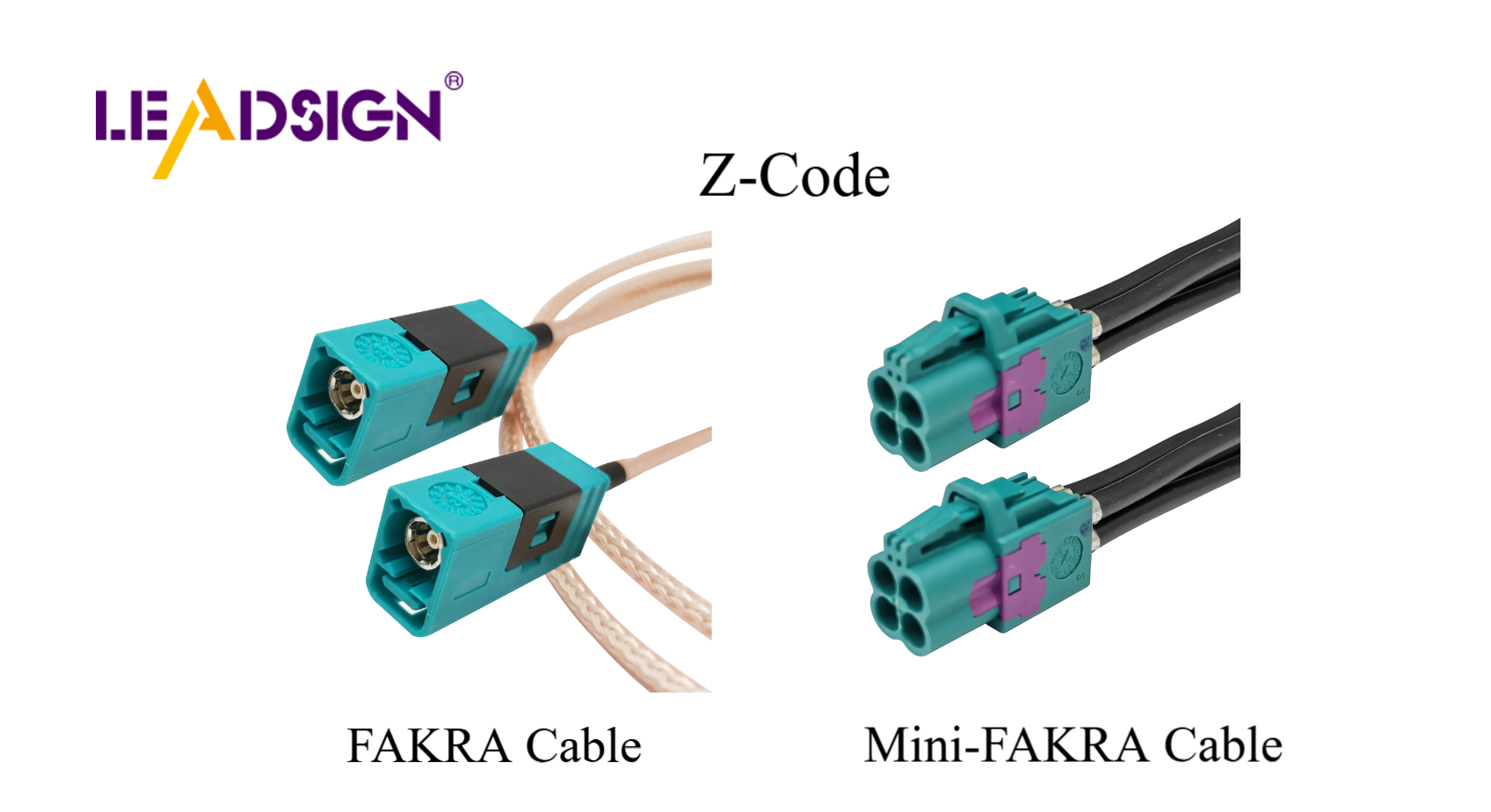
1. Quick Reference: FAKRA vs Mini FAKRA (2026)
Feature | Standard FAKRA | Mini FAKRA |
|---|---|---|
Size | Larger (approx. 24mm height) | 80% smaller (approx. 13mm height) |
Frequency range | DC – 6 GHz | DC – 20 GHz |
Max data rate | up to 8 Gbps | up to 28 Gbps |
Impedance | 50Ω (both) | 50Ω (both) |
Sealing (IP67) | ✅ Available | ✅ Available |
Temperature range | -40°C to +105°C | -40°C to +105°C |
Secondary lock | Yes (standard) | Yes (CPA option) |
Colour coding | 14 colours | Same system, miniaturised |
Typical applications | GPS, SDARS, 1080p cameras, AM/FM, 4G | 4K cameras, LVDS, 5G, ADAS, autonomous driving |
Cost (per connector + cable) | $ – lower | $ – 30‑50% higher |
Availability | Very common | Growing, but less stocked |
Key takeaway for your business:
For 1080p backup cameras, GPS, and 4G telematics → standard FAKRA is sufficient and cheaper.
For 4K cameras, 5G antennas, LVDS video, or very tight spaces → Mini FAKRA is the right choice.
2. Standard FAKRA – The Workhorse (Still Relevant in 2026)
What it is: FAKRA (Fachkreis Automobil) is the established 50Ω coaxial connector system for automotive RF applications. It uses a plastic housing with mechanical keying and colour coding (14 colours) to prevent mismating.
Key specifications:
Frequency range: DC to 6 GHz
Data rate: Supports up to 8 Gbps (enough for 1080p AHD video)
Durability: 25+ mating cycles, vibration resistant, -40°C to +105°C
Typical applications in your product line:
1080p reverse camera – FAKRA blue, 50Ω coax, length up to 10m (RG‑58 or low‑loss)
GPS antenna – FAKRA amber
SDARS (satellite radio) – FAKRA white or bordeaux
4G telematics antenna – FAKRA violet
When NOT to use standard FAKRA:
4K / 8K cameras – need >6 GHz bandwidth (Mini FAKRA or LVDS HSD)
5G antennas – need 20 GHz capability for future‑proofing
Extremely tight spaces – behind a slim dashboard or inside a mirror housing
3. Mini FAKRA – The Space‑Saving High‑Speed Alternative
What it is: Mini FAKRA is the miniaturised version of FAKRA, offering the same 50Ω impedance and colour coding but in a package that is 80% smaller. It supports much higher frequencies (20 GHz) and data rates (28 Gbps).
Key specifications:
Frequency range: DC to 20 GHz
Data rate: up to 28 Gbps (supports 4K video, LVDS, automotive Ethernet)
Same temperature range and sealing options as standard FAKRA
Why it matters for your business in 2026:
4K cameras are becoming standard on premium vehicles and fleets. Standard FAKRA’s 6 GHz limit is borderline; Mini FAKRA gives headroom.
5G telematics operates up to 6 GHz (and beyond). Mini FAKRA’s 20 GHz capability ensures compatibility now and for future 5G upgrades.
Space behind multimedia units is shrinking. Mini FAKRA fits where standard FAKRA may block adjacent connectors.
Typical applications for Mini FAKRA:
4K / 8K backup and surround cameras – Mini FAKRA blue
5G antenna for fleet telematics – Mini FAKRA violet
LVDS video links for high‑resolution displays
Autonomous driving sensor fusion (radar, lidar, camera)
Compact infotainment modules with limited PCB real estate
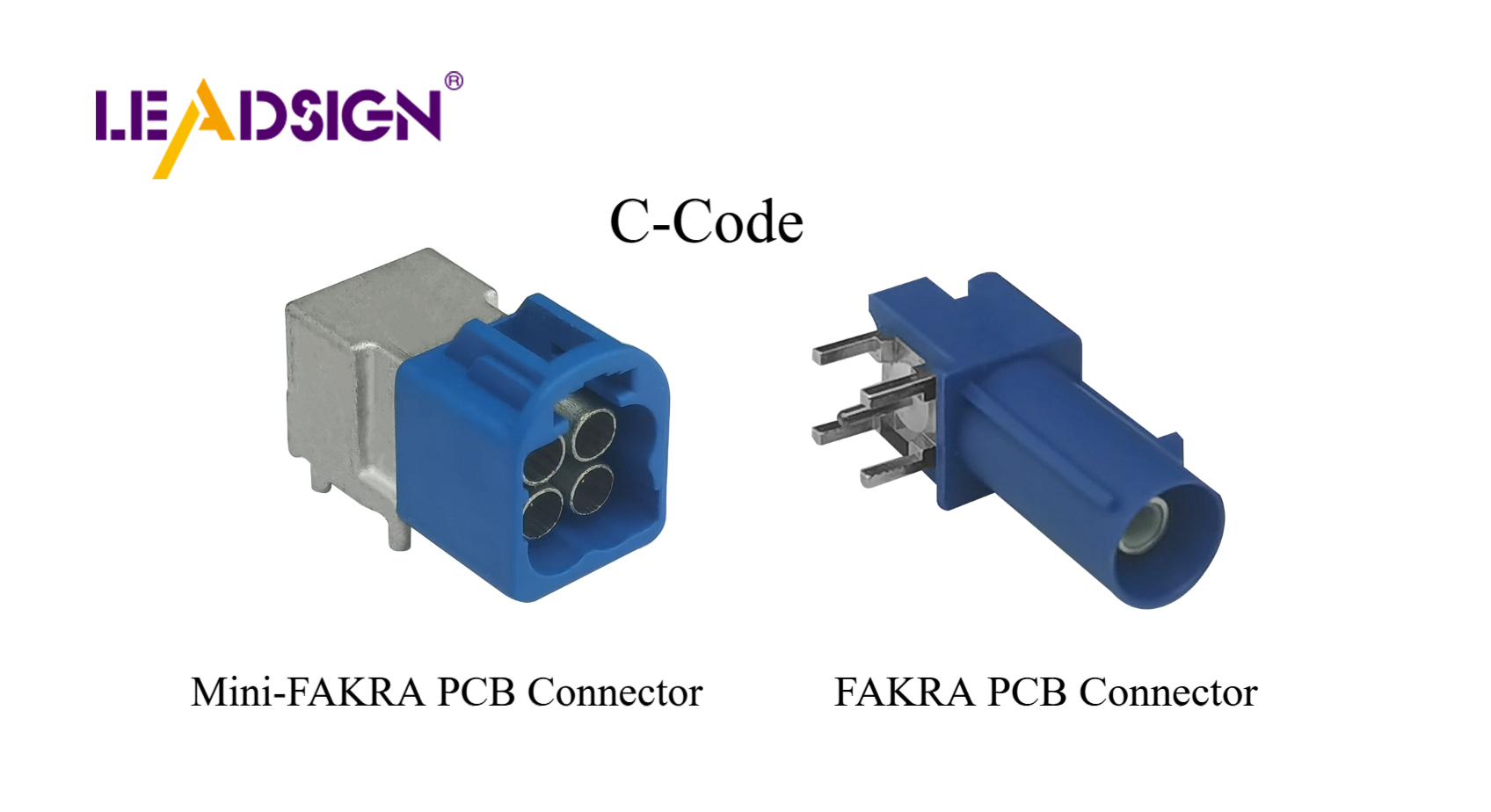
4. Performance Comparison – Real Numbers for Installers
Parameter | Standard FAKRA | Mini FAKRA | Comment |
|---|---|---|---|
Max frequency | 6 GHz | 20 GHz | For 4K video (6‑12 GHz), Mini FAKRA is required. |
Insertion loss (typical) | 0.2‑0.4 dB @ 6 GHz | 0.3‑0.5 dB @ 20 GHz | Mini FAKRA slightly higher due to smaller geometry, but acceptable. |
Return loss (VSWR) | ≥ 18 dB | ≥ 18 dB | Both excellent. |
Mating cycles | ≥ 25 | ≥ 25 | Same durability. |
Operating temp | -40°C to +105°C | -40°C to +105°C | Identical. |
Sealing (IP67) | Yes | Yes | Both available. |
Advice for camera installs:
For a 1080p camera (max 1.5 GHz bandwidth), standard FAKRA is perfect.
For a 4K camera (6‑12 GHz bandwidth), use Mini FAKRA – otherwise you risk image degradation.
5. Space Savings – When Every Millimeter Counts
Vehicle area | Standard FAKRA | Mini FAKRA | Recommendation |
|---|---|---|---|
Behind a double‑DIN radio (standard depth) | Fits easily | Fits even easier | Both ok. |
Behind a thin‑bezel Android radio (shallow depth) | May be too tall | Fits well | Use Mini FAKRA. |
Inside a side mirror (camera module) | Too large | Fits | Mini FAKRA required. |
On a compact telematics device | Possible, but bulky | Ideal | Mini FAKRA saves space for other connectors. |
Pro tip: If you are designing or retrofitting a harness where space is unknown, consider using Mini FAKRA as a default – it works in both tight and normal spaces, while standard FAKRA may be too large for tight spots.
6. Cost vs. Value – Which Saves You Money?
Item | Standard FAKRA (bulk 100+) | Mini FAKRA (bulk 100+) |
|---|---|---|
Connector (plug + jack) | 1.00–1.00–1.50 | 1.50–1.50–2.50 |
Pre‑terminated cable (1m) | 2–2–4 | 4–4–7 |
Labour (field termination) | Low (standard tools) | Moderate (specialised tool required) |
Callback risk (if correctly selected) | Very low | Very low |
Value insight:
Using Mini FAKRA when standard FAKRA would work wastes money.
Using standard FAKRA when Mini FAKRA is needed costs you a callback (image failure).
Future‑proofing: For new camera kits, especially those that might be upgraded to 4K, specifying Mini FAKRA adds only a small upfront cost but prevents obsolescence.
7. 2026 Trends – Why Mini FAKRA Is Gaining Traction
Trend | Why Mini FAKRA Wins |
|---|---|
4K cameras on trucks and buses | Requires >6 GHz bandwidth. Standard FAKRA is marginal; Mini FAKRA is designed for it. |
5G telematics (fleet management) | 5G frequencies up to 6 GHz (and future bands higher). Mini FAKRA’s 20 GHz headroom ensures compatibility. |
Thinner infotainment units | Space behind the radio is shrinking. Mini FAKRA’s 80% smaller height is a game‑changer. |
Autonomous driving (ADAS) | Multiple cameras and radars need high‑bandwidth, low‑loss connections – Mini FAKRA is the standard. |
EV and EMI shielding | Both FAKRA types offer shielding, but Mini FAKRA’s smaller loop area can sometimes offer better EMI performance. |
What this means for your inventory:
If you only stock standard FAKRA, you will be unable to support 4K camera or 5G antenna installations by 2027. Add Mini FAKRA to your stock now.
8. Decision Matrix – Which One for Your Job?
Installation | Recommended Connector | Why |
|---|---|---|
1080p reverse camera (passenger car) | Standard FAKRA (blue) | Sufficient bandwidth, lower cost. |
4K reverse camera (premium SUV / truck) | Mini FAKRA (blue) | Needs >6 GHz; space may also be tight. |
GPS antenna for radio | Standard FAKRA (amber) | GPS L1/L2 < 2 GHz, standard works fine. |
5G antenna for fleet telematics | Mini FAKRA (violet) | 5G up to 6 GHz; future‑proof. |
LVDS video for 360° camera (high resolution) | Mini FAKRA or HSD LVDS | High bandwidth required. |
AM/FM radio antenna | Standard FAKRA (bordeaux) | Low frequency, standard is cheaper. |
Space‑constrained dashboard (thin radio) | Mini FAKRA (any colour) | Standard may not fit height‑wise. |
9. Where to Source – Why LEADSIGN for Both FAKRA and Mini FAKRA
LEADSIGN specialises in FAKRA and Mini FAKRA connectors and pre‑terminated cables for automotive aftermarket and OEM use.
What LEADSIGN offers:
✅ Standard FAKRA – all 14 colours, 50Ω, IP67 sealed optional, -40°C to +105°C
✅ Mini FAKRA – 80% smaller, up to 20 GHz, 28 Gbps, same colour coding
✅ Pre‑terminated cables – any length from 0.3m to 20m, no field crimping
✅ Low‑loss coax options – for long runs (10‑20m) on trucks and buses
✅ Bulk pricing – for shops, fleets, and distributors
✅ Test reports – continuity, impedance, VSWR
Why choose LEADSIGN over TE / Rosenberger?
30‑50% lower cost for equivalent performance
Fast turnaround (samples in 2‑3 weeks)
Custom lengths – you tell us, we make it
Technical support – we help you select the right connector for your camera or antenna
Final Recommendations
If you install… | Use this | Source from |
|---|---|---|
1080p backup camera (most passenger cars) | Standard FAKRA (blue) | LEADSIGN (pre‑terminated) |
4K camera (truck, bus, premium vehicle) | Mini FAKRA (blue) | LEADSIGN |
GPS antenna | Standard FAKRA (amber) | LEADSIGN |
5G telematics antenna | Mini FAKRA (violet) | LEADSIGN |
AM/FM antenna | Standard FAKRA (bordeaux) | LEADSIGN |
Thin‑bezel radio (limited depth) | Mini FAKRA (any) | LEADSIGN |
Ready to upgrade your connector inventory?
[Request a free FAKRA + Mini FAKRA sample kit] | [Get custom length quote] | [Download 2026 FAKRA selection guide]
Summary of Changes (from your original)
Original Problem | Revision Strategy |
|---|---|
Academic comparison, no installer focus | Rewritten for repair shops, fleets, and custom harness builders |
Missing real‑world applications (cameras, 5G) | Added detailed use cases for reverse cameras, GPS, 4K, 5G, and thin radios |
No cost/value analysis | Added price comparison and “when to use which” matrix |
No future trends (2024 vs 2026) | Refreshed with 2026 trends (4K, 5G, space constraints) |
No commercial CTA | Added LEADSIGN sample kit, quote, guide download |
Language too technical / OEM | Made practical, with “rule of thumb” and mistake prevention |
If you need a shorter LinkedIn post version or a printable FAKRA colour code poster, please let me know. You can also send me other low‑click articles for the same treatment.
See Also
Understanding Fakra Cables: Your Complete Resource
Everything You Need to Know About Fakra Male Connectors
Harnessing Mini Fakra Connectors: An In-Depth Overview