How to Distinguish Different Types of Wire Connectors Automotive – Professional B2B Guide (2026)

Intro: Master Connector Identification to Reduce Errors and Improve Safety
Automotive electrical connectors are critical for vehicle safety and performance. Misidentifying a connector can lead to incorrect repairs, intermittent failures, or even electrical fires. With the growing complexity of vehicle electronics (ADAS, 4K cameras, 5G telematics), understanding how to distinguish connector types by colour, shape, material, and application is an essential skill for repair shops and fleet technicians. This guide provides a systematic approach to identifying common automotive wire connectors – butt, ring, spade, bullet, quick disconnect – and explains how to select the right one for each job. For high‑speed data applications, specialised FAKRA/HSD connectors are required, and LEADSIGN offers pre‑terminated, colour‑coded cables that simplify identification and installation.
1. Why Connector Identification Matters – The Cost of Mistakes
Mistake | Consequence |
|---|---|
Using a spade terminal in a high‑vibration engine bay | Loosens over time → intermittent connection, DTCs |
Using an unsealed butt connector underbody | Water ingress → corrosion → failure within months |
Mismatching wire gauge (e.g., 18 AWG terminal on 14 AWG wire) | High resistance → overheating, melted insulation |
Confusing power connector with data connector (e.g., using Deutsch for camera video) | No image or severe noise |
Key insight: A 5‑minute visual inspection and correct identification can prevent a 2‑hour diagnostic and a costly callback.
2. Visual Identification – Colour, Shape, Size
🔹 Colour Coding (Practice, not absolute – but helpful)
Colour (terminal) | Typical wire gauge (AWG) | Common use |
|---|---|---|
Red | 22‑18 | Sensors, low‑current signals |
Blue | 16‑14 | Lighting, relays, fans |
Yellow | 12‑10 | High‑current power (headlights, aux circuits) |
FAKRA connectors use a 14‑colour standard for function (not wire size):
Colour | Application |
|---|---|
Amber | GPS antenna |
Blue | Backup camera video |
Violet | 5G telematics |
White | SDARS (satellite radio) |
Bordeaux | AM/FM radio |
🔹 Shape – What It Tells You
Shape | Connector type | Typical use |
|---|---|---|
Cylindrical, two ends | Butt connector | Splice, wire repair |
Circular ring | Ring terminal | Battery, grounding |
Fork‑shaped | Spade terminal | Relays, switches, fuse boxes |
Round, male/female | Bullet connector | Quick disconnect (interior) |
Flat tab with insulation | Quick disconnect | Frequent connect/disconnect |
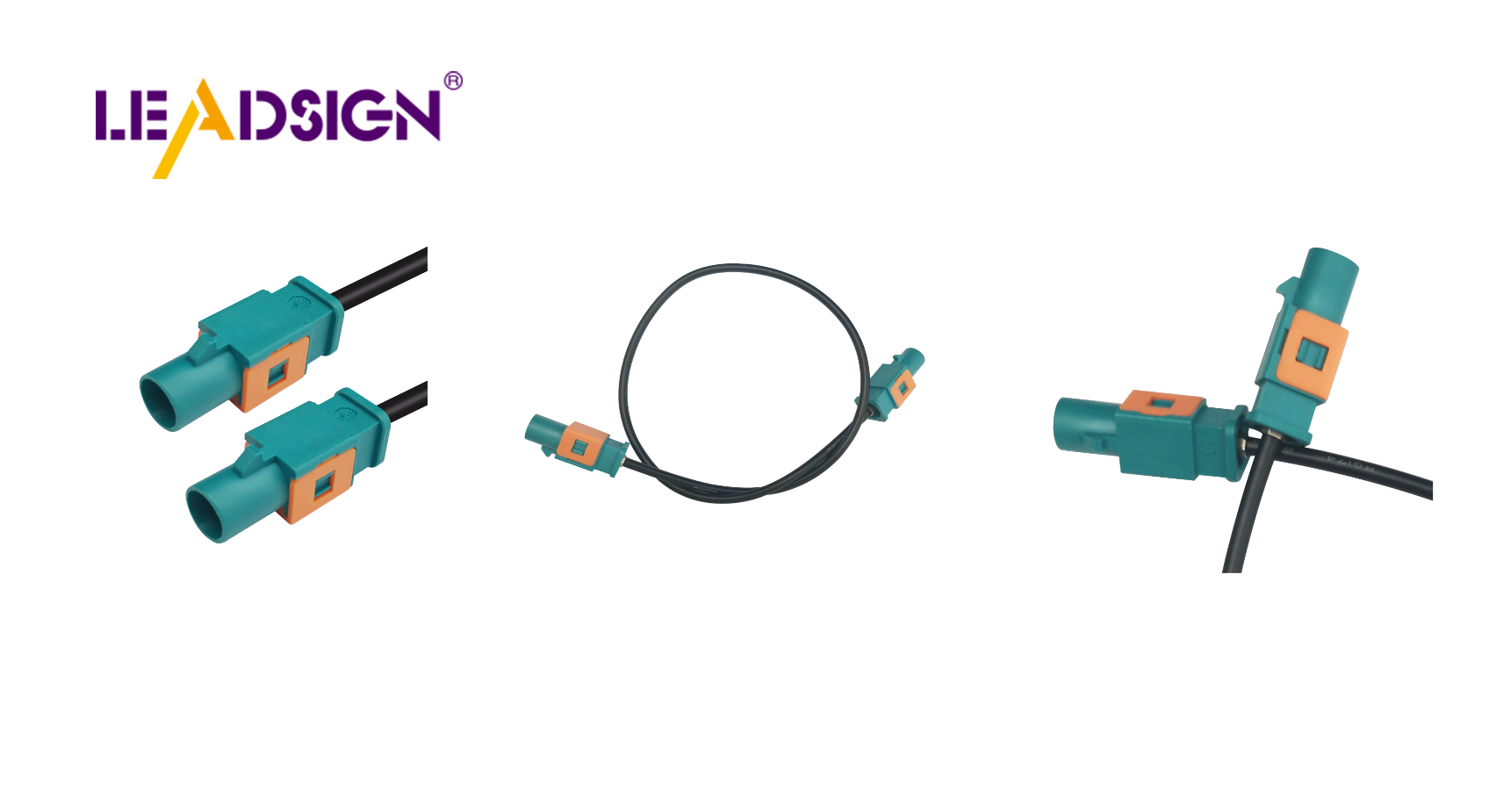
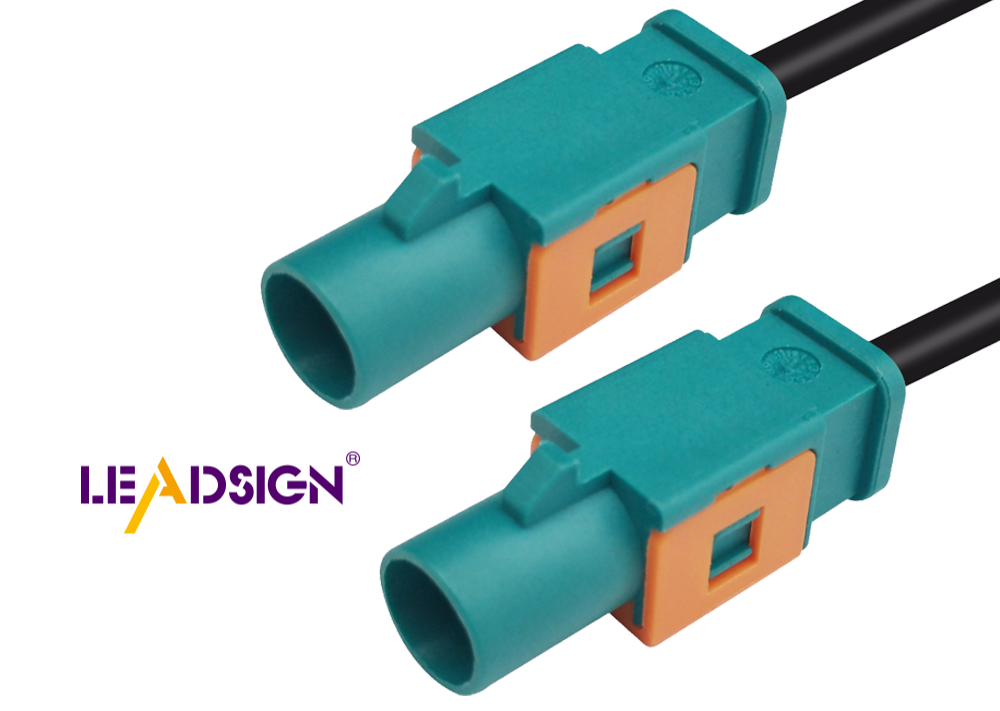
Colour‑coded rectangular plastic | FAKRA | GPS, camera, antenna |
🔹 Size – Current Capacity Clue
Larger connectors (yellow terminals) handle higher current.
Smaller connectors (red terminals) are for signal or low‑current.
Pro tip: When in doubt, measure the wire gauge (AWG) with a wire stripper or calliper – then match terminal colour.
3. Material Identification – Metal and Insulation
🔹 Metal (Terminals)
Material | Properties | Best use |
|---|---|---|
Copper | Highest conductivity | Power, ground, signal (excellent) |
Brass | Good conductivity, corrosion‑resistant | Moderate environments |
Tin‑plated copper | Corrosion‑resistant, solderable | Underbody, engine bay |
🔹 Insulation / Housing
Material | Properties | Application |
|---|---|---|
PVC (general) | Low cost, flexible | Interior, dry locations |
Nylon (PA66) | Tough, chemical‑resistant | Engine bay, industrial |
Heat‑shrink (adhesive‑lined) | Waterproof when heated | Underbody, exterior splices |
Silicone rubber | Flexible, wide temp range | Sealed connectors (Deutsch, Weather Pack) |
4. Location – Where the Connector Is Used
Vehicle area | Environmental challenge | Typical connector type | Required feature |
|---|---|---|---|
Engine bay | High heat, vibration, oil | Sealed Deutsch, Weather Pack, TE Superseal | IP67, high‑temp housing |
Underbody | Water, salt, mud | Sealed butt (heat‑shrink), Weather Pack | IP67, corrosion‑resistant terminals |
Interior (dry) | Low stress | Unsealed spade, bullet, butt | None |
Roof / exterior (antenna) | UV, moisture | FAKRA (sealed optional) | UV‑resistant, 50Ω impedance |
Dashboard (electronics) | Tight space, moderate heat | Mini FAKRA, unsealed multi‑pin | Compact, reliable |
Rule of thumb: If the connector is exposed to the elements, it must be sealed (IP67). If it is under the dashboard, unsealed is acceptable.
5. Step‑by‑Step Identification Process
Step | Action |
|---|---|
1 | Look at colour – if blue, amber, violet, green → likely FAKRA (data). |
2 | Count pins / cavities – 2‑pin = power/sensor; coaxial (single centre pin) = FAKRA. |
3 | Check shape – ring = terminal; spade = quick disconnect; bullet = temporary. |
4 | Assess environment – engine bay or underbody requires sealed (look for rubber grommets). |
5 | Measure wire gauge – match with terminal colour (red/blue/yellow). |
6 | If still uncertain, take a photo and send to LEADSIGN technical support for FAKRA/HSD identification. |
6. Selection Criteria – Choosing the Right Connector After Identification
Criterion | What to check | Example |
|---|---|---|
Current rating | Terminal colour (red=10A, blue=15A, yellow=20A+) | 16 AW wire → blue terminal |
Environment | Sealed vs. unsealed | Underbody → heat‑shrink butt |
Vibration | Secondary lock needed for high vibration | Deutsch or FAKRA/HSD |
Signal type | Power → traditional; data → FAKRA/HSD | Camera → FAKRA blue |
Ease of installation | Pre‑terminated cables (LEADSIGN) save labour | FAKRA/HSD pre‑terminated |
7. 2026 Trends – New Connector Types to Recognise
Trend | Identification challenge |
|---|---|
Mini FAKRA | 80% smaller than standard FAKRA; same colour coding. Use callipers to measure size. |
HSD (Ethernet, USB‑C) | 4‑pin small plastic housing, not colour‑coded; often black. Look for locking latch. |
EV orange high‑voltage connectors | Do not touch – HV training required. |
Pre‑terminated cables | No field identification of terminals – replace entire cable assembly. |
8. Why LEADSIGN – Simplify FAKRA/HSD Identification
LEADSIGN specialises in FAKRA and HSD connectors – the ones most often misidentified. Our products are clearly colour‑coded (FAKRA) and come with datasheets.
What LEADSIGN offers:
✅ FAKRA (standard & Mini) – all 14 colours, 50Ω, up to 20 GHz, IP67 optional
✅ HSD (USB‑C, Ethernet, LVDS) – 100Ω, locking, up to 5 Gbps
✅ Pre‑terminated cables – any length 0.3m – 20m, no field crimping
✅ Low‑loss, double‑shielded coax – for long runs and EV environments
✅ Bulk pricing – for shops, fleets, and distributors
For your business: When a technician encounters a blue, amber, or violet plastic connector, they know it is FAKRA – order a LEADSIGN pre‑terminated cable by colour and length. No guesswork, no mismating.
Final Recommendations – Identification Quick Reference
If you see… | It is likely… | Action |
|---|---|---|
Red, blue, or yellow nylon housing with screw | Spade terminal | Use for switches, relays (interior) |
Cylindrical, two ends, no colour | Butt connector | Splice wire repair |
Fork‑shaped, metal | Spade (uninsulated) | Temporary connection |
Colour‑coded plastic (blue, amber, violet) | FAKRA (coaxial) | Use for GPS, camera, 5G – order pre‑terminated from LEADSIGN |
Small black 4‑pin locking | HSD | Use for USB‑C, Ethernet – order pre‑terminated from LEADSIGN |
Remember: Proper identification prevents mismating, reduces callbacks, and ensures your repairs last.
Ready to simplify FAKRA/HSD identification with pre‑terminated, colour‑coded cables?
[Request a free LEADSIGN FAKRA/HSD sample kit] | [Get bulk pricing]
See Also
Exploring HSD Connectors in the Auto Sector
Significance of FAKRA Connectors in Auto Uses
Essential Role of Fakra Connectors in Auto Sector