Custom Wire Cables for Fleets & Shops: 2026 Pros, Cons & When to Choose

Intro: The Hidden Cost of “One‑Size‑Fits‑All” Cables
Standard cables are cheap and available – but they are also the #3 cause of aftermarket electrical failures (after connectors and installation errors). In a 2025 fleet study, nearly 30% of camera and infotainment issues traced back to cables that were the wrong length, poorly shielded, or rated for the wrong environment.
For a repair shop, custom harness builder, or fleet manager, every cable failure means:
Comebacks (lost labour, angry customers)
Safety risks (short circuits, false ADAS alerts)
Downtime (vehicle off the road)
Custom wire cables solve these problems – but they come with trade‑offs. This guide covers:
The real benefits of custom cables (backed by 2026 data)
The drawbacks you need to plan for
Exactly when to choose custom vs. off‑the‑shelf
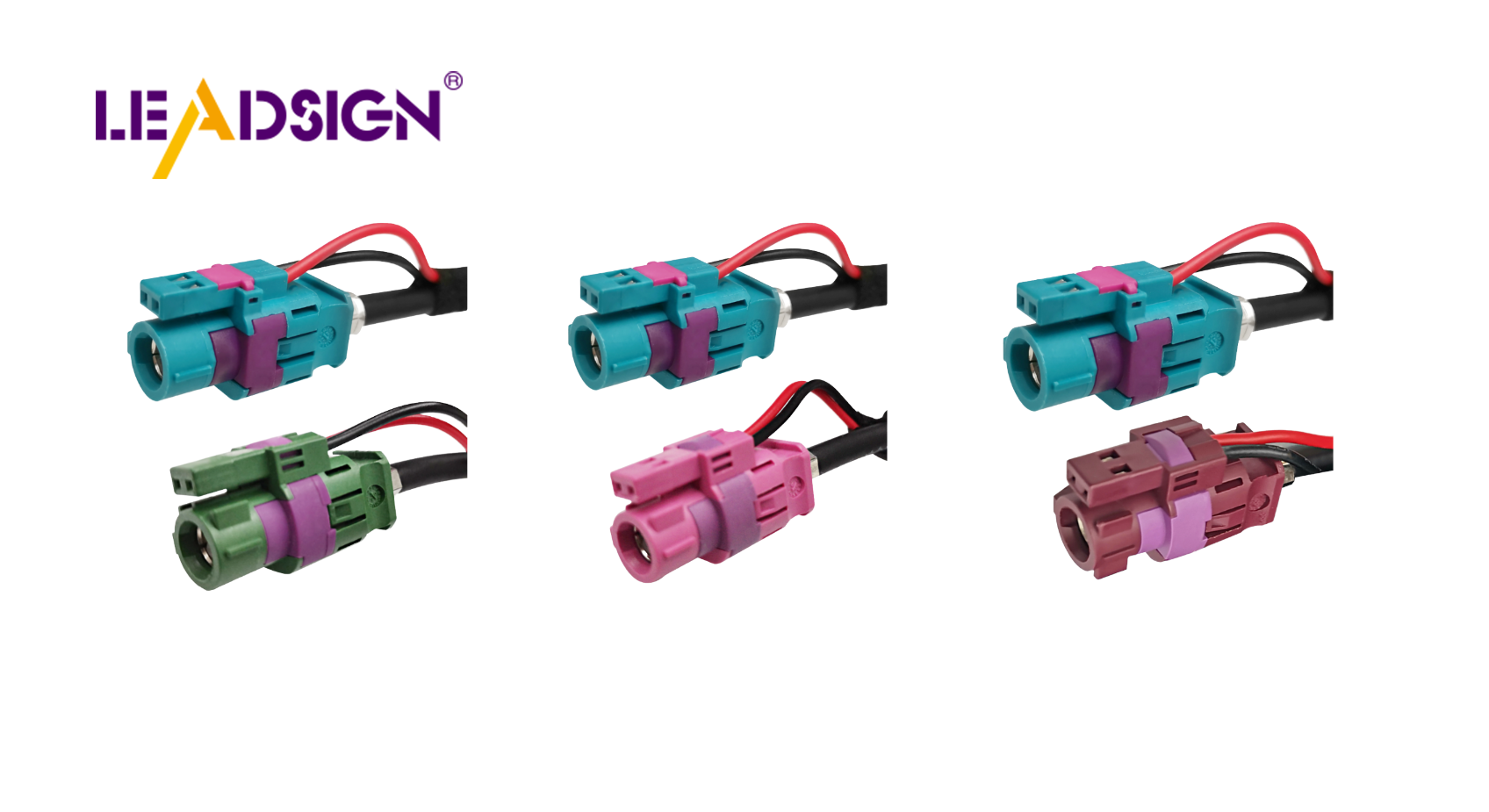
1. What Are Custom Wire Cables – And Why Do They Matter for Your Business?
A custom wire cable is designed and manufactured to your exact specifications: length, connector types, shielding, gauge, insulation material, colour, and even labelling. Unlike standard cables, there is no “almost fits”.
For your product line, custom cables are essential when:
Installing a reverse camera in a long truck or bus – standard 1m coax is too short.
Building a car multimedia harness that integrates power, ground, USB, and antenna into one bundle.
Adding telematics to a fleet – cables must be exactly the right length to avoid messy coiling.
2026 trend: With more EVs and ADAS, cables now need EMI shielding, high‑temperature jackets, and specific impedance (50Ω or 100Ω) – features rarely found in off‑the‑shelf consumer cables.
2. Benefits of Custom Wire Cables (B2B Focus)
✅ Tailored Performance & Efficiency
You optimise electrical properties for your exact application. For example:
Impedance‑matched coax (50Ω) for camera video – no signal loss over 15m.
Twisted‑pair with drain wire for USB 3.0 – preserves 5 Gbps data rate.
Hybrid cables – combine power and data in one jacket, reducing harness bulk.
✅ Enhanced Durability & Reliability
Choose insulation that resists oil, coolant, UV, or abrasion. For engine bay installations, specify -40°C to +125°C rating. For underbody camera cables, IP67 sealing and shielding against EMI from EV motors.
Result: Fewer replacements, lower warranty claims, higher customer satisfaction.
✅ Long‑term Cost Savings
A custom cable may cost 2‑3x more upfront, but it eliminates:
Repair comebacks (average $150‑300 per event)
Labour for re‑routing or adapting standard cables
Early failure of cameras / radios due to signal issues
Over a fleet of 50 vehicles, using correct custom cables for camera retrofits can save $5,000+ annually in avoided callbacks.
3. Drawbacks of Custom Wire Cables (And How to Mitigate)
Drawback | Why It Happens | How to Manage |
|---|---|---|
Higher initial cost | Engineering, tooling, small batch production | Order larger volumes (100+ pieces) to lower per‑unit cost. Combine multiple cable types into one custom design. |
Longer lead times | Prototyping, testing, moulding connectors | Plan ahead. Keep safety stock of common custom lengths (e.g., 5m, 10m, 15m). Work with a manufacturer that offers rapid prototyping (2‑3 weeks). |
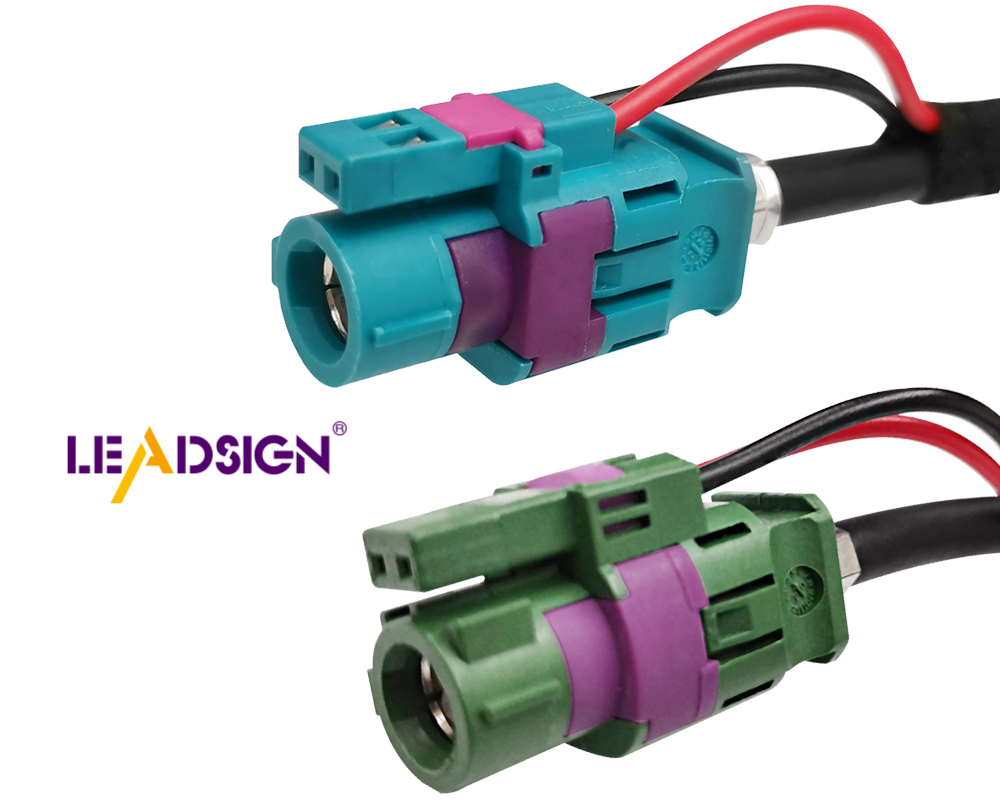
Limited future flexibility | Designed for a specific vehicle/system | Standardise custom cables across multiple vehicle models where possible. Use modular connectors (e.g., FAKRA, HSD) so the cable can be reused if the device changes. |
Pro tip: For moderate customisation, consider semi‑custom – modify an off‑the‑shelf cable by changing only the connectors or length. This balances cost, lead time, and fit.
4. Custom vs. Standard – When to Choose Which?
Factor | Choose Custom | Choose Standard (Off‑the‑shelf) |
|---|---|---|
Length | Non‑standard (e.g., 7.3m, 12.5m) | Standard (0.5, 1, 2, 3, 5m) |
Connector type | Mixed (e.g., FAKRA on one end, bare wire on the other) | Same connector both ends (USB‑A to USB‑A) |
Environment | Extreme temp, oil, chemicals, underbody | Interior, dry, mild conditions |
Data rate | 5+ Gbps (USB 3.0, Ethernet, LVDS) | ≤ 480 Mbps (USB 2.0, analog video) |
Shielding | Double foil + braid, specific impedance | Basic or no shielding |
Volume | 50‑1000+ pieces per year | Single pieces or small batches |
Lead time | You have 4‑8 weeks before installation | You need cables tomorrow |
Rule of thumb for your business:
Reverse camera installation for a fleet (50+ vehicles) → custom length, FAKRA to bare wire, IP67 sealed. Absolutely worth it.
Single radio upgrade for a walk‑in customer → use standard 2m USB‑C cable and 30cm power pigtail. Not worth custom.
5. Real‑World Applications – Directly Related to Your Products
📷 Backup / 360° Cameras
Problem: Standard 1m or 2m coax is too short for large vans, trucks, or SUVs with long tail sections.
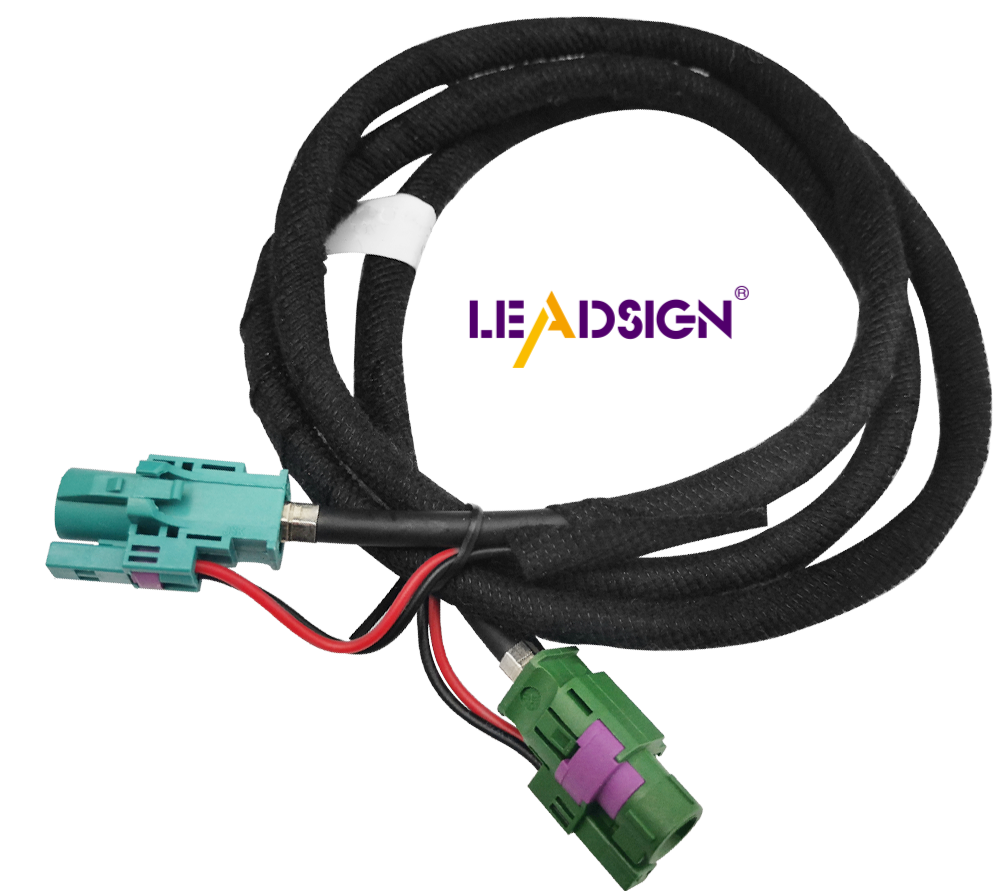
Custom solution: 50Ω coaxial cable with FAKRA (male) on camera end and FAKRA (female) or bare wire on display end. Length 5m, 10m, or 15m.
Benefit: No extension adapters, no signal loss, clean install.
📱 Car Multimedia (Double‑DIN Radios)
Problem: Aftermarket radios often have unique pinouts – need separate power, ground, speaker, USB, antenna, and steering wheel control wires.
Custom solution: Pre‑assembled harness that plugs directly into the radio and splits to vehicle‑specific connectors.
Benefit: 30‑minute install instead of 2 hours of cutting and soldering.
🚚 Fleet Telematics / Trackers
Problem: Telematics devices need power (constant + ignition) and sometimes data. Standard pigtails are too short or have wrong terminals.
Custom solution: Y‑cable with T‑tap or add‑a‑circuit on one end, and device‑specific plug on the other.
Benefit: No wire cutting – install in 5 minutes, removable without trace.
🔌 HSD / FAKRA for EV & ADAS
Problem: High‑EMI environment of EVs requires shielded cables with precise impedance.
Custom solution: 100Ω Ethernet HSD or 50Ω FAKRA coax with double shielding, pre‑terminated to exact length.
Benefit: No data corruption from motor noise – crucial for ADAS and camera systems.
6. 2026 Trends That Increase the Value of Custom Cables
EV penetration – More hybrid and electric vehicles on the road mean more retrofits. Custom cables with EMI‑resistant shielding are no longer a luxury – they are required.
Higher camera resolutions – 4K and 8K cameras need low‑attenuation coax (RG‑174 or better). Off‑the‑shelf video cables often cause pixelation over 3m.
Modular vehicle architectures – New cars use zone controllers. Tapping into these requires custom termination (e.g., Ethernet HSD to MATEnet). Standard cables won’t fit.
Fleet safety mandates – Backup cameras are now mandatory in many regions for commercial vehicles. Custom length cables ensure compliance without unsightly coil loops.
7. How to Order Custom Wire Cables – B2B Checklist
When requesting a quote from a manufacturer (like us), provide:
Total length (from connector A to connector B)
Connector type on each end (FAKRA, USB‑C, bare wire, ring terminal, etc.)
Wire gauge (AWG) for power vs. signal (e.g., 18 AWG for power, 26 AWG for data)
Shielding requirement (none / foil / braid / double)
Impedance (50Ω for video/GPS, 100Ω for USB/Ethernet)
Temperature range (cabin vs. engine bay vs. underbody)
Sealing (IP67 or unsealed)
Colour & labelling (helpful for fleet standardisation)
Quantity (unit price drops significantly above 100 pieces)
Why choose us as your custom cable partner?
✅ Rapid prototyping – samples in 2‑3 weeks
✅ No minimum order quantity for simple designs
✅ Full test reports (continuity, impedance, isolation)
✅ Competitive pricing for 100+ units
Final Verdict
Custom wire cables are not for every job – but for fleets, repeat installations, and high‑reliability applications, they pay for themselves quickly. The key is to balance upfront cost against the hidden costs of standard cables (callbacks, labour, signal issues).
When in doubt, start with a semi‑custom approach – modify an existing off‑the‑shelf cable with your choice of connector and length. It’s the sweet spot between cost and performance.
See Also
Enhancing Automotive Data Flow With Superior Connectors And Cables
Discovering The Flexibility And Advantages Of FAKRA Connectors
Understanding The Advantages Of Fakra Connectors In Vehicles