WHY YOUR 2026 RFQ MUST SPECIFY CONNECTOR TYPE — OR RISK FIELD FAILURES

Intro: One Connector Choice Can Make or Break Vehicle Reliability
Automotive electrical connectors are not interchangeable “one‑size‑fits‑all” parts. Choosing the wrong type for a specific circuit – power, signal, or high‑speed data – can lead to voltage drops, intermittent failures, or even safety hazards. With the rise of ADAS, 4K cameras, and electric vehicles, understanding connector types is more critical than ever for repair shops and fleet managers.
In this guide, you will learn:
The key features of automotive connectors (materials, design, applications)
Detailed comparison of blade, pin, Deutsch, and Molex connector families
How to select based on current, environment, and mating cycles
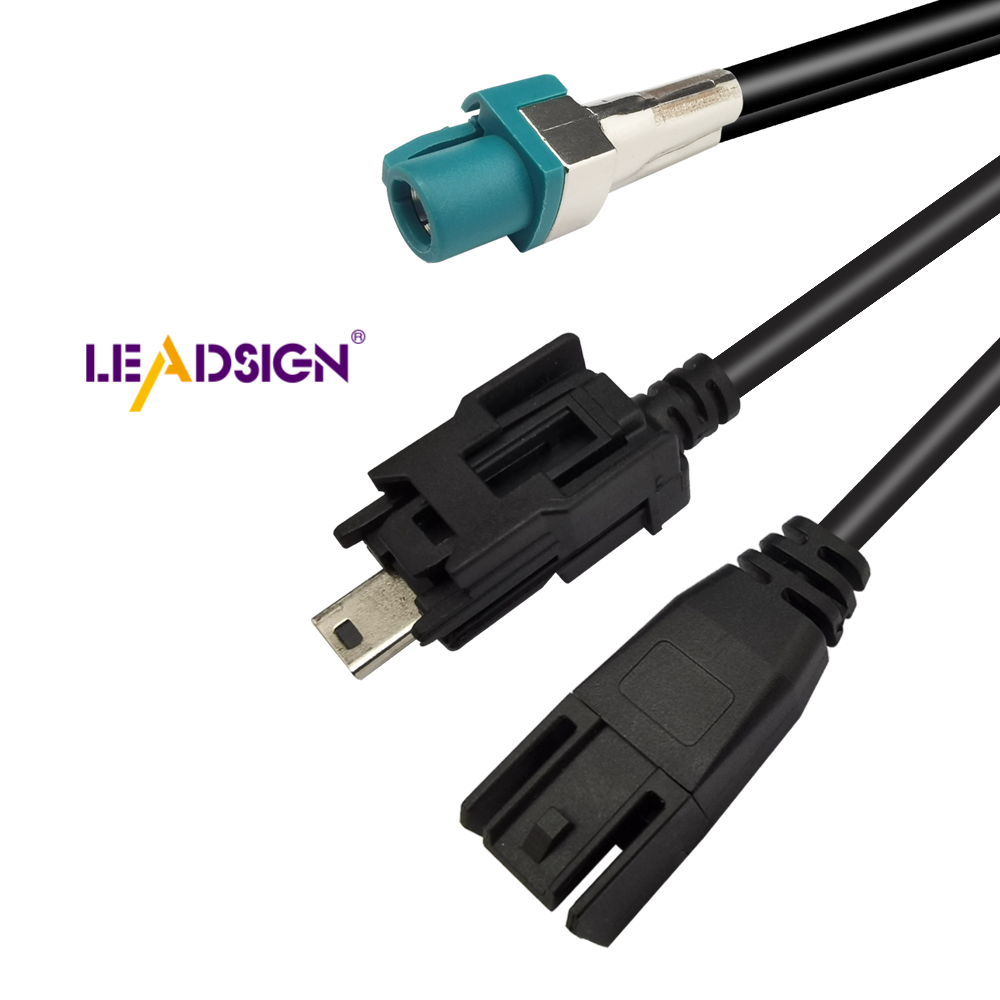
The special case of high‑speed data connectors (FAKRA, HSD) – often overlooked
Why LEADSIGN FAKRA/HSD connectors are essential for modern vehicle data systems
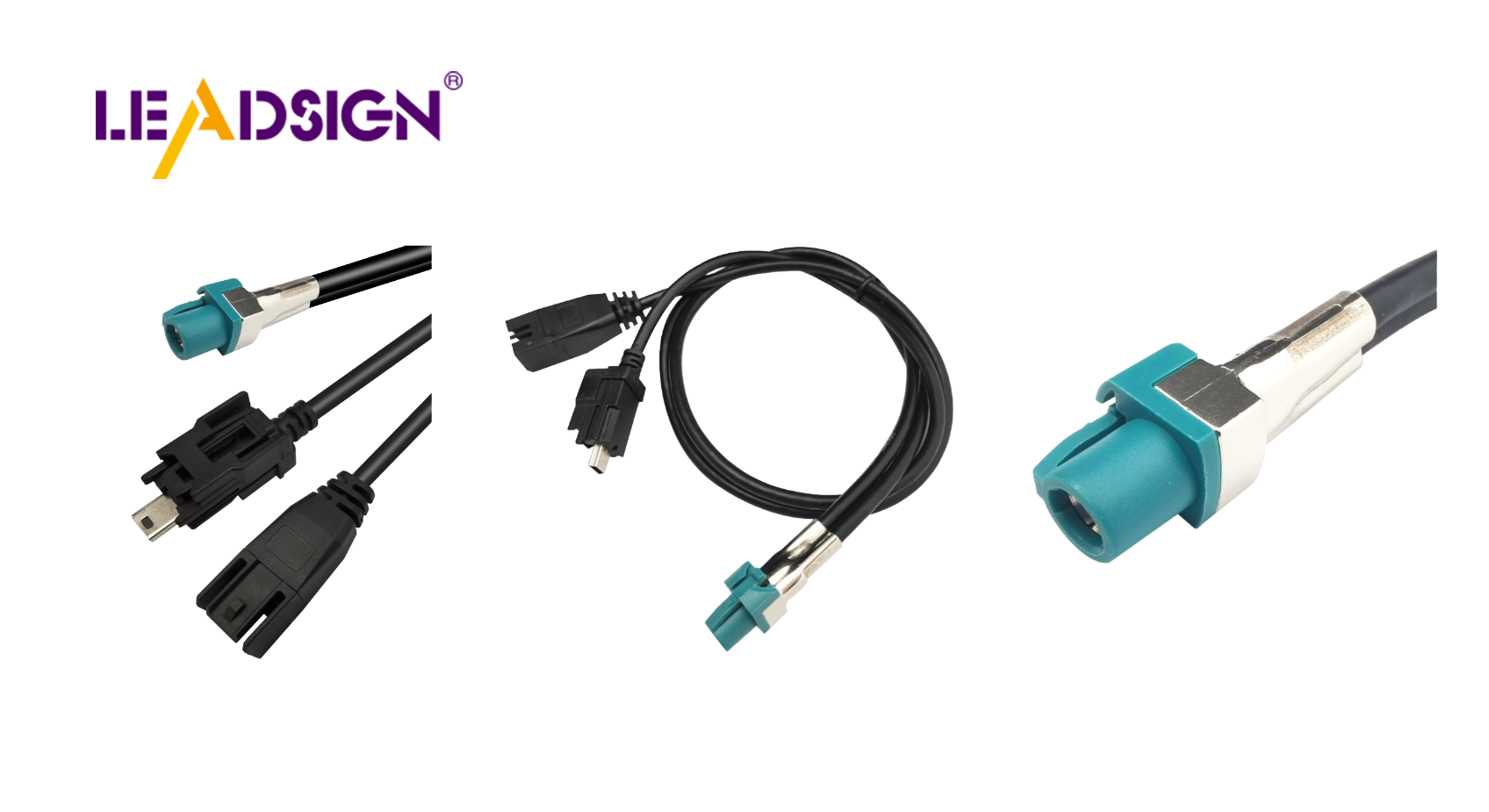
1. Key Features of Automotive Wiring Connectors
Feature | Why it matters |
|---|---|
Material (housing) | Nylon, PBT, or PPA plastics – high strength, heat resistant, chemical resistant. |
Terminal material | Copper or copper alloy (tin or gold plated) – low resistance, corrosion resistance. |
Sealing | IP67/IP69K for exterior/underbody; unsealed for interior. |
Locking mechanism | Secondary lock / CPA prevents vibration loosening. |
Polarisation / keying | Prevents mismating (especially important for FAKRA colour coding). |
Mating cycles | ≥ 25 for serviceable connectors. |
2. Common Connector Types – Blade, Pin, Deutsch, Molex
🔹 Blade Connectors
Shape: Flat metal blade (male) that inserts into a female receptacle.
Common varieties: Standard, mini, micro (size based on current rating and space).
Pros: Simple, low cost, easy to disconnect.
Cons: Unsealed (interior only); moderate vibration resistance.
Best for: Fuse boxes, interior lighting, dashboard switches.
🔹 Pin Connectors (Circular, Rectangular, Miniature)
Shape: Round pins (male) that insert into sockets (female).
Pros: Can be sealed (e.g., Deutsch); good for multi‑pin configurations.
Cons: Requires proper crimp tool.
Best for: ECUs, transmission controllers, airbag systems (sealed versions).
🔹 Deutsch Connectors (DT, DTM, DTP)
Advantages: Sealed (IP67/IP68), high vibration resistance (USCAR‑2), secondary lock, wide temperature range (-55°C to +125°C).
Weaknesses: Larger size, special crimp tool required.
Best for: Engine bay sensors, power distribution, off‑road, heavy‑duty trucks.
🔹 Molex Connectors (MX150, Mini‑Fit, etc.)
Advantages: Compact, sealed options (MX150L), available in many pin counts.
Weaknesses: Lower vibration rating than Deutsch; some series unsealed.
Best for: Interior body electronics, lighting, infotainment, climate control.
3. Comparison Table – Connector Families
Connector Family | Sealed? | Vibration rating | Current (max) | Data capable? | Typical use |
|---|---|---|---|---|---|
Blade (standard) | No | Low | 10‑20A | ❌ | Fuse boxes, interior lighting |
Pin (unsealed) | No | Low‑moderate | 5‑15A | ❌ | Dashboard switches, sensors |
Deutsch DT | Yes (IP67/IP68) | Excellent (20 G’s) | 13A/pin | ❌ | Engine bay, chassis, off‑road |
Molex MX150L | Yes (IP67) | Good | 40A | ❌ | Power distribution, sealed environments |
LEADSIGN FAKRA | Optional (IP67) | Good | <1A (signal) | ✅ 50Ω, up to 20 GHz | GPS, camera, 5G antenna |
LEADSIGN HSD | Optional (IP67) | Good | <1A (signal) | ✅ 100Ω, up to 5 Gbps | USB‑C, Ethernet, LVDS |
Key insight: For power and low‑frequency signals, Deutsch and Molex are excellent. For high‑speed data (video, GPS, USB‑C), you need FAKRA or HSD.
4. How to Select the Best Connector for Optimal Performance
Selection criterion | What to check | Example |
|---|---|---|
Current rating | Match circuit load (e.g., 10A for lights) | Deutsch DT for engine sensors; blade for interior lights. |
Environment | Sealed (IP67) for underbody/exterior; unsealed for interior | Underbody camera power → Deutsch or Weather Pack. |
Vibration | Secondary lock / CPA for high‑vibration areas | Deutsch DT, FAKRA, HSD. |
Data speed | 50Ω (FAKRA) for video/GPS; 100Ω (HSD) for USB/Ethernet | FAKRA blue for camera; HSD USB‑C for CarPlay. |
Space | Compact connectors for tight dashboards | Mini FAKRA, Molex MX150 (sealed). |
Mating cycles | ≥25 for serviceable connectors | Deutsch, FAKRA, HSD. |
Pro tip: For critical systems (airbag, ABS, camera), never use generic unsealed connectors in underbody locations – they will corrode and fail.
5. 2026 Trends – What’s Changing in Connector Selection
Trend | Connector implication |
|---|---|
4K cameras on trucks & vans | Mini FAKRA (20 GHz) required for video. Standard blade/pin cannot carry video. |
5G telematics | Mini FAKRA (violet) with low‑loss coax – field repair impossible; use pre‑terminated. |
EV / hybrid | High‑voltage (orange) connectors (special training). Low‑voltage data lines need double shielding. |
Pre‑terminated cables | Shops prefer LEADSIGN plug‑and‑play FAKRA/HSD – eliminates field crimping errors. |
Space‑constrained designs | Mini‑blade and miniature pin connectors gain popularity. |
6. Why LEADSIGN for High‑Speed Data Connectors
For power and basic signal, Deutsch, Molex, and blade/pin connectors are well understood. However, for high‑speed data, many shops still make the mistake of using power connectors – leading to flickering cameras and lost GPS signals.
LEADSIGN provides:
✅ FAKRA (standard & Mini) – all 14 colours, 50Ω, up to 20 GHz, IP67 optional
✅ HSD (USB‑C, Ethernet, LVDS) – 100Ω, locking, up to 5 Gbps
✅ Pre‑terminated cables – custom lengths 0.3m – 20m, no field crimping
✅ Low‑loss, double‑shielded coax – for long runs and EV environments
✅ Bulk pricing – for shops, fleets, and distributors
For your business: When you install a backup camera or USB‑C port, use LEADSIGN FAKRA or HSD cables – they are designed for the specific electrical requirements of high‑speed data, not adapted power connectors.
Final Recommendations – Connector Selection by Application
Application | Recommended connector type | Source |
|---|---|---|
Fuse box / interior lighting | Blade connector (unsealed) | Any auto parts supplier |
Engine bay sensor (temp, pressure) | Deutsch DT (sealed, high vibration) | TE / Deutsch |
ECU / transmission (OEM replacement) | Pin connector (sealed or unsealed) | OEM or Molex |
Infotainment / climate control | Molex MX150 (unsealed) or HSD (for data) | Molex, LEADSIGN for data |
Backup camera (1080p) | FAKRA blue (50Ω coax) | LEADSIGN pre‑terminated |
4K camera (truck/bus) | Mini FAKRA blue (low‑loss) | LEADSIGN |
GPS antenna | FAKRA amber | LEADSIGN |
5G telematics antenna | Mini FAKRA violet | LEADSIGN |
USB‑C CarPlay | HSD USB‑C (locking) | LEADSIGN |
Remember: A connector that fits mechanically is not enough – it must match the electrical requirements (current, impedance, shielding, environment). Choose wisely, and your repairs will last.
Ready to optimise your connector inventory for both power and data?
See Also
Enhancing Automotive Efficiency with HFM Connectors
Improving Automotive Data Transfer with Advanced Connectors
Essential Guide to HSD Connectors in Automotive Sector