Comparing Types of Wire Connectors for Automotive Use

Intro: One Wrong Connector Can Cost a Comeback
Automotive wire connectors are the unsung heroes of every vehicle’s electrical system. They link power to lights, signals to sensors, and data to cameras. With the rise of ADAS, electric vehicles, and high‑speed infotainment, choosing the right connector type has never been more critical.
In this guide, you will learn:
The most common automotive connector types (crimp, solder, twist‑on, push‑in)
Their pros, cons, and best applications
How to select the right connector based on environment, current, and ease of installation
The special case of high‑speed data connectors (FAKRA/HSD) – often overlooked
2026 trends that affect connector choice
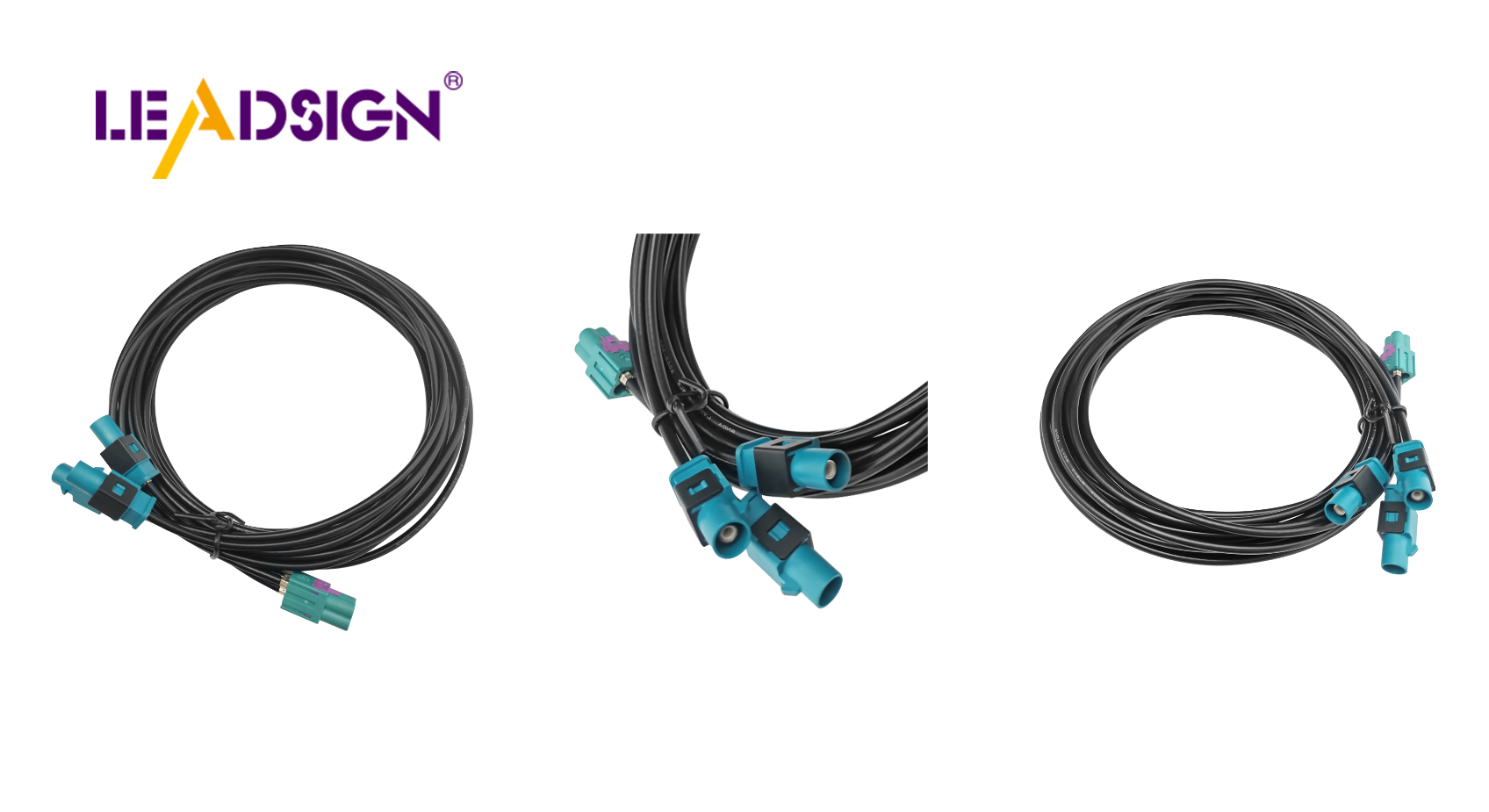
1. Quick Overview – Connector Types at a Glance
Connector Type | Connection Method | Tools Required | Sealed? | Vibration Resistance | Best For |
|---|---|---|---|---|---|
Crimp | Mechanical deformation (squeeze) | Crimping tool | Optional (heat‑shrink) | Excellent | Permanent power & ground, engine bay |
Solder | Molten metal bond | Soldering iron | No (needs heat‑shrink) | Good (if strain relieved) | Low‑vibration interior, sensitive audio |
Twist‑on (wire nut) | Screw‑on compression | None | No | Poor | Temporary repairs, interior only |
Push‑in (lever) | Spring clamp | None | No | Moderate | Quick disconnects, prototyping, interior |
Key insight: Traditional connectors (crimp, solder, twist‑on, push‑in) are designed for power and low‑frequency signals. They cannot carry high‑speed data (video, USB, Ethernet). For that, you need FAKRA or HSD connectors.
2. Detailed Review of Each Connector Type
🔹 Crimp Connectors
How they work: A terminal is pressed onto a stripped wire using a ratcheting crimper, creating a gas‑tight connection.
Pros:
Excellent vibration resistance – ideal for engine bay and underbody
Fast installation (seconds)
Wide range of sizes (22‑18 AWG red, 16‑14 AWG blue, 12‑10 AWG yellow)
Sealed versions available (heat‑shrink butt connectors)
Cons:
Requires proper crimp tool (generic pliers will fail)
Poor crimp = intermittent connection, callback
Best for: Battery terminals, lighting, sensors, ECU power, ground straps.
Pro tip: Always perform a pull test after crimping – wire should not come out with light tug (5‑10 lbs).
🔹 Solder Connectors
How they work: Wire ends are joined by melting solder (tin‑lead or lead‑free) into the strands.
Pros:
Very low resistance (excellent electrical conductivity)
Permanent, strong bond
Good for delicate signal wires
Cons:
Slow (requires heating, cooling)
Risk of wicking (solder climbing inside insulation) – makes wire brittle
Not recommended for high‑vibration areas without strain relief
Best for: Interior audio wires, sensor pigtails, low‑vibration fixed harnesses.
Warning: Many automotive OEMs prohibit solder in harnesses because vibration can crack the solder joint. Crimping is preferred.
🔹 Twist‑on Connectors (Wire Nuts)
How they work: A plastic cone with an internal spring is twisted onto two or more stripped wires.
Pros:
No tools required
Very cheap
Reusable
Cons:
Poor vibration resistance (will loosen)
Not sealed – corrosion guaranteed in engine bay or underbody
Not automotive‑grade for any moving vehicle
Best for: Temporary repairs, bench testing, interior hobbyist projects only.
Do not use: Underhood, underbody, doors, trunks, or any location subject to vibration.
🔹 Push‑in (Lever) Connectors (e.g., WAGO)
How they work: A spring‑loaded lever opens a clamp; wire is inserted, lever closed.
Pros:
Tool‑less, fast
Easy to disconnect and reconnect
Transparent housing (visual check)
Cons:
Not sealed – interior use only
Moderate vibration resistance (lever can bounce open)
Larger than crimp connectors
Best for: Prototyping, temporary installations, DIY interior accessories.
3. The Missing Category – High‑Speed Data Connectors (FAKRA, HSD)
Traditional connectors cannot handle video, USB, GPS, or Ethernet signals. For these, you need:
Connector Family | Impedance | Data Rate | Colour Coding | Typical Use |
|---|---|---|---|---|
FAKRA (standard) | 50Ω | Up to 8 Gbps | 14 colours (blue=camera, amber=GPS) | Backup camera, GPS, 4G antenna |
Mini FAKRA | 50Ω | Up to 28 Gbps / 20 GHz | Same colours, smaller size | 4K camera, 5G telematics |
HSD (USB‑C, Ethernet) | 100Ω | Up to 5 Gbps | Keyed (not colour‑coded) | CarPlay, ADAS, diagnostics |
Rule of thumb: If the signal is video, GPS, or USB, do not use crimp, solder, twist‑on, or push‑in connectors. Use FAKRA or HSD.
4. Selection Criteria – How to Choose the Right Connector
Factor | What to consider | Example |
|---|---|---|
Environment | Interiors = unsealed; engine bay/underbody = sealed (IP67) | Crimp with heat‑shrink for underbody |
Current | Power circuits need larger gauge terminals; signal circuits small | 16‑14 AWG crimp for lights; 22‑18 AWG for sensors |
Vibration | High‑vibration areas need secondary lock or tight crimp | Deutsch DT, FAKRA, HSD |
Data speed | Low speed (sensors) = any; high speed (video) = FAKRA/HSD | AHD camera = FAKRA blue 50Ω |
Ease of installation | Field crimp vs pre‑terminated | LEADSIGN pre‑terminated FAKRA/HSD saves labour |
Cost | Cheap = interior; invest in sealed/data for critical systems | Balance upfront vs callback cost |
5. Common Mistakes – And How to Avoid
Mistake | Consequence | Prevention |
|---|---|---|
Using twist‑on connector underhood | Vibrates loose, arcing, fire | Use crimp or Deutsch sealed connector. |
Soldering wires in engine bay | Solder joint cracks from vibration | Use crimp with heat‑shrink. |
Using a power connector (Deutsch) for camera video | No image or severe noise | Use FAKRA (blue) 50Ω coax. |
Field‑crimping FAKRA with generic tool | Impedance mismatch → image flicker | Buy pre‑terminated LEADSIGN FAKRA cable. |
No strain relief | Wire pulls out of crimp | Zip‑tie wire within 5 cm of connector. |
6. 2026 Trends – What’s Changing
Trend | Connector implication |
|---|---|
4K cameras on trucks & buses | Mini FAKRA required – standard FAKRA’s 6 GHz may be borderline. |
5G telematics | Mini FAKRA (violet) with low‑loss coax – field repair impossible. |
EV / hybrid | High EMI environment – double‑shielded FAKRA/HSD cables mandatory. |
Pre‑terminated cables | Shops moving to plug‑and‑play to reduce labour and errors. |
What this means for your inventory: Stock crimp connectors for power, but also stock FAKRA (blue, amber, violet) and HSD (USB‑C) for data.
7. Why LEADSIGN – Your Partner for High‑Speed Data Connectors
For power and basic signal connectors, many reliable brands exist (TE, Molex, Deutsch). For FAKRA and HSD, LEADSIGN offers the best combination of quality, cost, and customisation.
What LEADSIGN provides:
✅ FAKRA (standard & Mini) – all 14 colours, 50Ω, up to 20 GHz, IP67 optional
✅ HSD (USB‑C, Ethernet, LVDS) – 100Ω, locking, up to 5 Gbps
✅ Pre‑terminated cables – custom lengths (0.3m – 20m), no field crimping
✅ Low‑loss, double‑shielded coax – for long runs and EV EMI environments
✅ Bulk pricing – for shops, fleets, and distributors
For your business: When selling a reverse camera kit, include a LEADSIGN pre‑terminated FAKRA cable – your customers get a professional, reliable installation with no crimping errors.
Final Recommendations – Connector Selection Summary
Application | Recommended Connector | Source |
|---|---|---|
Interior power (lights, switches) | Crimp butt or push‑in (unsealed) | Any |
Engine bay power / sensors | Crimp with heat‑shrink (sealed) or Deutsch | TE, Deutsch |
Speaker wires | Crimp bullet or butt | Any |
Backup camera (1080p) | FAKRA blue (50Ω coax) | LEADSIGN pre‑terminated |
4K camera | Mini FAKRA blue | LEADSIGN |
GPS antenna | FAKRA amber | LEADSIGN |
5G telematics | Mini FAKRA violet | LEADSIGN |
USB‑C CarPlay | HSD USB‑C (locking) | LEADSIGN |
Remember: A connector that fits mechanically is not enough – it must match the electrical requirements (current, impedance, shielding, environment). Choose wisely, and your repairs will last.
Ready to upgrade your connector inventory?
See Also
Exploring HSD Connectors in Automotive Technology
Benefits of HFM Connectors in Automotive Sector
Significance of FAKRA Connectors in Auto Uses