Tips for Choosing Automotive Wire Connectors Types

Intro: One Wrong Connector Can Undermine Your Entire Repair
Automotive wire connectors are small components with a huge responsibility – they carry power to lights, signals to sensors, and data to cameras. Choosing the wrong type can lead to loose connections, corrosion, overheating, or intermittent failures. For repair shops and fleet managers, understanding connector types and selection criteria is essential for reducing callbacks and ensuring vehicle safety.
In this guide, you will learn:
Common connector types (butt, spade, bullet, ring, quick‑disconnect)
Key selection factors (wire gauge, material, environment, application)
How to avoid costly mistakes
Why FAKRA/HSD connectors are required for high‑speed data
Why LEADSIGN pre‑terminated cables simplify installation
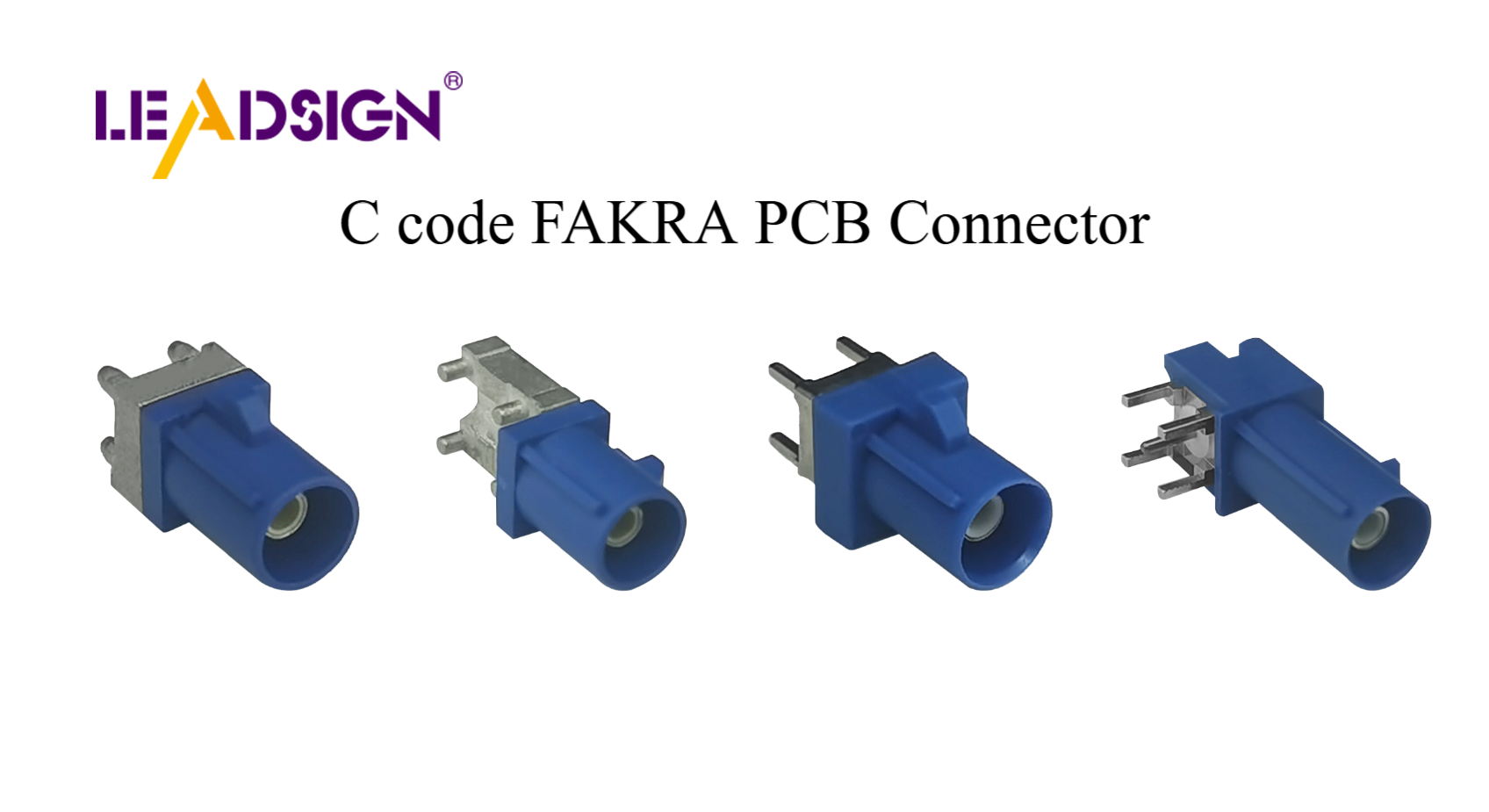
1. Common Automotive Wire Connector Types
Connector Type | Description | Typical Use | Sealed? |
|---|---|---|---|
Butt connector | Joins two wires end‑to‑end | Wire repair, extending circuits | Optional (heat‑shrink) |
Spade connector | Flat female fork | Relay, fuse box, quick disconnect | No (unsealed) |
Bullet connector | Round male/female plug | Lighting, low‑power accessories | No |
Ring terminal | Circular, fits over a stud | Battery terminal, grounding point | No (can add heat‑shrink) |
Quick‑disconnect | Push‑on tab and receptacle | Speakers, frequently disconnected devices | Yes (insulated types) |
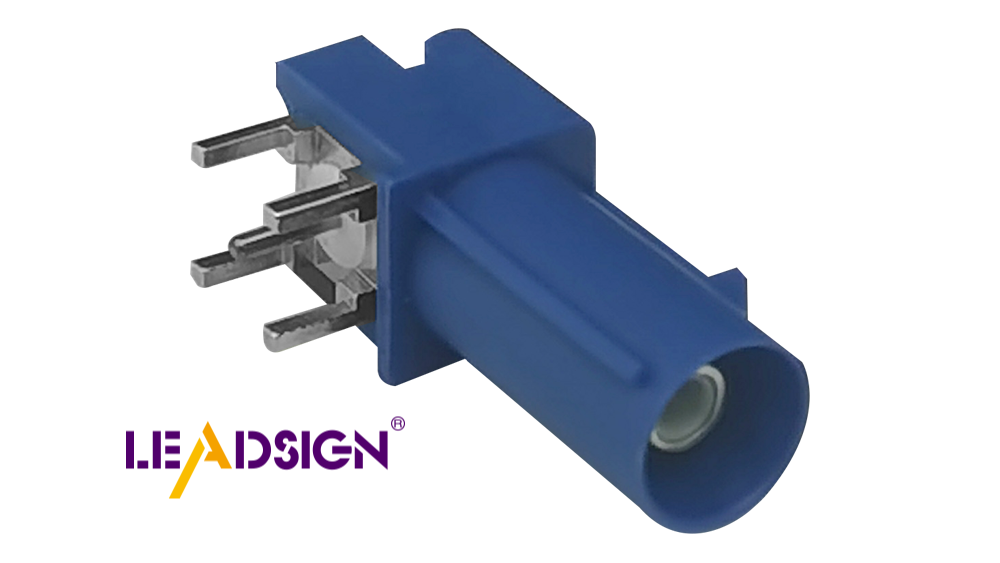
FAKRA (coaxial) | Colour‑coded plastic housing, 50Ω | GPS, backup camera, 4G/5G antenna | IP67 optional |
HSD (differential) | 4‑pin or 6‑pin, locking, 100Ω | USB‑C CarPlay, Ethernet, LVDS | Optional |
Key insight: For power and low‑speed signals, butt, spade, bullet, ring, and quick‑disconnect connectors are suitable. For high‑speed data (video, GPS, USB‑C), you must use FAKRA or HSD.
2. Key Factors for Choosing the Right Connector
🔹 Wire Gauge Compatibility
Red terminal: 22‑18 AWG
Blue terminal: 16‑14 AWG
Yellow terminal: 12‑10 AWG
Using the wrong gauge causes loose crimps or overheating.
🔹 Material & Durability
Terminals: Copper or copper alloy (tin/gold plated) – best conductivity and corrosion resistance.
Insulation: PVC (interior), XLPE (engine bay), heat‑shrink (waterproof).
Housing: PA66, PBT, or PPA for high‑temp, chemical resistance.
🔹 Environmental Conditions
Location | Recommended Connector |
|---|---|
Interior (dry) | Unsealed butt, spade, bullet |
Engine bay (heat, vibration) | Sealed (Deutsch, Weather Pack) or heat‑shrink butt |
Underbody (water, salt) | IP67 sealed (Deutsch, Weather Pack, sealed FAKRA) |
🔹 Application‑Specific Needs
Quick repairs / temporary connections → Quick‑disconnect or bullet.
Permanent / high‑vibration → Crimped ring terminal or butt connector with secondary lock.
Moisture‑prone areas → Heat‑shrink crimp connectors or sealed housings.
Video / data → FAKRA (50Ω) or HSD (100Ω).
3. Common Mistakes to Avoid
Mistake | Consequence | Prevention |
|---|---|---|
Using a power connector for video | No image or severe interference | Use FAKRA blue (50Ω coax) |
Wrong wire gauge | Loose crimp, overheating | Match terminal colour to AWG |
Unsealed connector underbody | Corrosion in 3‑6 months | Use IP67 sealed connectors |
No secondary lock in high‑vibration area | Connector separates | Choose connectors with CPA |
Field‑crimping FAKRA/HSD | Impedance mismatch, signal loss | Use pre‑terminated LEADSIGN cables |
Pro tip: Always perform a pull test after crimping – the wire should not come out with 5‑10 lbs force.
4. Organising & Labelling Connections – Best Practices
Group wires by function (lighting, sensors, data) using zip ties or braided sleeving.
Use waterproof labels or heat‑shrink markers – write function (e.g., “CAMERA VIDEO”, “+12V CONSTANT”).
Draw a simple wiring diagram or take photos before disassembly – saves hours of confusion.
Colour coding: Red = power, black = ground, yellow = switched accessory.
5. Why LEADSIGN for High‑Speed Data Connectors
For power and basic signal, many brands (TE, Molex, Deutsch) offer excellent products. However, for high‑speed data (FAKRA, HSD), field termination is difficult and error‑prone. LEADSIGN provides pre‑terminated, ready‑to‑install cables.
What LEADSIGN offers:
✅ FAKRA (standard & Mini) – all 14 colours, 50Ω, up to 20 GHz, IP67 optional
✅ HSD (USB‑C, Ethernet, LVDS) – 100Ω, locking, up to 5 Gbps
✅ Pre‑terminated cables – custom lengths 0.3m – 20m, no field crimping
✅ Low‑loss, double‑shielded coax – for long runs and EV environments
✅ Bulk pricing – for shops, fleets, and distributors
For your business: Instead of struggling with field‑crimped data cables, use LEADSIGN pre‑terminated FAKRA/HSD cables – plug‑and‑play, perfect signal integrity, and no callbacks.
Final Recommendations – Quick Selection Tool
Application | Recommended Connector | Source |
|---|---|---|
Interior power (lights, switches) | Spade or bullet (unsealed) | Any |
Engine bay sensor | Deutsch DT or heat‑shrink butt | TE, Deutsch |
Underbody camera power | Sealed butt (IP67) | Any quality brand |
1080p backup camera | FAKRA blue (50Ω coax) | LEADSIGN pre‑terminated |
4K camera (truck/bus) | Mini FAKRA blue (low‑loss) | LEADSIGN |
GPS antenna | FAKRA amber | LEADSIGN |
USB‑C CarPlay | HSD USB‑C (locking) | LEADSIGN |
Remember: The right connector type is not a suggestion – it is a requirement for reliable, safe vehicle operation.
Ready to optimise your connector inventory?
See Also
Why FAKRA Connectors Are Essential for Cars Today
Significance of Fakra Connectors in Today's Vehicles
Crucial Role of Fakra Connectors in Automotive Sector