Choosing the Right Automotive Wiring Connector Types – Professional B2B Guide (2026)

Intro: The Right Connector Prevents Costly Failures
Selecting the correct automotive electrical connector is critical for vehicle performance, safety, and reliability. Connectors link every electrical component – from engine controls and sensors to lighting and infotainment. A poor choice can cause voltage drop, intermittent signals, overheating, or even fire. With a wide variety of connector types available (blade, bullet, butt, pin, FAKRA, HSD), understanding their features, applications, and limitations is essential for repair shops, fleet managers, and custom harness builders.
In this guide, you will learn:
Common automotive connector types and their uses
Key selection criteria (electrical, environmental, mechanical)
How to match connectors to your vehicle’s needs
Practical tips for testing and choosing wisely
Why LEADSIGN FAKRA/HSD connectors are the professional choice for high‑speed data
1. Understanding Automotive Electrical Connectors – Definitions & Materials
Automotive connectors join wires and components, ensuring reliable power and signal flow. They are made of:
Conductive terminals: Copper or copper alloy (tin or gold plated) for low resistance and corrosion resistance.
Insulating housing: Plastic (nylon, PBT, PPA) or metal (for heavy‑duty). Plastic is lightweight and corrosion‑free; metal offers superior mechanical strength.
Seals: Rubber or silicone grommets and gaskets for waterproofing (IP67/IP69K).
Why material matters: Cheap materials corrode quickly, leading to high resistance and failure.
2. Common Types of Automotive Electrical Connectors
Connector type | Description | Best for | Limitations |
|---|---|---|---|
Blade (spade) | Flat male terminal, female receptacle | Low‑current, interior (fuse boxes, switches) | Not sealed; moderate vibration |
Bullet | Round male pin, female socket | Low‑vibration interior, lighting | Not for high current |
Butt | Cylindrical splice, crimp or heat‑shrink | Wire repair, extending circuits | Not reusable; requires crimp tool |
Pin | Round pin & socket, multi‑cavity | ECUs, sensors, engine bay (sealed versions) | Requires precise alignment |
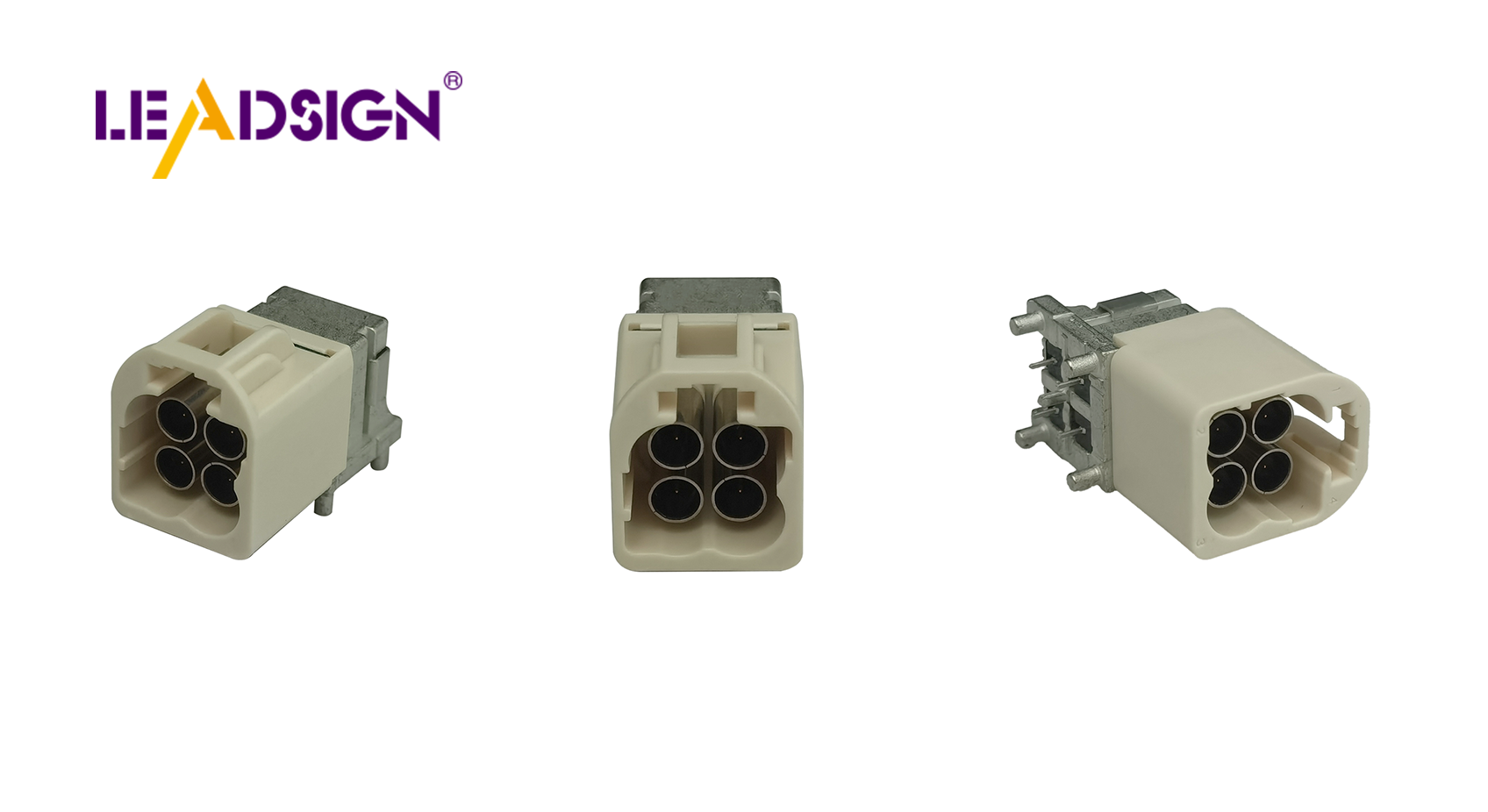
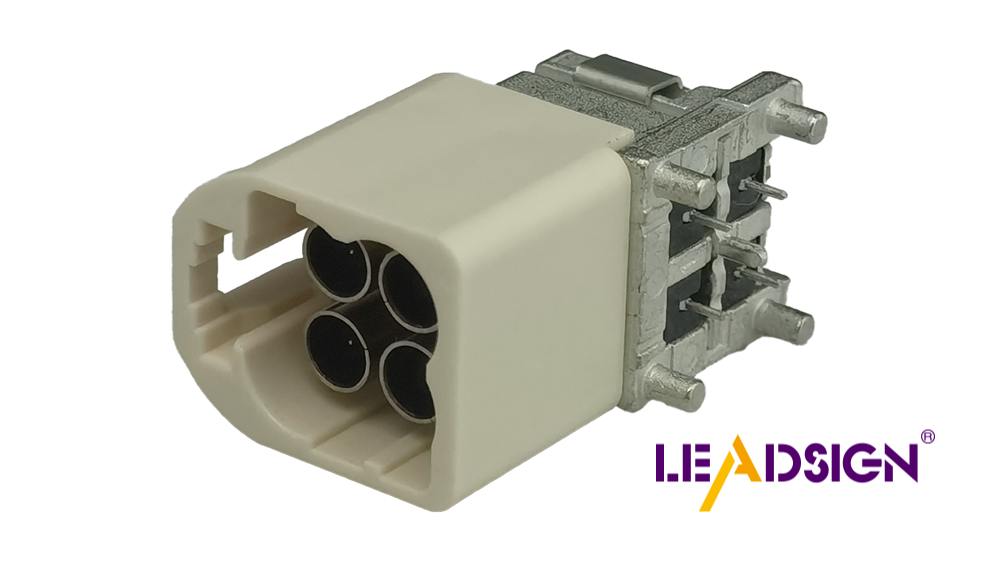
FAKRA (coaxial) | Colour‑coded plastic housing, 50Ω | GPS, backup camera, 4G/5G antenna | Signal only; pre‑terminated recommended |
HSD (differential) | 4‑pin locking, 100Ω | USB‑C, Ethernet, LVDS | Signal only; field termination difficult |
Key takeaway: For power and low‑frequency signals, blade, bullet, butt, and pin connectors are suitable. For high‑speed data (video, USB, Ethernet), you must use FAKRA or HSD.
3. Key Selection Criteria
🔹 Electrical Requirements
Current & voltage ratings: Match connector to circuit load (e.g., 10A for lights, 30A for fans). Oversize for safety.
Wire gauge compatibility: Use terminals that match wire size (red=22‑18 AWG, blue=16‑14 AWG, yellow=12‑10 AWG).
🔹 Environmental Conditions
Condition | Requirement | Example |
|---|---|---|
High heat (engine bay) | Rated -40°C to +125°C, XLPE insulation | Deutsch DT, sealed pin connectors |
Moisture / water (underbody) | IP67/IP69K sealing, dielectric grease on seals | Weather Pack, sealed FAKRA |
Vibration | Secondary lock / CPA, USCAR‑2 rated | Deutsch, FAKRA, HSD |
Chemical exposure (oil, coolant) | Chemically resistant housing | Deutsch DT, TE MCON |
🔹 Mechanical & Installation Factors
Ease of installation: Crimp terminals (fast, reliable) vs. solder (slow, low‑vibration only). Pre‑terminated cables (LEADSIGN) eliminate field crimping.
Maintenance: Sealed connectors require less frequent cleaning. Unsealed interior connectors need periodic inspection.
4. Practical Tips for Picking the Right Connector
✅ Assess your specific application
Location: Interior (dry) → unsealed blade or bullet; engine bay → sealed pin or Deutsch.
Signal type: Power/ground → butt or ring; data (video, USB) → FAKRA or HSD.
✅ Consult experts and datasheets
Review manufacturer specifications (current, temperature, IP rating, USCAR‑2).
For unfamiliar connectors, send a photo to LEADSIGN technical support – free identification.
✅ Test before full installation
Continuity test: Use a multimeter to check each wire end‑to‑end (beep).
Voltage drop test: Power the circuit, measure drop across connector – should be <0.2V.
Environmental chamber (for high volume): Simulate heat, cold, humidity.
5. Why LEADSIGN – Your Partner for High‑Speed Data Connectors
For power and basic signal connectors, many brands (Deutsch, TE, Molex) offer excellent products. However, for high‑speed data (FAKRA, HSD), field termination is error‑prone. LEADSIGN provides pre‑terminated, colour‑coded cables that eliminate this problem.
What LEADSIGN offers for 2026:
✅ FAKRA (standard & Mini) – all 14 colours, 50Ω, up to 20 GHz, IP67 optional
✅ HSD (USB‑C, Ethernet, LVDS) – 100Ω, locking, up to 5 Gbps
✅ Pre‑terminated cables – any length 0.3m – 20m, no field crimping
✅ Low‑loss, double‑shielded coax – for long runs and EV environments
✅ Bulk pricing – for shops, fleets, and distributors
For your business: When you need a reliable GPS, camera, or USB‑C connection, use LEADSIGN pre‑terminated FAKRA/HSD cables – plug‑and‑play, perfect signal integrity, no callbacks.
Final Recommendations – Connector Selection Summary
Application | Recommended connector type | Sealed? | Source |
|---|---|---|---|
Interior light / switch | Blade or bullet | No | Any |
Engine bay sensor | Sealed pin (Deutsch, TE MCON) | Yes | TE / Deutsch |
Underbody camera power | Sealed butt (heat‑shrink) | Yes | Any |
GPS antenna | FAKRA amber (50Ω) | Optional | LEADSIGN pre‑terminated |
1080p backup camera | FAKRA blue | Optional | LEADSIGN |
4K camera (truck/bus) | Mini FAKRA blue (low‑loss) | IP67 optional | LEADSIGN |
5G telematics antenna | Mini FAKRA violet | IP67 optional | LEADSIGN |
USB‑C CarPlay | HSD USB‑C (100Ω) | No (interior) | LEADSIGN |
Remember: Choosing the right connector type is not just about fit – it’s about matching electrical requirements, environment, and signal type. Invest wisely, and your repairs will last.
Ready to optimise your connector inventory with pre‑terminated data cables?
[Request a free LEADSIGN FAKRA/HSD sample kit] | [Get bulk pricing]
See Also
Significance of HSD Connectors in Automotive Sector
Value of Fakra Auto Connectors in Contemporary Cars
Fundamentals of HSD Connectors in Automotive Sector