Factors to Consider When Choosing Car Radio Wire Connectors

Intro: The Right Connector Prevents Electrical Failures and Poor Sound Quality
Choosing high‑quality auto harness connectors for car radio wiring is essential. Poor connectors can cause weak signals, corrosion, intermittent sound, or complete system failure. To avoid issues, use strong splices, correct crimping techniques, and reliable materials. Heat‑shrink tubing with adhesive ensures moisture‑proof, long‑lasting connections. In vehicles, these connectors link the radio to the electrical system, enabling seamless power and signal flow.
This guide covers key selection factors:
Compatibility and fit (vehicle model, radio system, pin layout)
Durability and material (copper, brass, corrosion‑resistant coatings)
Electrical performance (current/voltage ratings, insulation, heat prevention)
Ease of installation (locking features, pre‑made vs. DIY, tools)
Environmental resistance (temperature, moisture, UV protection)
Advanced features (mismating prevention, secondary locks, compact designs)
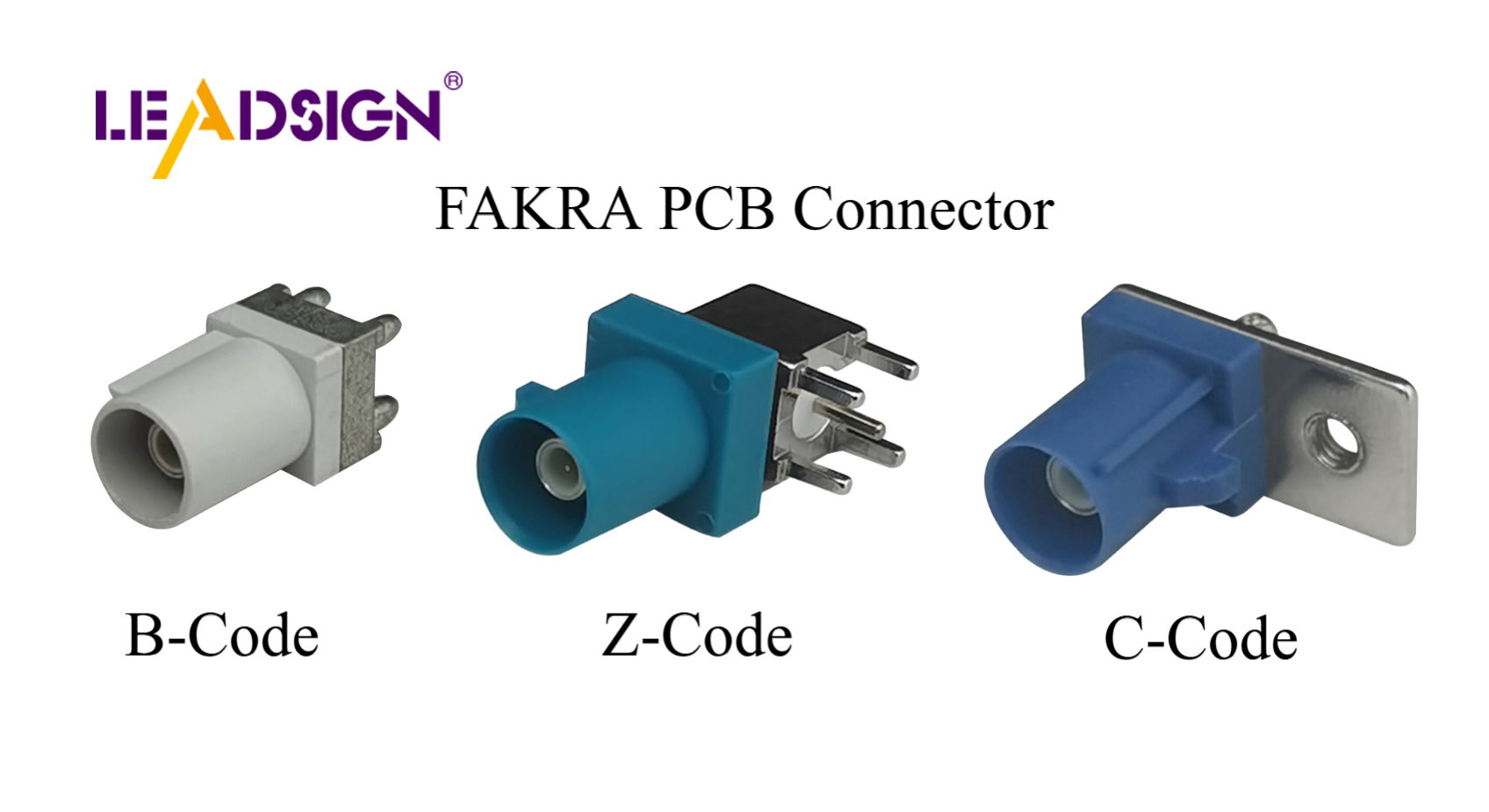
Why LEADSIGN FAKRA/HSD connectors are the professional choice for modern digital audio and antenna connections
1. Compatibility and Fit – Matching Connectors to Your Vehicle and Radio
Factor | What to check | Why it matters |
|---|---|---|
Vehicle make and model | Electrical system voltage (12V/24V/HV), number of ECUs | Hybrid/EV may need HV‑rated connectors; older vehicles have simpler wiring. |
Radio system requirements | Voltage (typically 12V continuous), current (e.g., 15A switched), number of pins | Prevents overheating and ensures sufficient power. |
Pin size and layout | Compare radio pinout diagram to connector; keying/colour coding | Prevents loose connections and mismating. |
Pro tip: Use vehicle‑specific adapter harnesses – they are pre‑terminated and eliminate cutting factory wires.
2. Durability and Material – Long‑Lasting Performance
Material | Properties | Best for |
|---|---|---|
Copper | Excellent conductivity, flexible | Signal and power terminals |
Brass | Strong, wear‑resistant, good conductivity | High‑stress or high‑cycle connections |
Corrosion‑resistant plating (tin, nickel, gold) | Prevents oxidation, extends life | Exterior or high‑humidity installations |
Why materials matter: Plastic connectors may suffice for interior dry locations, but metal or high‑grade thermoplastics (PA66, PBT) resist heat and vibration better. Choose gold‑plated terminals for low‑voltage signal lines (e.g., antenna, USB).
3. Electrical Performance – Current, Voltage, and Insulation
Requirement | Typical value | Notes |
|---|---|---|
Continuous voltage | 12V (most cars) | Some heavy‑duty vehicles use 24V. |
Switched current | 15A (for standard radios) | High‑power amplifiers may need higher‑rated connectors (20‑30A). |
Insulation material | PVC (interior), XLPE (heat‑resistant) | Prevents shorts and signal interference. |
To prevent overheating:
Use the correct wire gauge (16‑18 AWG for power, 18‑22 AWG for speakers).
Ensure ground connection is solid (no noise, no voltage drop).
Keep wires away from sharp edges and hot surfaces.
4. Ease of Installation – Locking Features, Pre‑Made vs. DIY, Tools
🔹 Locking features for secure connections
Primary lock: Latch or snap that holds connector halves together.
Secondary lock / CPA: Extra assurance against vibration loosening – essential for off‑road or high‑vibration vehicles.
🔹 Pre‑made connectors vs. making your own
Option | Pros | Cons |
|---|---|---|
Pre‑made (adapter harness) | Time‑saving, fewer errors, plug‑and‑play | Higher upfront cost, requires exact vehicle match |
DIY (crimp your own) | Lower cost, custom length | Requires skill, tools, and time; higher error risk |
🔹 Tools to make installation easier
Ratcheting crimper – consistent, gas‑tight crimps.
Wire strippers – clean strip without nicking strands.
Heat gun – for shrinking adhesive‑lined tubing (waterproof seal).
Multimeter – test continuity and voltage drop.
5. Environmental Resistance – Temperature, Moisture, and UV Protection
Hazard | Requirement | Solution |
|---|---|---|
Extreme temperature (-40°C to +105°C) | Connector must not crack or melt | Use high‑temp thermoplastics (PA66, PBT). |
Water / moisture | Prevent corrosion and short circuits | Sealed (IP67) connectors, dielectric grease on seals, drip loops. |
Sunlight (UV) | Prevent plastic degradation | UV‑resistant housing or protect with tape/loom. |
Pro tip: For radios installed in open vehicles (boats, off‑road), use weatherpack or sealed Deutsch connectors – never unsealed spade or bullet.
6. Advanced Features in Automotive Electrical Connectors
Feature | Benefit |
|---|---|
Mismating prevention (keyed housings, colour coding) | Prevents connecting the wrong harness – saves time and avoids damage. |
Secondary lock / CPA | Extra retention under vibration – critical for off‑road vehicles. |
Compact design | Fits tight dashboard spaces – essential for modern cars. |
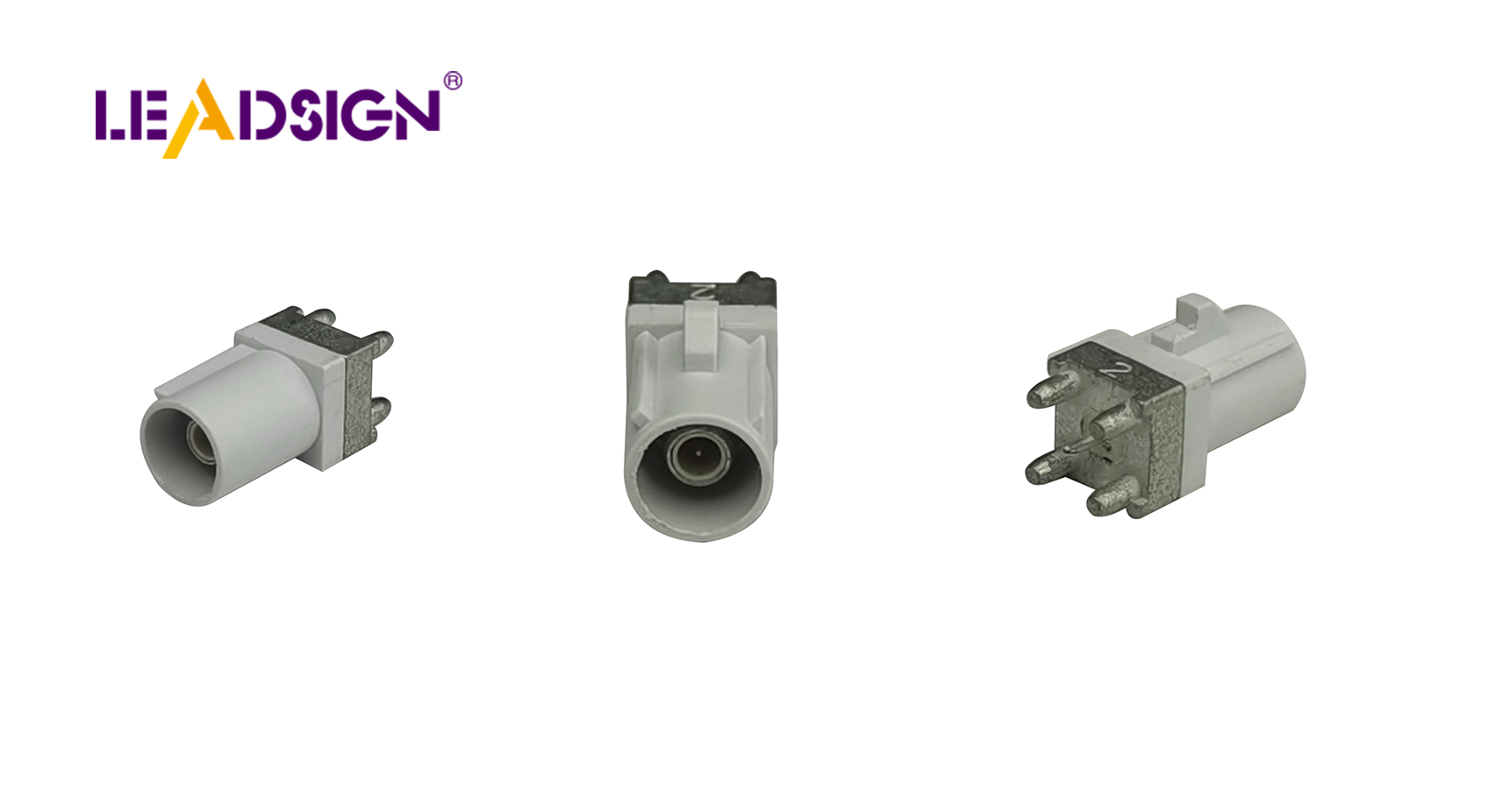
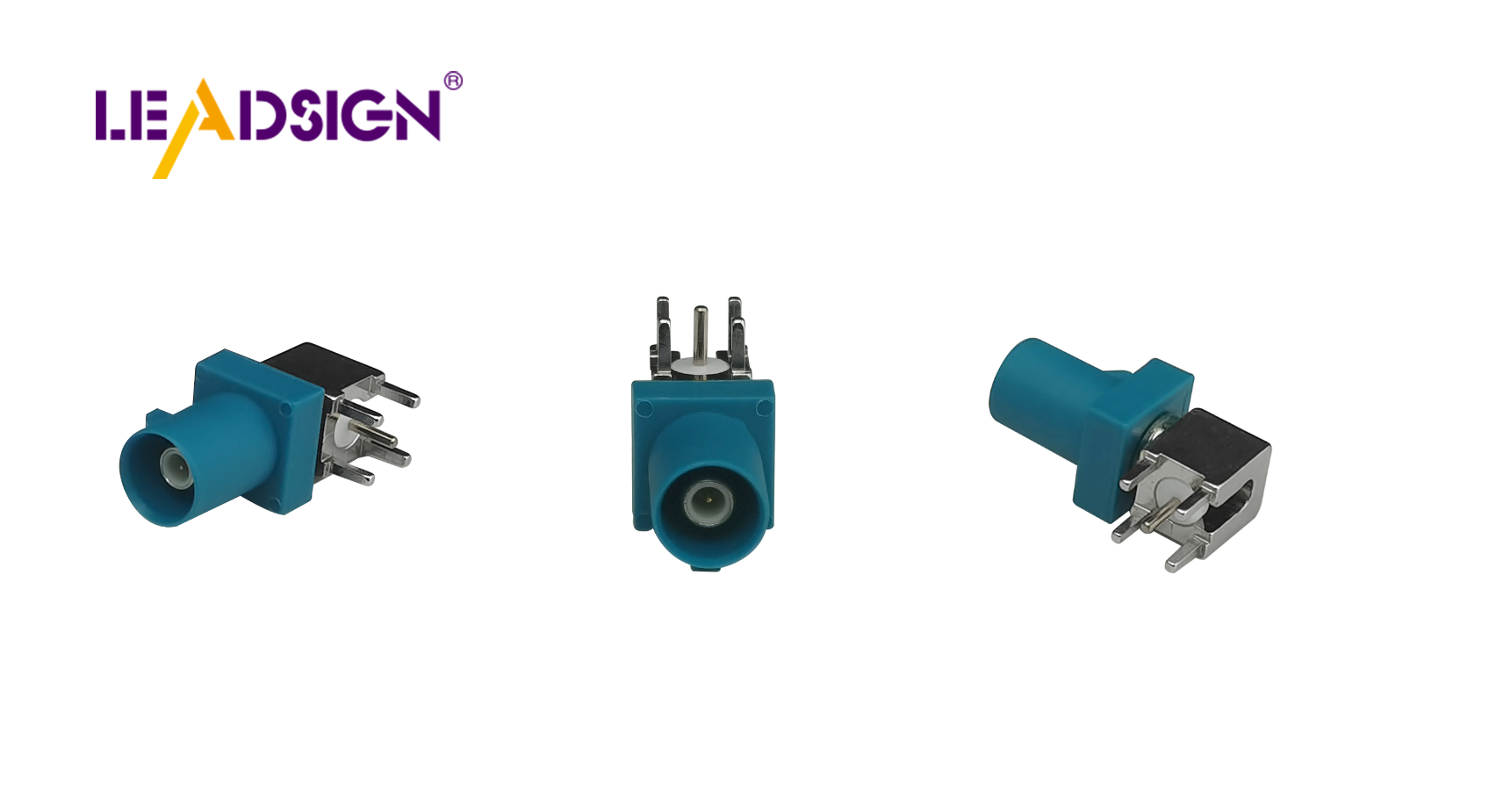
Pre‑terminated cables (LEADSIGN FAKRA/HSD) | No field crimping, perfect impedance for digital audio and antennas. |
7. Why LEADSIGN – For Modern Digital Radio and Antenna Connections
Modern car radios increasingly use digital audio (A2B, MOST), GPS antennas, and USB‑C – which require FAKRA or HSD connectors, not traditional speaker terminals.
What LEADSIGN offers:
✅ FAKRA (standard & Mini) – all 14 colours, 50Ω, up to 20 GHz, IP67 optional
✅ HSD (USB‑C, Ethernet, LVDS) – 100Ω, locking, up to 5 Gbps
✅ Pre‑terminated cables – any length 0.3m – 20m, no field crimping
✅ Low‑loss, double‑shielded coax – for clean digital audio and GPS signal
✅ Bulk pricing – for shops, fleets, and distributors
For your business: When upgrading to a digital radio or adding a backup camera, use LEADSIGN pre‑terminated FAKRA/HSD cables – plug‑and‑play, perfect signal integrity, no callbacks.
Final Recommendations – Car Radio Connector Selection Summary
Application | Recommended connector | Key feature | Source |
|---|---|---|---|
Power / ground (12V) | Unsealed butt or spade (16‑18 AWG) | Low cost, easy crimp | Any quality brand |
Speaker wires (interior) | Unsealed bullet or butt | Quick disconnect | Any |
AM/FM antenna | FAKRA bordeaux (50Ω) | Colour‑coded, low loss | LEADSIGN pre‑terminated |
GPS antenna (navigation) | FAKRA amber (50Ω) | 50Ω, colour‑coded | LEADSIGN |
Digital audio / A2B | FAKRA or HSD | Impedance‑controlled | LEADSIGN |
USB‑C CarPlay | HSD USB‑C (locking) | 5 Gbps, vibration‑proof | LEADSIGN |
Remember: Choosing the right connector prevents electrical gremlins, ensures clear sound, and makes installation faster. Invest in quality, and your customers will enjoy years of trouble‑free listening.
Ready to simplify your car radio connector inventory with pre‑terminated data cables?
[Request a free LEADSIGN FAKRA/HSD sample kit] | [Get bulk pricing]
See Also
Benefits of HFM RF Connectors for Automotive Innovations
Significance of Fakra Connectors in Today's Automotive Designs
Enhancing Vehicle Data Transfer with Advanced Connectors and Cables