How to Pick the Best Custom Wire Cables for Your Vehicle – Professional B2B Guide (2026)

Intro: One Wrong Cable Can Overheat, Drop Voltage, or Kill a Module
Choosing the correct custom wire cable for your vehicle is critical. The wrong wire gauge can cause overheating, voltage drop, intermittent failures, or even fire. Key factors include wire gauge (AWG), voltage and amperage ratings, temperature resistance, chemical resistance, and EMI/RFI shielding. This guide explains how to select the right automotive wire for various applications – from lights and audio to high‑tech infotainment and ADAS. For high‑speed data (cameras, GPS, USB‑C, Ethernet), specialised cables (FAKRA, HSD) are required, not standard primary wire.
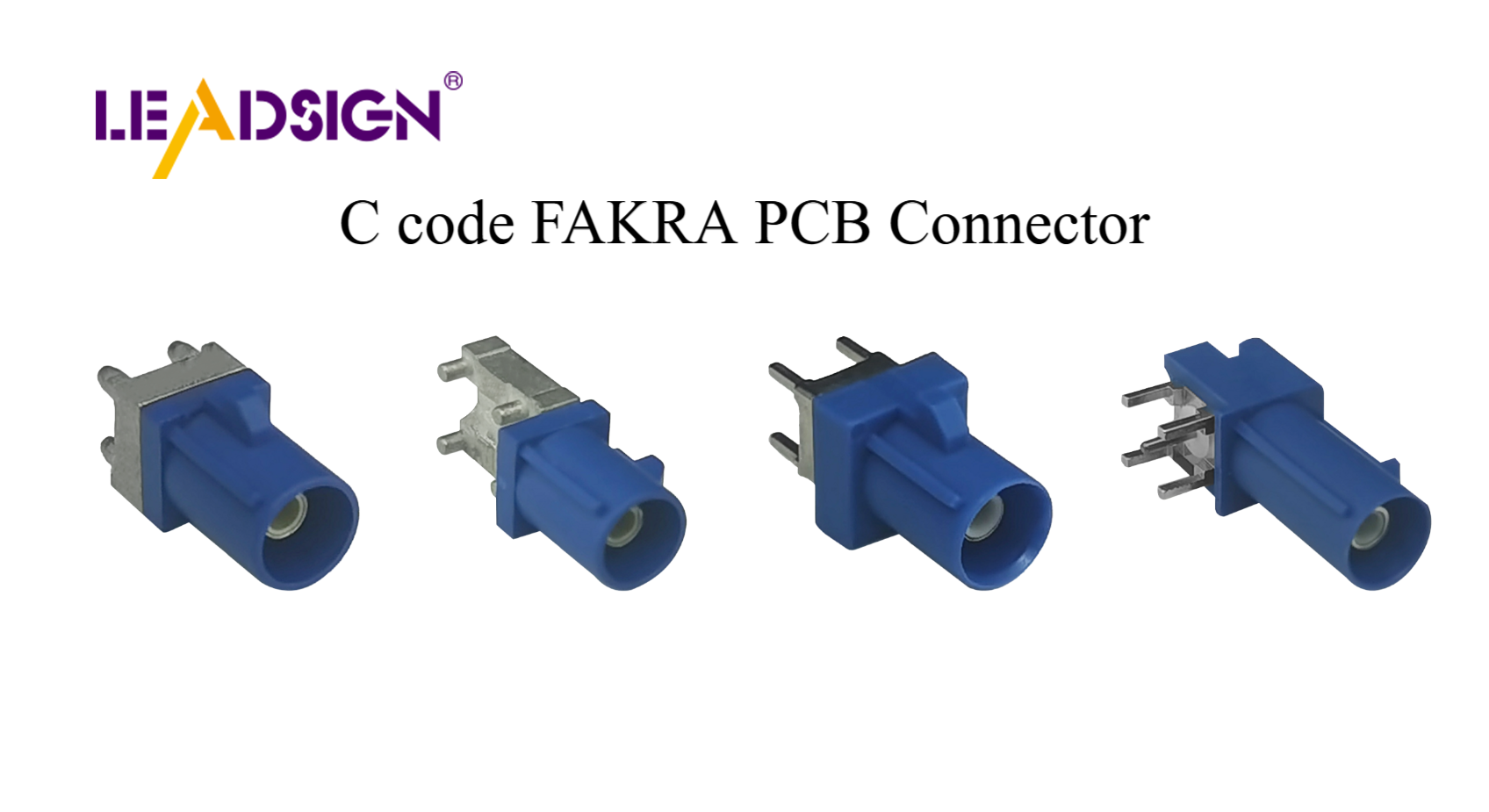
1. Key Factors in Automotive Wiring – What to Consider
Factor | What it means | Why it matters |
|---|---|---|
Wire gauge (AWG) | Thickness of the wire; smaller number = thicker wire | Thicker wire carries more current; undersized wire overheats. |
Voltage rating | Maximum voltage the insulation can withstand | 12V/24V automotive is low voltage, but insulation must handle spikes. |
Amperage (current) | Amount of current the wire can carry safely | Determines minimum gauge; use ampacity charts. |
Temperature rating | Maximum operating temperature of insulation | Engine bay needs 125°C+ (XLPE); interior 80°C (PVC). |
Chemical resistance | Resists oil, fuel, coolant, battery acid | Essential for engine bay and underbody. |
EMI/RFI shielding | Blocks electromagnetic / radio frequency interference | Critical for GPS, camera, radio, and CAN bus lines. |
Pro tip: For engine bay, use SXL or GXL (XLPE insulation). For interior, GPT (PVC) is sufficient. For data lines, use pre‑terminated FAKRA or HSD cables from LEADSIGN.
2. Step‑by‑Step – How to Choose the Right Wire Gauge
Step 1: Determine the circuit load (amperage)
Read the device specification (e.g., 10A for a light bar, 30A for a fan).
Use a clamp meter if unknown.
Step 2: Measure the one‑way wire length (from battery/fuse to device)
Longer runs require thicker wire to reduce voltage drop.
Step 3: Allow for voltage drop
For critical circuits (ECU, camera, GPS): aim for <3% drop.
For general lighting: <5% is acceptable.
Step 4: Use a wire gauge chart or calculator
AWG | Max amps (chassis, 3m run) | Typical use |
|---|---|---|
22‑20 | 5‑8A | Sensors, signals |
18 | 10‑15A | Lights, relays |
16 | 15‑20A | Headlights, power windows |
14 | 20‑30A | Auxiliary circuits, amplifiers |
12 | 30‑40A | Main feeds, winch control |
10‑8 | 40‑60A+ | Battery cables, alternator |
Rule: When in doubt, go one size thicker – it is safer and reduces voltage drop.
3. Practical Examples – Selecting Wires for Common Automotive Applications
🔹 Extra Lights (fog lights, light bars)
Calculate amps: Watts ÷ 12V = Amps (e.g., 120W ÷ 12V = 10A).
Typical run: 3‑5 metres.
Recommended: 16 AWG (for <15A) or 14 AWG for longer runs.
Add a relay – do not run high current through dashboard switches.
🔹 Car Audio (amplifiers, speakers)
Amplifier power wire: 500W ÷ 12V = 42A → use 8 AWG.
Ground wire: same gauge as power, short run to clean chassis metal.
Speaker wire: 16‑18 AWG for interior; 14 AWG for long runs.
🔹 High‑Tech Systems (infotainment, GPS, cameras)
Power: use standard primary wire (18‑16 AWG) fused appropriately.
Data lines (GPS, camera, USB‑C): Do NOT use primary wire. Use FAKRA 50Ω coax for GPS and camera video; use HSD 100Ω for USB‑C and Ethernet. LEADSIGN offers pre‑terminated cables in custom lengths – no field crimping.
4. Wire Insulation and Environmental Resistance
Location | Temperature | Chemicals | Recommended insulation |
|---|---|---|---|
Interior (dry) | -40°C to +80°C | Low | GPT (PVC) |
Engine bay | -40°C to +125°C | Oil, fuel, coolant | SXL or GXL (XLPE) |
Underbody | -40°C to +105°C | Salt, water, mud | GXL with sealed connectors |
Exterior (roof) | UV, moisture | UV‑rated PVC or loom tubing |
Pro tip: For any wire passing through the engine bay, use XLPE (SXL, GXL) – PVC will become brittle and crack.
5. EMI/RFI Shielding – Why It Matters for Modern Vehicles
Electromagnetic interference (EMI) from alternators, wipers, and EV motors can corrupt signals in:
GPS receivers (loss of lock)
Backup cameras (flickering image)
Radio (static)
CAN bus (communication errors)
Solution: Use shielded cables (coaxial or twisted pair with foil/braid) for all data and antenna lines. LEADSIGN FAKRA and HSD cables are double‑shielded and impedance‑controlled.
6. Safe Installation Tips – Do’s and Don’ts
Do | Don’t |
|---|---|
Use crimp terminals with ratcheting crimper | Use household solid wire |
Add adhesive‑lined heat‑shrink for exterior splices | Twist and tape wires |
Use relays for high‑current devices (winch, fans) | Rely on undersized wire |
Keep power and data wires separate (20 cm min) | Run data cables parallel to high‑current wires |
Use fused power feeds | Skip fuses |
For data cables (FAKRA, HSD): Never field‑crimp – order pre‑terminated LEADSIGN cables in the exact length you need.
7. 2026 Trends – What’s Changing in Automotive Wiring
Trend | Implication |
|---|---|
4K cameras on trucks and SUVs | Mini FAKRA (20 GHz) required – low‑loss, double‑shielded coax. |
5G telematics | Mini FAKRA violet with low‑loss coax – replace entire cable if damaged, do not splice. |
EV / hybrid | High‑voltage (orange) cables – do not touch. Low‑voltage data lines need extra EMI shielding. |
Pre‑terminated data cables | Shops use LEADSIGN plug‑and‑play FAKRA/HSD cables – no field termination, guaranteed impedance. |
8. Why LEADSIGN – Your Source for Pre‑Terminated Data Cables
For power wires, you can measure, cut, and crimp your own. But for high‑speed data – GPS, backup cameras, 5G, USB‑C, Ethernet – specialised pre‑terminated cables are required.
What LEADSIGN offers:
✅ FAKRA (standard & Mini) – all 14 colours, 50Ω, up to 20 GHz, IP67 optional
✅ HSD (USB‑C, Ethernet, LVDS) – 100Ω, locking, up to 5 Gbps
✅ Pre‑terminated cables – any length 0.3m – 20m, no field crimping
✅ Low‑loss, double‑shielded coax – for long runs and EV environments
✅ Bulk pricing – for shops, fleets, and distributors
For your business: When you need a reliable GPS extension, camera cable, or USB‑C lead, order LEADSIGN pre‑terminated cables – correct gauge, correct impedance, ready to install.
Final Recommendations – Automotive Wire Selection Summary
Application | Recommended wire | Insulation | Gauge | Source |
|---|---|---|---|---|
Interior light / switch | GPT (PVC) | PVC | 18‑20 AWG | Any |
Engine bay sensor | SXL (XLPE) | XLPE | 18‑20 AWG | Any |
Battery cable (short) | Battery cable | PVC | 4‑2 AWG | Any |
GPS antenna | FAKRA amber 50Ω coax | Double‑shielded | – | LEADSIGN pre‑terminated |
1080p backup camera | FAKRA blue 50Ω coax | Double‑shielded | – | LEADSIGN |
4K camera (truck/bus) | Mini FAKRA blue low‑loss | Double‑shielded | – | LEADSIGN |
5G telematics antenna | Mini FAKRA violet | Double‑shielded | – | LEADSIGN |
USB‑C CarPlay | HSD USB‑C 100Ω | Shielded twisted pair | – | LEADSIGN |
Remember: The right wire size and type ensure your electrical system performs safely and reliably for years. Invest in quality, especially for data lines.
Ready to simplify your data cable selection with pre‑terminated solutions?
[Request a free LEADSIGN FAKRA/HSD sample kit] | [Get bulk pricing]
See Also
Enhancing Vehicle Data Flow With Superior Connectors And Cables
Why FAKRA Coaxial Cables Are Crucial For Vehicles
Boosting Data Transfer With Fast Automotive Connectors