Best Auto Wire Connectors 2026: What Professionals Demand for Reliability

Intro: $8.67 Billion Market – But 1 in 4 Electrical Failures Traces to Connectors
The global automotive connector market reached $8.67 billion in 2023, and passenger cars alone account for 70% of that value. Yet studies show that nearly 25% of aftermarket electrical callbacks are caused by poor‑quality or incorrectly installed connectors.
For a repair shop, fleet, or distributor, each callback means:
– Lost labour and reputation
– Safety hazards (short circuits, fire)
– Premature failure of cameras, radios, or sensors
Choosing the right auto wire connector type is not just about performance – it’s about liability, cost, and customer trust. This guide covers the 5 essential types you need to stock and install for 2026 vehicles, including EVs and ADAS.
1. Why Connector Quality Matters More Than Ever
Modern vehicles have an average of 240 connectors – each one a potential failure point. Traditional connectors were designed for 12V lights and basic sensors. Today’s vehicles carry:
High‑frequency video signals (4K reverse cameras)
Low‑voltage sensor data (ADAS radar, LiDAR)
High‑current loads (electric cooling fans, heated seats)
High‑speed data (Ethernet, USB, LVDS)
A single loose or corroded connection can cause intermittent camera flicker, false automatic braking, or a no‑start condition.
Key takeaway for B2B buyers: Investing in OEM‑grade connectors pays back in reduced comebacks and extended vehicle uptime.
2. Five Essential Auto Wire Connector Types – With 2026 Applications
Connector Type | Best For | Key Feature | 2026 Verdict |
|---|---|---|---|
Crimp (butt, bullet, ring) | Permanent splices, power distribution | Gas‑tight, vibration‑resistant | ✅ Standard – use heat‑shrink insulated for moisture |
Solder | Permanent, low‑resistance joints (audio, sensors) | Very low resistance, strong mechanical bond | ⚠️ Skilled labour required – not for field repairs |
Quick Disconnect (spade, blade) | Components that need removal (lights, batteries, fans) | Tool‑free, repeatable | ✅ Good for interior / accessible areas |
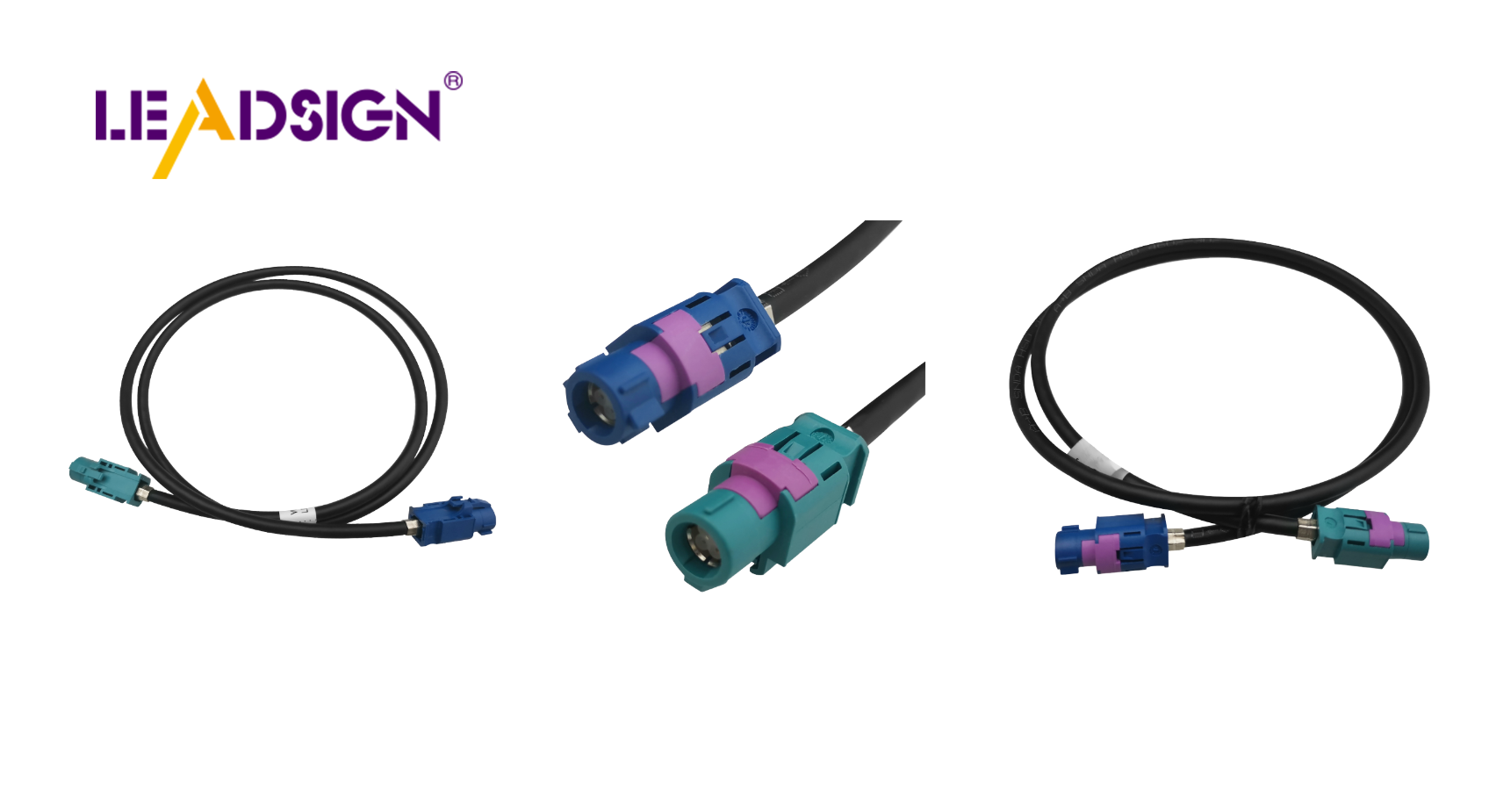
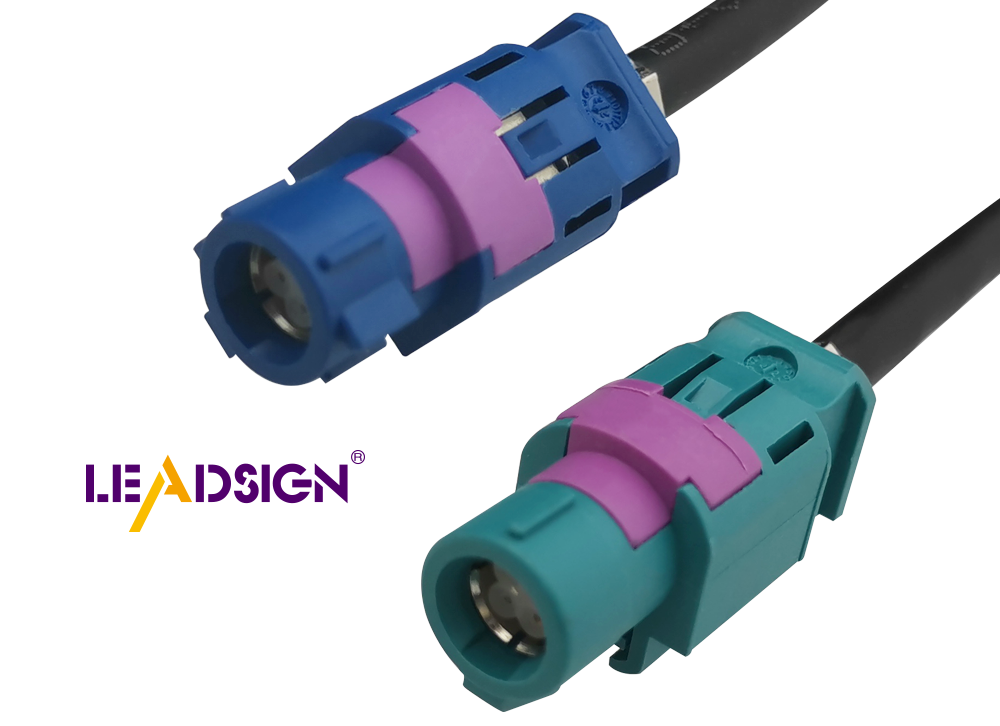
HSD (High‑Speed Data) | USB, Ethernet, LVDS, HDMI (cameras, infotainment) | Shielded, twisted‑pair, up to 6 GHz | ✅ Essential for 2026 multimedia & ADAS |
Coaxial / FAKRA | Reverse camera video, GPS, SDARS, 4G/5G antenna | 50Ω impedance, EMI shielded | ✅ Must‑have for any camera installation |
Pro tip: For reverse camera retrofits, use pre‑terminated FAKRA‑to‑RCA or FAKRA‑to‑LVDS cables (we supply custom lengths). For radio installations, use crimp butt connectors for power and ground, and HSD USB‑C for wired phone mirroring.
3. Crimp vs. Solder vs. Quick Disconnect – When to Use Which
Feature | Crimp Connector | Solder Connector | Quick Disconnect |
|---|---|---|---|
Installation speed | Fast (seconds) | Slow (minutes) | Very fast |
Skill required | Low (with proper tool) | High | None |
Vibration resistance | Excellent (gas‑tight) | Good (but brittle if not supported) | Moderate (can loosen over time) |
Waterproof capability | Yes (heat‑shrink or sealed barrel) | Needs tape or heat‑shrink over it | Not typically (use only indoors) |
Removable? | No (cut out) | No (melt) | Yes (pull apart) |
Recommendation for shops:
Crimp – 80% of your work (power, ground, speakers, sensors)
Solder – only for sensitive audio or signal wires where resistance must be minimal (e.g., microphone connections)
Quick disconnect – for components that are regularly swapped (headlights, batteries, fans)
4. High‑Speed Data (HSD) Connectors – Why Your Camera & Radio Installs Need Them
HSD connectors are no longer optional. They are designed for differential signalling (twisted‑pair quad) and multi‑layer shielding, allowing data rates up to 6 GHz without interference.
Key features that matter for your business:
Primary + secondary locking – prevents vibration‑induced disconnection
Crimp termination – more robust than solder for automotive environments
High cable retention force – cables stay put even under tension
Coding options – different colours prevent mismating (e.g., USB vs. Ethernet)
Where you use HSD connectors:
Backup cameras – LVDS or AHD video signal over coax (FAKRA is a type of HSD)
Car multimedia units – USB‑C for smartphone mirroring, Ethernet for diagnostics
Telematics / trackers – Ethernet for fast data upload
Rear‑seat entertainment – HDMI Type E with locking
We supply: pre‑crimped HSD assemblies (USB‑C, Ethernet, LVDS, FAKRA) in any length – ready to install.
5. Three Costly Mistakes (And How to Avoid)
Mistake | Consequence | Prevention |
|---|---|---|
Using unsealed connectors under the vehicle | Corrosion in 6‑12 months → camera fails | Use IP67 (rubber seal) or heat‑shrink butt connectors |
Over‑crimping or under‑crimping | Intermittent connection or wire break | Use ratcheting crimper with correct die for wire gauge |
Mixing wire gauges incorrectly | High resistance → overheating → melted housing | Match connector to wire AWG (e.g., red = 22‑18 AWG, blue = 16‑14, yellow = 12‑10) |
Toolbox must‑haves:
Ratcheting crimper (interchangeable dies)
Wire stripper (auto‑adjusting)
Heat gun (for shrink‑tube seals)
Multimeter (continuity & resistance)
6. 2026 Trends Affecting Your Connector Inventory
EV & hybrid engine bays – Higher temperatures (up to 125°C) require connectors rated -40°C to +125°C and sealed against coolant/oil.
ADAS sensors (radar, camera, ultrasonic) – Need shielded connectors (coax, Ethernet) to prevent EMI from power cables. A failing connector here can trigger false emergency braking – a serious liability.
Modular wiring harnesses – Fleets want plug‑and‑play. Stock pre‑assembled pigtails (connector + 15‑30cm wire) so technicians don’t have to crimp in tight spaces.
Sustainability regulations – Some regions (EU, California) restrict certain materials. Ensure your connectors are RoHS / REACH compliant.
7. How to Choose the Right Connector – B2B Checklist
Factor | What to look for |
|---|---|
Current rating | Match to load (e.g., camera 0.5A, radio 10A, fan 20A) |
Wire gauge compatibility | Connector must accept the wire size (printed on packaging) |
Environmental sealing | IP67 for exterior/underbody; unsealed for interior |
Temperature range | -40°C to +125°C for engine bay; -40°C to +85°C for cabin |
Locking mechanism | Positive latch or secondary lock – essential for vibration |
Terminal material | Copper alloy (tin or gold plated) – not pure brass |
Trusted brands for professional use:
TE Connectivity – broad range, sealed multi‑pin
Amphenol – rugged, industrial grade
Molex – excellent for data/signal
LEADSIGN – cost‑effective OEM‑grade connectors with test reports
Final Recommendations for Your Business
For reverse camera kits:
Video: FAKRA coaxial (50Ω, pre‑terminated, custom length)
Power: Sealed bullet or heat‑shrink butt connector (IP67)
For car multimedia (double‑DIN) installs:
Power & ground: Unsealed butt connectors (interior)
Speakers: Butt or bullet (18‑22 AWG)
USB extension: Locking USB‑C female‑to‑male HSD cable
For telematics / tracker installations:
Power: T‑tap or wire‑to‑wire sealed bullet (no cutting)
Data (optional): Ethernet HSD connector
Why buy connectors from us?
✅ OEM‑grade copper alloy terminals – no cheap brass
✅ Pre‑crimped pigtails available (save 50% labour time)
✅ Custom‑length FAKRA & HSD cables – exactly what you need
✅ Bulk pricing for repair chains and distributors
See Also
Enhancing Automotive Connectivity with HSD Connectors
Benefits of HFM Connectors for Automotive Applications
Significance of FAKRA Connectors in Automotive Uses