Avoid Common Mistakes with Automotive Plugs and Connectors – Professional B2B Guide (2026)

Intro: One Installation Mistake Can Cost a Comeback
Automotive plugs and connectors are small components, but they carry enormous responsibility – power to the engine control unit, signals to airbags, video to backup cameras. A single poor connection can cause intermittent failures, flickering lights, or even safety system malfunctions.
For repair shops and fleet managers, avoiding common installation, maintenance, and storage mistakes is essential for reducing callbacks and ensuring vehicle reliability.
In this guide, you will learn:
The most frequent installation errors (wire preparation, crimping, grounding)
Maintenance mistakes that damage connectors
Storage pitfalls and how to avoid them
Practical tips for using the right tools, weatherproof connectors, and OEM parts
2026 trends affecting connector reliability
Why LEADSIGN pre‑terminated FAKRA/HSD cables eliminate many field errors
1. Common Installation Mistakes – And How to Avoid Them
🔹 Incorrect Wire Preparation
Mistake: Using a knife or scissors to strip insulation – nicking copper strands.
Consequence: Reduced current capacity, overheating, or wire breakage under vibration.
Correct practice: Use a proper wire stripper matched to the wire gauge (e.g., 18‑22 AWG, 16‑14 AWG). Strip only the required length – typically 5‑8 mm. Inspect for nicks; if damaged, cut and re‑strip.
🔹 Wrong Crimping or Soldering
Mistake: Using a generic plier or incorrect die for crimp terminals; too much/too little solder.
Consequence: Loose connection, high resistance, intermittent signal, or complete failure.
Correct practice:
Use a ratcheting crimper with the die specified for the terminal family (open barrel, closed barrel, Deutsch, etc.).
Perform a pull test (5‑10 lbs) – the wire should not come out.
For soldering (interior, low‑vibration only), heat the wire and terminal evenly, apply solder until it flows, then let cool without movement.
🔹 Bad Grounding
Mistake: Dirty or loose ground point; undersized ground wire; sharing one ground for multiple circuits.
Consequence: Voltage drop, erratic sensor readings, dim lights, no start.
Correct practice:
Clean the ground point to bare metal (remove paint, rust).
Use a star washer to ensure bite.
Torque bolt to spec.
Use separate ground wires for sensitive circuits (cameras, ECUs).
Pro tip: For aftermarket cameras, always run a dedicated ground wire back to the chassis – do not rely on body sheet metal.
2. Maintenance Mistakes That Harm Connectors
🔹 Skipping Regular Inspections
Mistake: Only checking connectors when a system fails.
Consequence: Corrosion and fretting progress unseen, leading to sudden failure.
Correct practice: Inspect connectors every 6 months or 20,000 km. Look for:
Green/white powder (corrosion)
Melted or cracked housing
Bent pins
Loose secondary locks
🔹 Cleaning Connectors Incorrectly
Mistake: Using brake cleaner, WD‑40, or water; scrubbing with steel wool.
Consequence: Plastic becomes brittle, grease removed, water wicks into wire.
Correct practice:
Use electrical contact cleaner (plastic‑safe).
Gently brush with a soft brush (toothbrush or dedicated connector brush).
Blow dry with compressed air.
Apply dielectric grease only to seals and grommets, not to electrical contacts.
🔹 Not Protecting Connectors from Weather
Mistake: Using unsealed connectors in engine bay, underbody, or exterior lights.
Consequence: Water ingress → corrosion → high resistance → failure.
Correct practice: For any location exposed to moisture, salt, or pressure wash, use IP67 or IP69K sealed connectors (Deutsch, Weather Pack, sealed FAKRA). For interior (dry), unsealed connectors are acceptable.
3. Storage Mistakes – Keeping Connectors Safe
Mistake | Consequence | Prevention |
|---|---|---|
Storing in damp or hot garage | Corrosion, plastic degradation | Keep in dry, climate‑controlled area; use silica gel packs. |
Throwing loose connectors in a bin | Damage to pins, bent terminals | Use compartmentalised boxes (e.g., tackle box or parts organizer). |
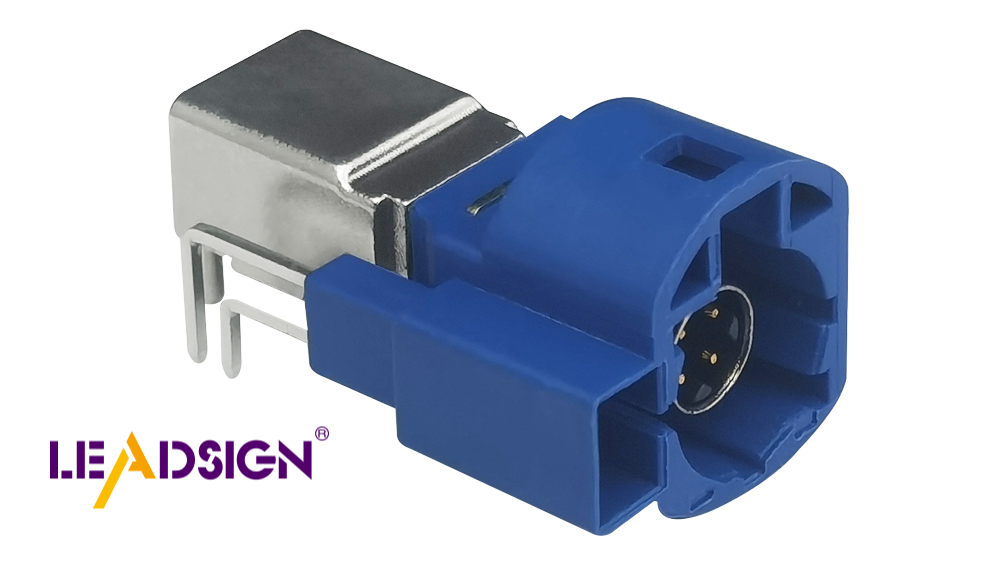
No labelling | Wrong connector used during repair – mismatch | Label bins by type (FAKRA blue, Deutsch DT, Weather Pack, etc.). |
Stacking heavy items on top | Crushed housings, bent pins | Store on shelves or in protective cases. |
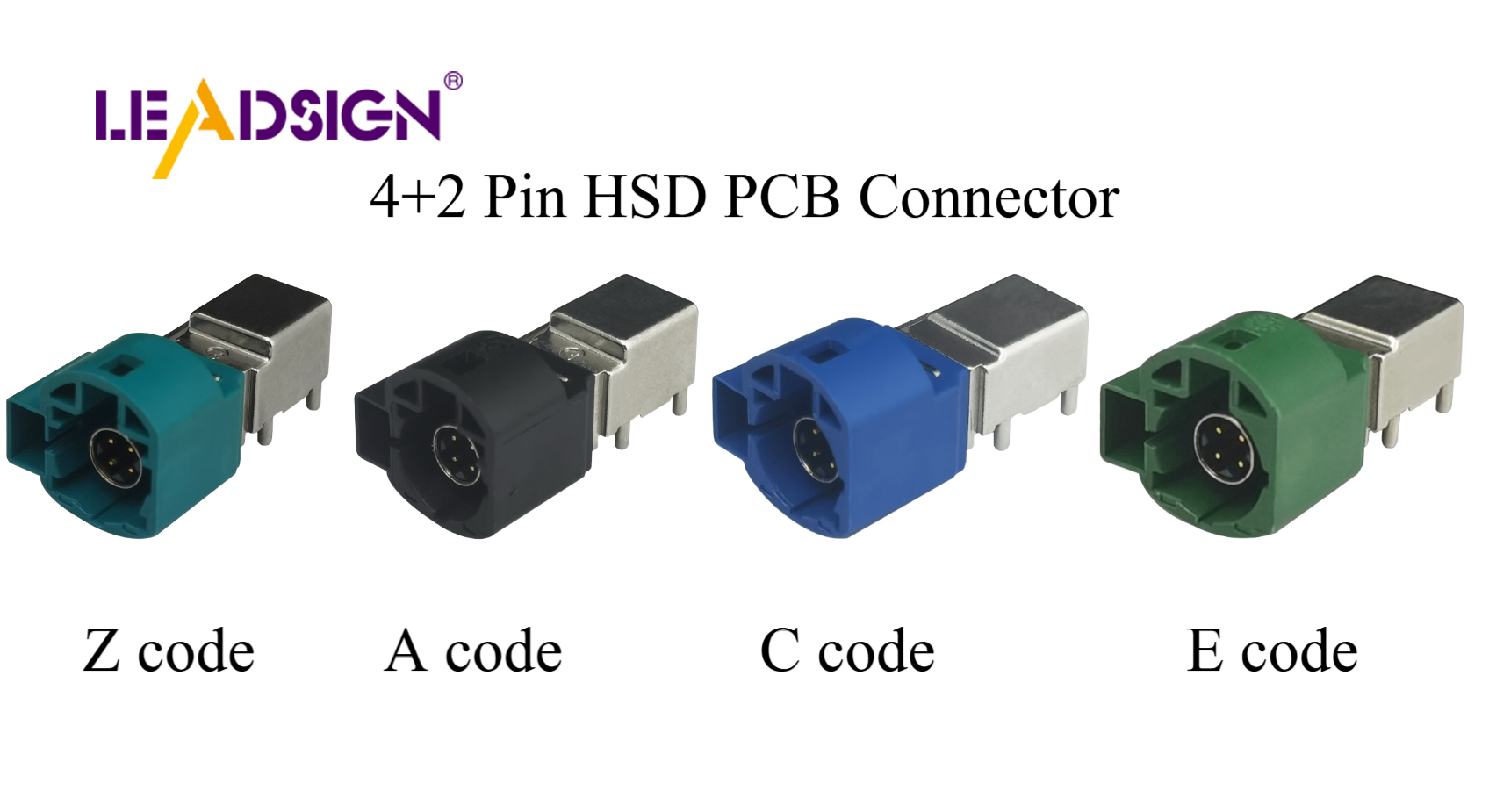
Pro tip: Keep FAKRA and HSD connectors in anti‑static bags with dust caps – especially gold‑plated terminals.
4. Tips to Keep Connectors Working Well – and Avoid Mistakes
🔹 Use the Right Tools & Materials
Crimpers: Ratcheting, with interchangeable dies for different terminal families.
Insertion/extraction tools: Prevents damage when removing terminals from housings.
Heat gun: For heat‑shrink tubing (adhesive‑lined for waterproofing).
Multimeter: For continuity and voltage drop tests.
🔹 Switch to Weatherproof Connectors
For exterior/underbody: Deutsch DT, Weather Pack, or sealed FAKRA (IP67).
For interior (dry): Unsealed butt, bullet, or spade connectors are fine.
🔹 Use Genuine OEM or High‑Quality Aftermarket
OEM parts guarantee fit and performance – but can be expensive.
High‑quality aftermarket (e.g., LEADSIGN for FAKRA/HSD) offers same reliability at lower cost.
Avoid unbranded “assorted kits” from online discount sellers – they often lack secondary locks and proper seals.
🔹 Label and Track
Before removing a connector, label it with tape or a tag (e.g., “CAMERA VIDEO – BLUE FAKRA”).
Take a photo before disassembly.
Keep a log for fleet vehicles.
5. 2026 Trends – Why These Mistakes Are More Costly Now
Trend | Consequence if you make mistakes |
|---|---|
4K cameras on trucks & vans | Mini FAKRA connectors are smaller and more fragile – improper crimping or storage damages centre pins. |
5G telematics | Antenna cables (Mini FAKRA violet) require perfect termination; field repair impossible. |
EV / hybrid | High‑voltage (orange) connectors – do not touch. Low‑voltage FAKRA/HSD must be double‑shielded and properly grounded to avoid EMI. |
Pre‑terminated cables | Shops using pre‑terminated LEADSIGN cables avoid most field errors – faster, no crimping. |
6. Why LEADSIGN – Pre‑Terminated FAKRA/HSD Cables Eliminate Field Mistakes
Many installation and maintenance mistakes come from field‑crimping FAKRA or HSD connectors – wrong die, incorrect strip length, damaged centre pin. LEADSIGN pre‑terminated cables eliminate this variable.
What LEADSIGN offers:
✅ FAKRA (standard & Mini) – all 14 colours, 50Ω, up to 20 GHz, IP67 optional
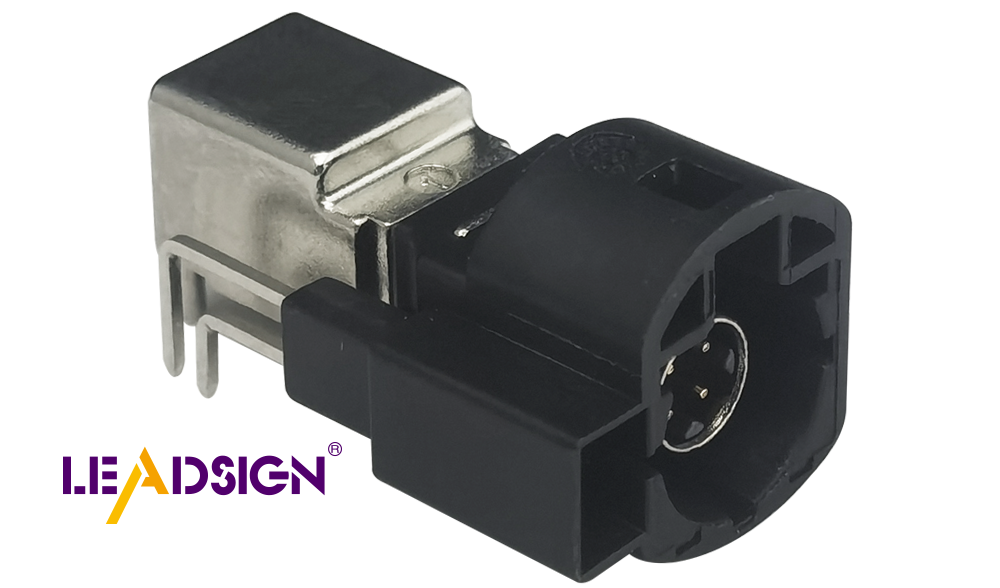
✅ HSD (USB‑C, Ethernet, LVDS) – 100Ω, locking, up to 5 Gbps
✅ Pre‑terminated cables – any length from 0.3m to 20m, no field crimping
✅ Factory‑tested – impedance, continuity, VSWR
✅ Bulk pricing – for shops, fleets, and distributors
For your business: When you install a camera or GPS, use a LEADSIGN pre‑terminated FAKRA cable – no wire preparation, no crimping, no grounding issues. Plug and play.
Final Recommendations – Avoid These Mistakes Checklist
Area | Action |
|---|---|
Installation | Use correct wire stripper, ratcheting crimper, pull test; clean ground points. |
Maintenance | Inspect every 6 months; use contact cleaner and soft brush; apply dielectric grease to seals only. |
Storage | Keep in dry, labelled containers; protect from heat and crushing. |
Materials | Use weatherproof connectors for exterior; genuine OEM or quality aftermarket (LEADSIGN). |
Data cables | Never field‑crimp FAKRA/HSD – use pre‑terminated LEADSIGN cables. |
Remember: A 3connectorinstalledincorrectlycancausea3connectorinstalledincorrectlycancausea300 comeback. Take the extra minute to do it right.
Ready to eliminate connector‑related callbacks?
See Also
Why FAKRA Connectors Are Essential for Cars Today
Understanding the Role of Fakra Connectors in Vehicles
Significance of Fakra Connectors in Automotive Engineering