Why Automotive Ethernet Cables Are Essential for Vehicle Cable Networks – Professional B2B Guide (2026)

Intro: The Data Backbone of Tomorrow’s Vehicles
Automotive Ethernet cables are not ordinary networking cables. They are purpose‑built for the extreme automotive environment – vibration, temperature swings, and electromagnetic interference. With the rise of ADAS, 4K cameras, 5G V2X, and autonomous driving, legacy CAN, LIN, and MOST buses can no longer handle the massive data throughput. Automotive Ethernet uses a single twisted‑pair (100BASE‑T1 / 1000BASE‑T1) to deliver 100 Mbps to 1 Gbps, reducing harness weight and cost while providing high reliability. This guide explains the technology, advantages, trends, and why it’s indispensable for modern vehicle networks.
1. Definition & Purpose of Automotive Ethernet Cables
Feature | Description |
|---|---|
Physical medium | Single twisted pair (UTP/STP) – 75% lighter than traditional 4‑pair Ethernet |
Data rate | 100 Mbps (100BASE‑T1) to 1 Gbps (1000BASE‑T1); future 2.5/5/10 Gbps |
Temperature range | -40°C to +105°C (engine bay grade) |
EMC/EMI compliance | CISPR 25, ISO 11452 (automotive electromagnetic compatibility) |
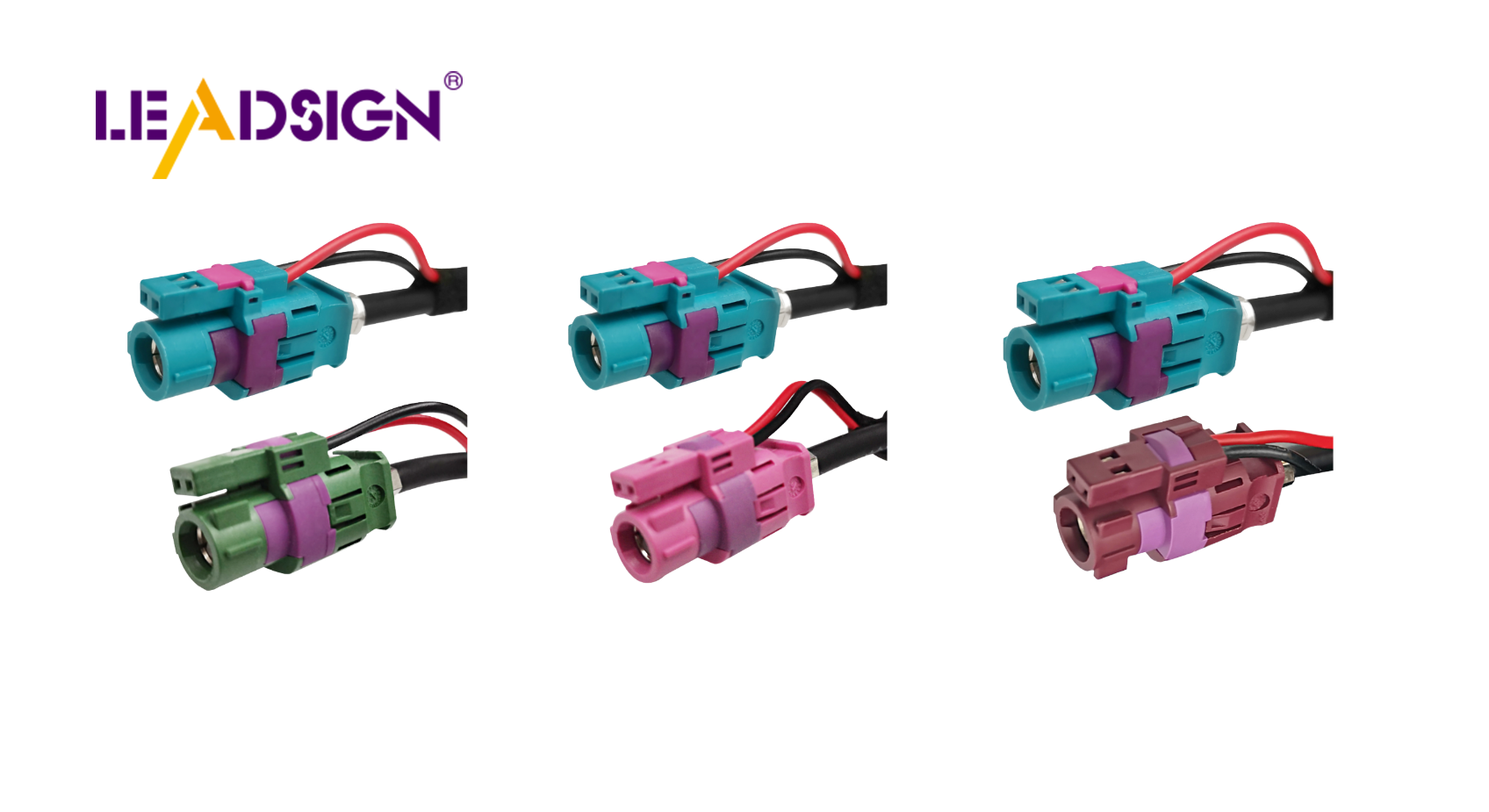
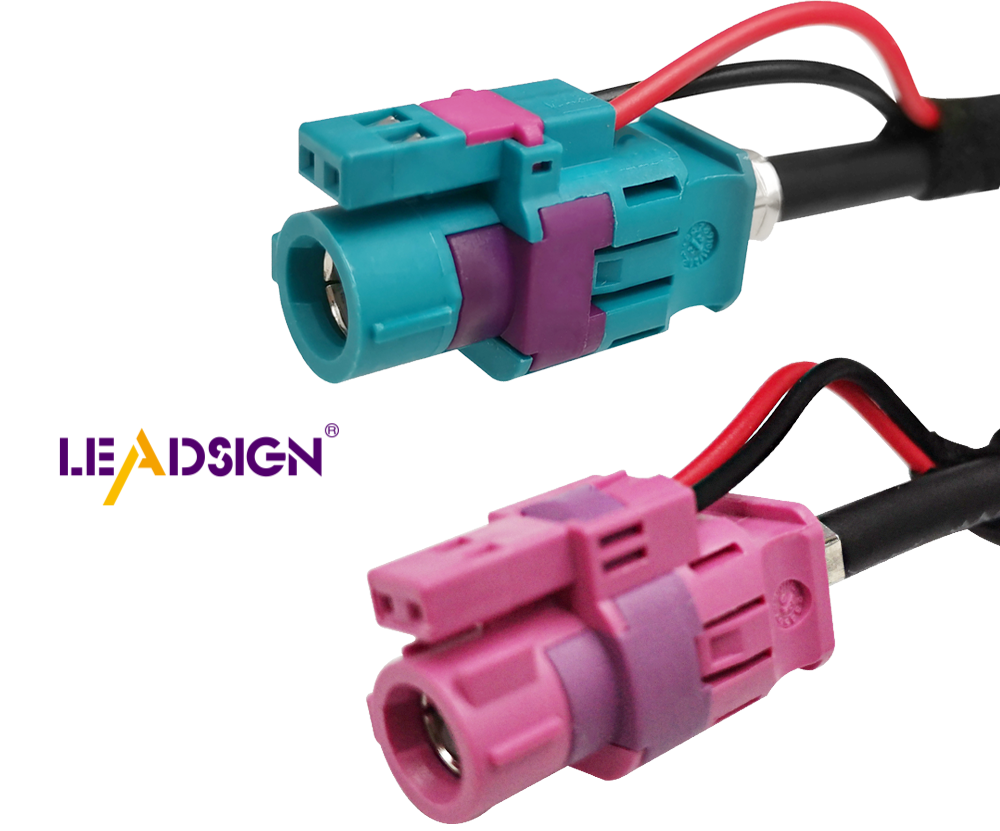
Connectors | HSD, MATEnet, H‑MT (100Ω differential) |
Purpose: Replace or complement CAN, LIN, and MOST as the backbone for ADAS, cameras, radar, lidar, high‑resolution displays, infotainment, and V2X. Supports Power over Data Line (PoDL), eliminating separate power wires for low‑power devices.
2. Key Advantages of Automotive Ethernet
🔹 High‑Speed Data Transfer – Meeting Modern Vehicle Demands
Application | Required bandwidth | Legacy network | Ethernet solution |
|---|---|---|---|
1080p camera | ~1.5 Gbps | ❌ CAN (1 Mbps) not enough | 1000BASE‑T1 (1 Gbps) |
4K surround camera | ~6‑12 Gbps | ❌ | Multiple 1000BASE‑T1 or higher speed |
Raw radar data | ~100 Mbps – 1 Gbps | ❌ | 100/1000BASE‑T1 |
OTA firmware update | 100 MB+ | ❌ | 100BASE‑T1 (minutes) |
🔹 Cost & Weight Reduction
Harness weight reduction: Single twisted pair replaces multiple wires – up to 30% lighter harness.
Lower connector cost: Smaller HSD connectors are cheaper than multiple CAN connectors.
Simplified architecture: Domain controllers and zonal gateways replace point‑to‑point wiring, reducing BOM.
🔹 Simplified Network Design & Diagnostics
Standard IP protocols: Use common TCP/IP stack – development and diagnostic tools compatible with IT industry.
Remote diagnostics & OTA: Reprogram entire ECUs over Ethernet without a visit to the shop.
3. Automotive Ethernet vs. Traditional Vehicle Networks
Feature | CAN | LIN | MOST | Automotive Ethernet |
|---|---|---|---|---|
Max data rate | 1 Mbps | 20 kbps | 150 Mbps | 100 Mbps – 1 Gbps |
Topology | Bus | Single master | Ring / star | Star / point‑to‑point |
Medium | Twisted pair | Single wire | Fibre / twisted pair | Single twisted pair |
Typical use | Engine, body | Windows, seats | Audio/video (legacy) | ADAS, cameras, backbone |
Cost | Low | Very low | High | Medium |
Conclusion: For low‑speed control, CAN/LIN will remain. For high‑bandwidth data, Ethernet is the only choice.
4. Role in Autonomous & Connected Vehicles
🔹 Enabling ADAS
Front cameras, corner radars, lidars generate massive raw data that must reach central domain controllers in real time.
Ethernet’s low latency and high bandwidth ensure timely fusion for braking and steering decisions.
🔹 V2X (Vehicle‑to‑Everything) Foundation
5G C‑V2X requires low‑latency communication between vehicles and roadside units. Automotive Ethernet carries V2X data within the vehicle.
🔹 Software‑Defined Vehicles (OTA)
Ethernet backbone allows full vehicle firmware updates in minutes without a dealer visit.
5. 2026 Trends & Future Developments
Trend | Implication for Ethernet cables |
|---|---|
4K / 8K cameras | Needs 1000BASE‑T1 or higher (2.5/5/10 Gbps); low‑attenuation shielded twisted pair |
Zonal architecture | Each zone gateway connects to central computer via one Ethernet link – reduces harness |
10BASE‑T1S | 10 Mbps single‑pair Ethernet for replacing low‑speed CAN/LIN sensors and actuators |
TSN (Time‑Sensitive Networking) | Guaranteed deterministic latency for real‑time control – essential for autonomous driving |
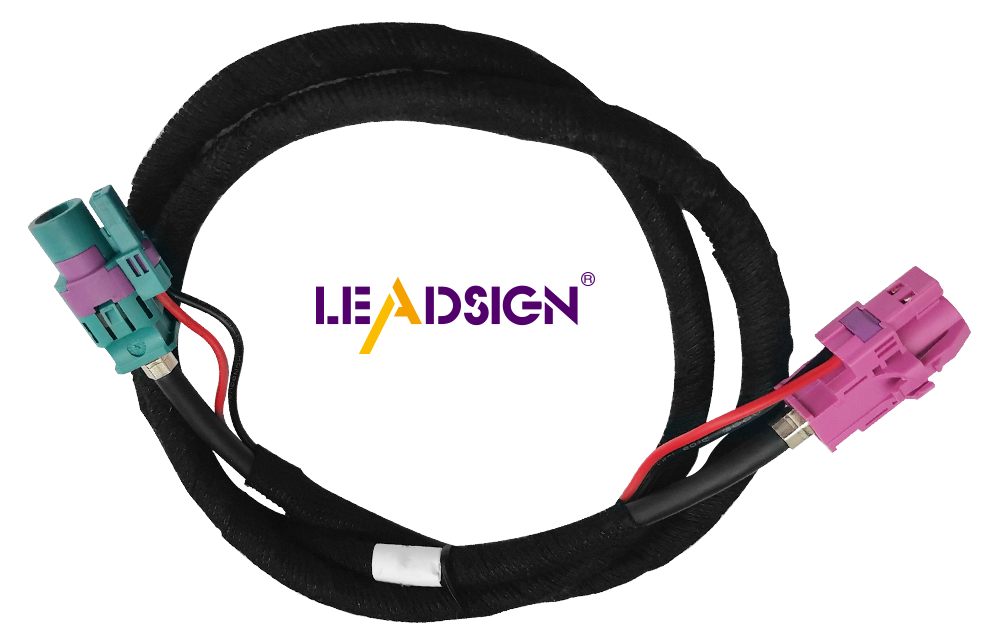
Pre‑terminated Ethernet cables | Shops prefer LEADSIGN pre‑terminated HSD cables – no field crimping, no impedance errors |
Impact on repair shops & fleets: Must stock pre‑terminated HSD 100Ω Ethernet cables and learn 100/1000BASE‑T1 diagnostics.
6. Why LEADSIGN – Your Automotive Ethernet Cable Partner
For traditional powertrain and body control, most shops rely on CAN/LIN. For high‑speed data, LEADSIGN provides pre‑terminated, tested HSD Ethernet cables meeting 100BASE‑T1 and 1000BASE‑T1 standards.
What LEADSIGN offers for 2026:
✅ HSD 100Ω differential cables – 4‑pin locking connectors
✅ Pre‑terminated – any length 0.3m – 20m, no field crimping
✅ Double‑shielded (foil + braid) – for EV high‑EMI environments
✅ IP67 optional – for underbody / exterior Ethernet connections
✅ Bulk pricing – for shops, fleets, and distributors
For your business: When repairing or upgrading ADAS cameras, radar, or telematics modules using Ethernet, use LEADSIGN pre‑terminated HSD cables – plug‑and‑play, perfect signal integrity, no callbacks.
Final Recommendations – Automotive Ethernet Cable Selection for 2026
Application | Recommended cable | Source |
|---|---|---|
Front camera (ADAS) | 1000BASE‑T1 HSD shielded twisted pair | LEADSIGN pre‑terminated |
Surround view camera (4K) | Mini FAKRA 50Ω coax (video) + HSD 100Ω (control) | LEADSIGN |
5G V2X antenna | Mini FAKRA 50Ω low‑loss | LEADSIGN |
Diagnostic / programming interface | HSD to RJ45 adapter | LEADSIGN (custom) |
Zone gateway interconnection | 1000BASE‑T1 HSD unshielded or shielded | LEADSIGN |
Remember: Automotive Ethernet is not a future option – it is a reality for 2026 vehicles and retrofits. Stocking the right pre‑terminated cables ensures your repairs and upgrades are ready for next‑generation vehicle architectures.
Ready to upgrade your Ethernet cable inventory?
[Request a free LEADSIGN HSD Ethernet sample kit] | [Get bulk pricing for pre‑terminated cables]
See Also
Maximizing Data Flow: Innovative Connectors And Cables
Boosting Data Transfer: Significance of Fast Automotive Connectors
Crucial Role of LVDS/GVIF Cables in Automotive Systems